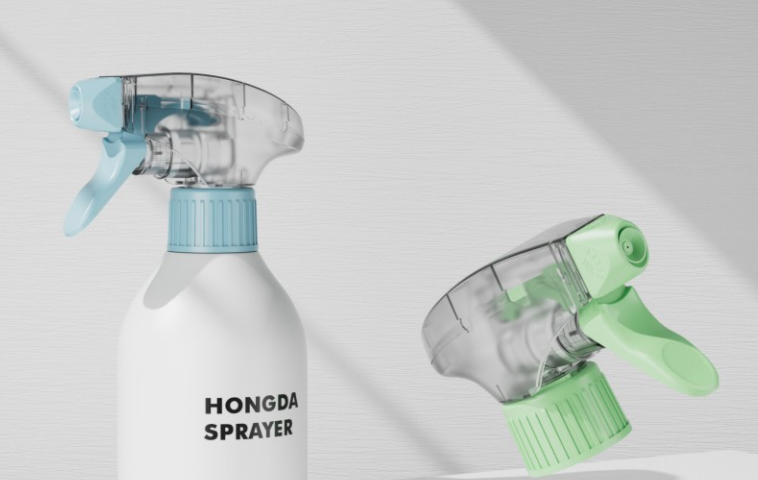
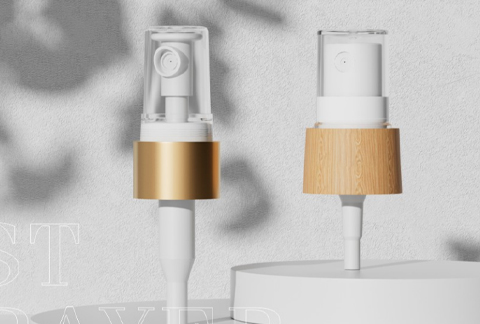
The Trigger Sprayer Head Is a Packaging Decision, Not an Afterthought
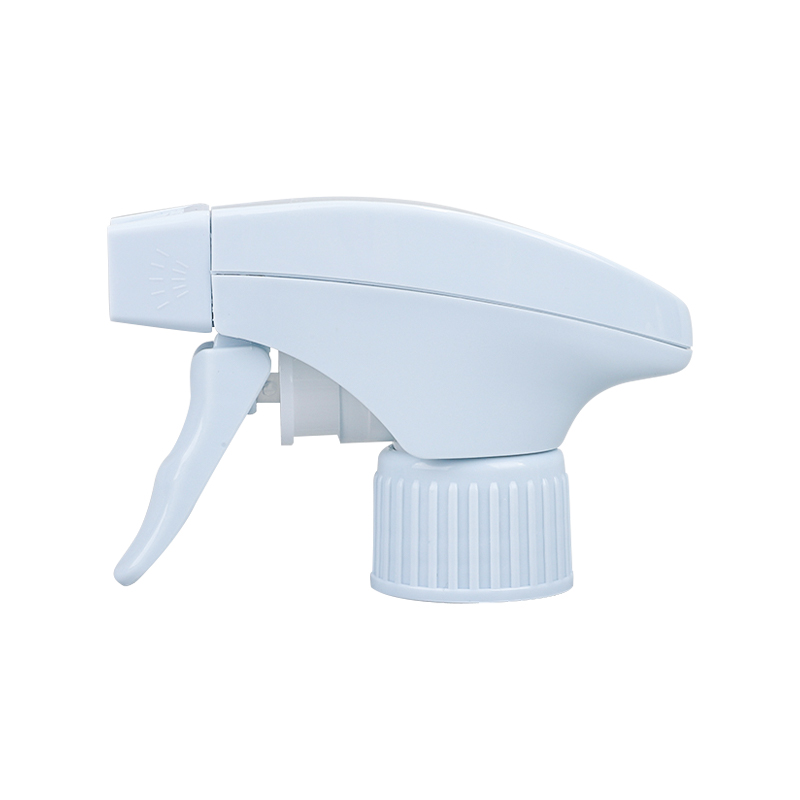
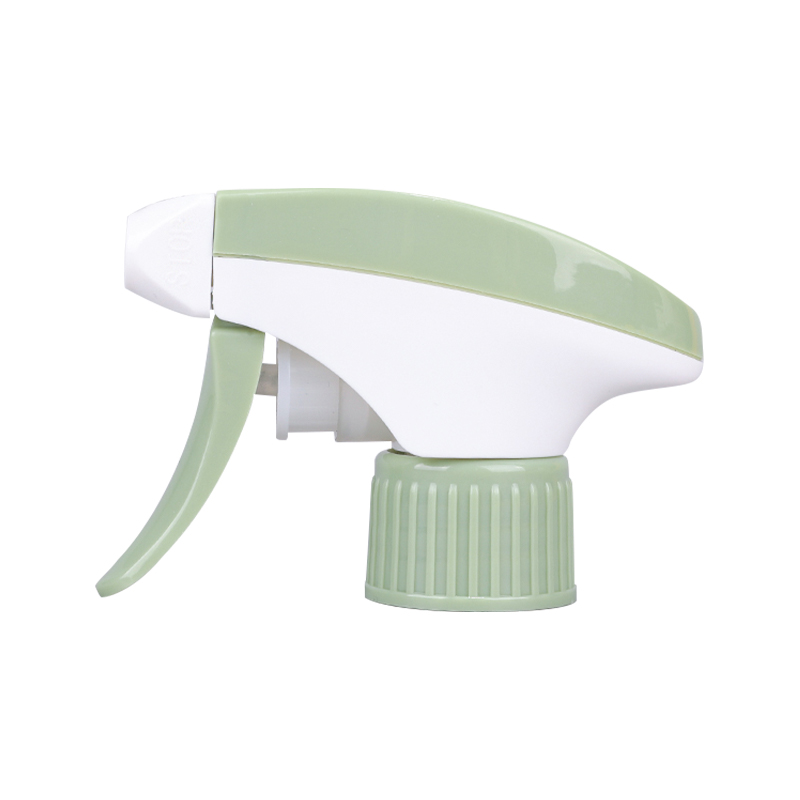
A trigger sprayer head turns a bottle into a functional product, but a wrong match makes that product fail. For example, a surface cleaner with a fine mist head leaves streaks, while a solvent-based formula stored in a head with exposed metal springs can corrode inside the closure. The selection process should start with the bottle’s neck finish and end with a sample test using your actual formula.
Start With the Bottle Neck Finish
The first number to verify is the bottle neck finish. A trigger sprayer head is designed to fit a specific closure size, and that size is measured as a neck finish such as 24/410, 28/410, or 28/400. If the closure and the sprayer head do not match, even a well-built pump will leak, wobble, or fail to create a proper seal.
Common neck finishes for trigger sprayer heads
| Neck finish |
Common bottle sizes |
Typical application |
| 24/410 |
2–8 oz bottles |
Small mist sprays, sample bottles, travel-size cleaners |
| 28/410 |
8–32 oz bottles |
Multi-purpose cleaners, glass cleaners, laundry spot treatments |
| 28/400 |
16–32 oz bottles |
Household and automotive products when the closure standard uses 28/400 |
How to Confirm the Neck Finish
Check the container drawing provided by your bottle supplier. The neck finish is usually printed or stamped on the drawing, and it will tell you the exact thread standard required for the closure. If you are unsure, measure the outside diameter of the bottle neck and count the thread start points, then ask the sprayer manufacturer to confirm compatibility before ordering.
Why Small Tolerance Differences Matter
A few tenths of a millimeter can make the difference between a secure fit and a cracked neck. This is especially important for trigger sprayer heads used with concentrated cleaning formulas, because the user applies repeated force to the trigger. A loose closure will eventually leak, and a tight closure can crack during capping.
Set the Dip Tube Length for the Bottle Height
A dip tube that is too short leaves usable product in the bottle, and a tube that is too long can hit the bottom and deform. The tube should be cut short enough to leave roughly 1/8 inch of clearance from the inside bottom of the container, or according to the sprayer manufacturer’s recommendation.
Measuring the Dip Tube
Measure from the underside of the closure to the inside bottom of the bottle, then subtract a small clearance distance. If the dip tube reaches all the way to the bottom, the suction inlet can become blocked by sediment or by the tube wall pressing against the bottle. A tube that is too short, on the other hand, leaves liquid behind and creates a poor user experience.
Straight Versus Angled Dip Tubes
Straight dip tubes work well for typical upright bottles. Angled or curved dip tubes are useful for small trigger bottles, containers with sloped shoulders, or bottles that will be used at an angle. When reviewing a trigger sprayer head, ask whether the dip tube orientation can be adjusted for your bottle shape.
Select Output and Spray Pattern by Product End Use
Never choose a trigger sprayer head only by its appearance. The same trigger head family can produce a fine mist, a focused stream, or a foam depending on the nozzle and internal chamber design. Output per stroke and spray character must match how the product will be used.
Spray patterns and typical applications
| Spray pattern |
Spray character |
Best suited for |
| Fine mist |
Small droplets, lower volume per stroke |
Room sprays, fabric refreshers, facial or hair toners |
| Stream |
Focused liquid jet, higher volume |
Glass and surface cleaners, engine degreasers, plant care |
| Foam |
Aerated foam, expanded volume |
Hand soap, foam cleaners, pet spot treatments |
Output Per Stroke and Trigger Effort
High-output trigger sprayer heads move more liquid per pull, which makes them better for thick or concentrated products that need to be delivered quickly. However, high-output designs often require more trigger force. For a hand-held bottle that will be used repeatedly, balance output with trigger comfort and operator fatigue.
Adjustable Nozzles Versus Fixed Spray Patterns
An adjustable nozzle gives users the option to switch between mist and stream, but it also adds moving parts and calibration points. A fixed nozzle is simpler, reduces variation in dosing, and often reduces the risk of clogging. Choose the approach based on whether your product needs user flexibility or consistent per-stroke delivery.
Choose Materials Based on Formula and Recycling Goals
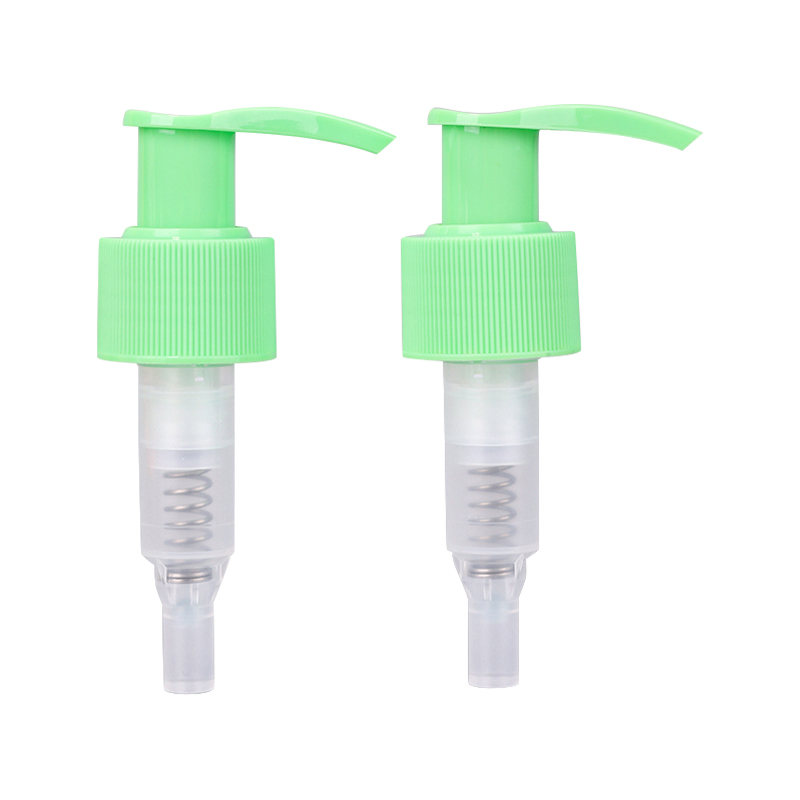
Metal springs and metal ball valves are the most common corrosion points in a trigger sprayer head. If your formula contains acids, alkaline cleaners, or strong solvents, exposed metal can fail early and contaminate the product. For those cases, an all-plastic trigger sprayer head eliminates most metal-to-product contact and simplifies recycling.
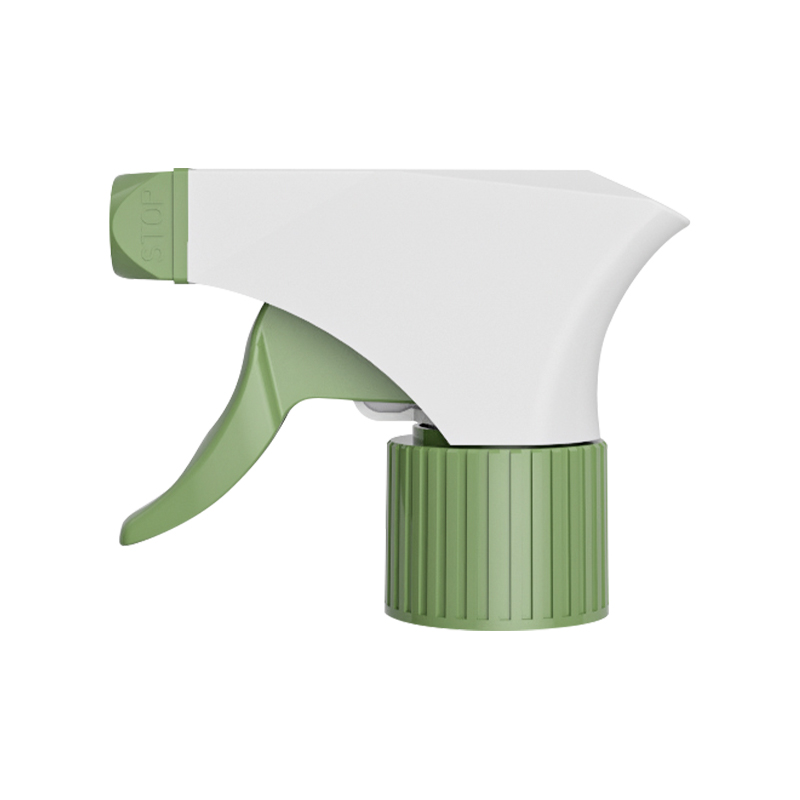 Wholesale All Plastic Trigger Sprayer Suppliers, Factory - Zhejiang Eaed TechnolZhejiang Eaed Technology Development Co., Ltd. is China wholesale All Plastic Trigger Sprayer factory and suppliers, All plastic trigger ...View Product →
Metal-Free Spring Designs
In a metal-free spring trigger sprayer, the spring is formed from plastic rather than metal. This reduces the risk of rust, discoloration, and metallic taste in the dispensed liquid. The metal-free spring trigger sprayer is a practical option for laundry products, kitchen cleaners, and personal-care formulas with sensitive ingredients.
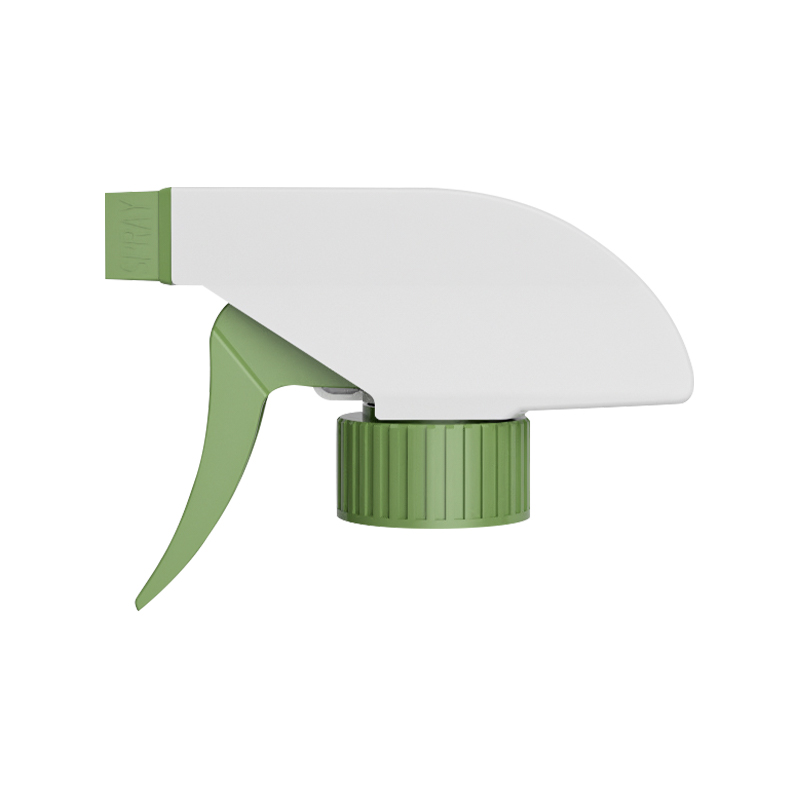 Wholesale Metal-Free Spring Trigger Sprayer Suppliers, Factory - Zhejiang Eaed TZhejiang Eaed Technology Development Co., Ltd. is China wholesale Metal-Free Spring Trigger Sprayer factory and suppliers, Metal-free spr...View Product →
Plastic Material Selection and Solvent Resistance
Polypropylene and polyethylene resist many common cleaning chemicals, but not every plastic grade handles every solvent. Always ask the supplier for chemical compatibility data and test under real fill conditions. Temperature, dwell time, and contact with concentrated product during storage can all affect plastic performance.
Plan for Leakage, Inverted Use, and Operator Fatigue
Leaking is the most expensive trigger sprayer failure. It wastes product, damages labels, and ruins shipping cases. Before approving a head, run a pressure, drop, or inversion test on actual bottles. A leakproof plastic trigger sprayer with a reliable gasket reduces returns and chargebacks.
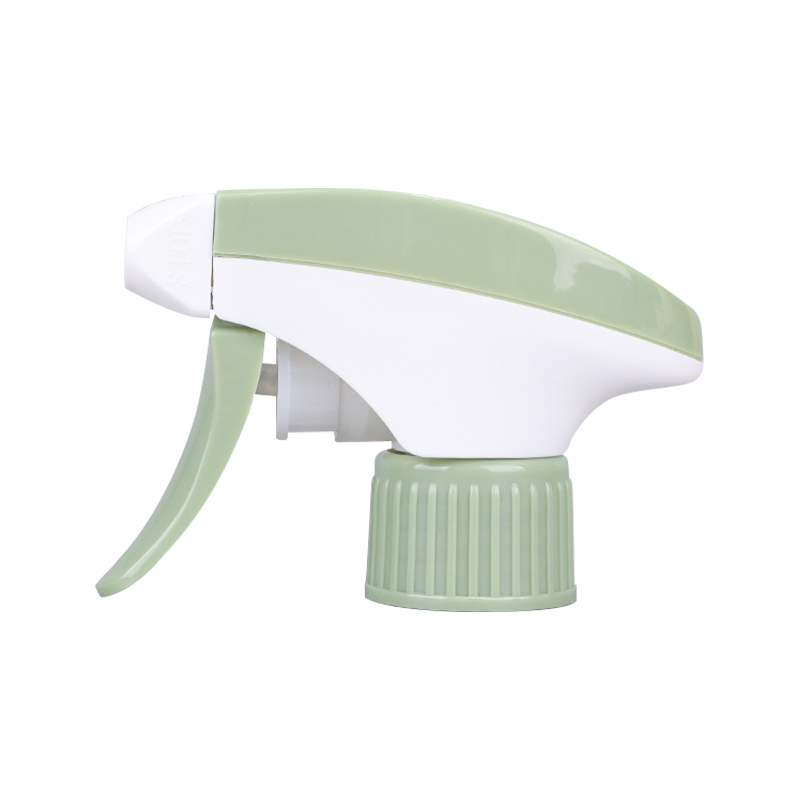 Wholesale Leak-Proof Plastic Trigger Sprayer Suppliers, Factory - Zhejiang Eaed Zhejiang Eaed Technology Development Co., Ltd. is China wholesale Leak-Proof Plastic Trigger Sprayer factory and suppliers, The leak-proo...View Product →
Inverted Trigger Sprayer Heads for Hard-to-Reach Jobs
Some cleaning tasks require spraying upside down, such as under counters, behind appliances, or on engine parts. Inverted trigger sprayer heads are designed to pull liquid through a rear inlet so they continue to work when the bottle is held below the liquid level.
Handle Length, Trigger Shape, and User Experience
A longer handle gives the user more leverage and reduces fatigue during repeated spraying. For products used daily by cleaning professionals, trigger comfort and weight matter as much as output. A head that feels stiff after twenty pulls can cause complaints even if the spray performance is correct.
Qualify the Supplier and Test Before Scaling
A trigger sprayer head is a precision component with many interacting parts: closure, spring, ball valve, piston, nozzle, and dip tube. Consistency in production depends on mold quality, injection molding control, and automated assembly. Look for a supplier with in-house tooling and assembly capability, because that structure makes it easier to resolve neck finish, dip tube, and output problems before a full production run.
Before final approval, request samples and run practical checks: fit the head on your bottle, measure output across multiple pulls, spray on a vertical surface, and shake or invert the bottle. Document the results and agree on acceptable tolerances with the factory.
For a deeper review of how trigger sprayers behave in real applications, read our plastic trigger sprayer functionality and applications guide. You can also learn how to manage product handling and packaging choices in this overview of trigger sprayer practical tips and environmental considerations.

 English
 русский
 Français
 Español
 italiano