Packaging Engineering · Dispensing Systems
Thick Products Break Ordinary Trigger Sprayers. The Fix Starts With the Pump.
A practical field guide for formulators, packaging buyers, and brand owners — what changes when a formula turns viscous, which sprayer features actually matter, and how to test before you commit.
The moment a product moves from free-flowing liquid to gel, honey-like concentrate, or creamy lotion, the trigger sprayer loses its composure. Water-thin formulas handle the standard sprayer’s narrow dip tube and fine nozzle easily. Thick products resist it at every stage.
Here is the conclusion up front: for thick products, choose a trigger sprayer with a high-output piston, wide internal channels, all-plastic or metal-free wetted parts, and a nozzle designed for viscous flow — and check the dip tube length against your bottle before production. That combination eliminates most spraying failures before the product reaches the shelf.
Why Standard Sprayers Fail on Thick Formulas
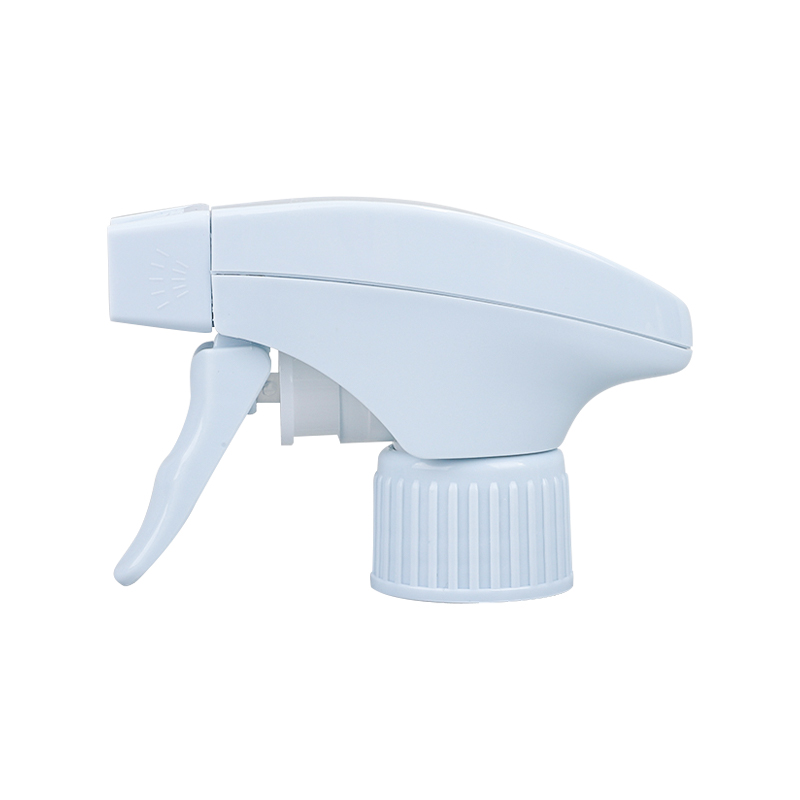
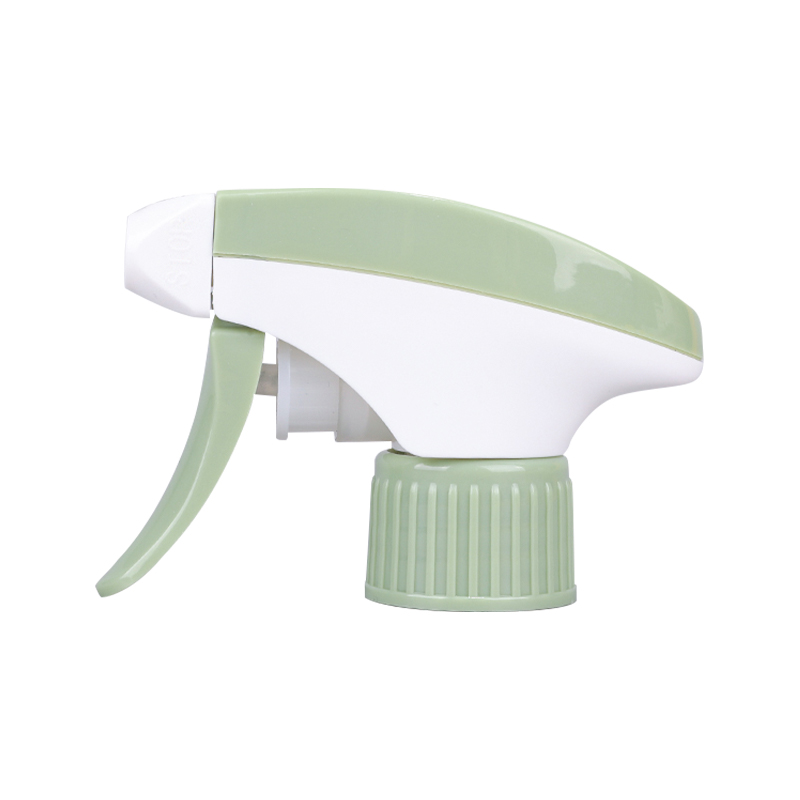
A trigger sprayer works on a simple principle: squeezing the trigger compresses a piston, drawing product from the bottle into the pump chamber through a one-way ball valve, then pushing it out through the nozzle. The mechanism assumes the liquid can follow quickly. With thick products, the liquid is too slow to refill the chamber, so the stroke runs partially empty and the nozzle sputters.
The failure pattern is easy to recognize:
- Spitting and dribbling instead of a clean spray or stream;
- Nozzle clogging as thick residue dries around the tip;
- Hard trigger pull, because the liquid has to be forced through small channels;
- Weak spring return and premature seal wear under the extra friction.
As one packaging engineer put it: “The complaints you see — spitting nozzles, leaking triggers, bottles abandoned because the sprayer jammed — are almost never the formula’s fault. They are a sprayer compatibility problem discovered after the product is already on the shelf.”
Warning: switching to a heavier bottle will not fix a spraying problem. The pump mechanism — not the container — determines whether a thick product dispenses cleanly.
Four Design Details That Separate a Working Sprayer From a Leaky One
When viscosity goes up, the engineering priorities change. These four design details matter most on a trigger sprayer for thick products:
- High-output piston design. A high-output trigger sprayer moves more liquid per stroke than a standard mist trigger, compensating for the resistance of a thick formula and delivering a complete spray instead of a weak half-pulse.
- All-plastic or metal-free internals. Thick cleaners, degreasers, and sanitizer gels often contain solvents, acids, or surfactants that attack a metal spring. All-plastic construction removes the risk entirely.
- Nozzle geometry matched to the liquid. A fine-mist nozzle cannot atomize a honey-like liquid. For viscous products, choose a larger fan orifice, a stream mode, or a foam nozzle that injects air into the formula. Foam nozzles are especially useful for gel soaps and hand sanitizers because a small dose expands into spreadable foam.
- Sealing and gasket materials. Thick formulas can dry around the nozzle and make the trigger stick. A tight closure seal reduces the amount of dried product between uses.
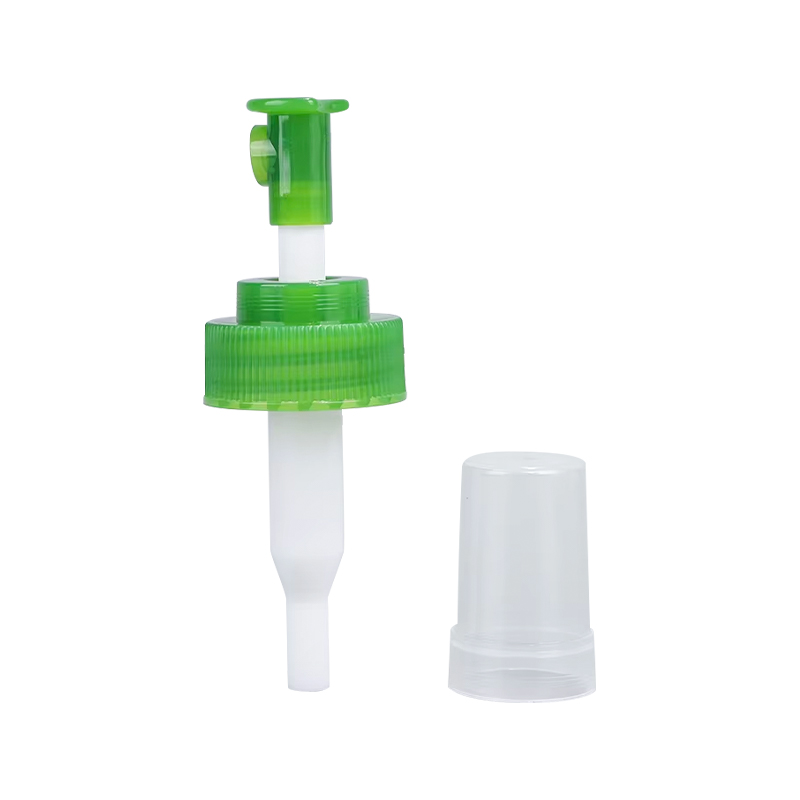 High Viscosity Plastic Liquid Mist Sprayer for Thick FluidsEngineered for lubricants, cosmetics, sealants, and adhesives, this sprayer uses an efficient hydraulic pump and corrosion-resistant materials to handle syrup-like liquids reliably without clogging.View Product →
A sprayer built for this job, such as our high-viscosity plastic liquid mist sprayer, uses a wider piston bore and a heavier return spring to keep the cycle reliable even with syrup-like flow.
Danger: if your formula is acidic, alkaline, or solvent-based, a metal spring is a liability. Corrosion products can bleed into the first sprays, and by the time the consumer opens the bottle, the damage is already in the dose.
Choosing the Right Trigger Sprayer by Product Type
Not all thick products behave alike. A gel hand soap places different demands on the sprayer than a solvent degreaser, and each formulation type benefits from a different configuration:
Matching trigger sprayer configurations to product viscosity.
| Product category |
When it flows like |
Recommended approach |
| Gel hand soap, body wash |
Thick but smooth |
Foam nozzle, short dip tube, high-output piston |
| Heavy degreaser, oven cleaner |
Honey-like, syrupy |
All-plastic trigger, metal-free spring, stream nozzle |
| Creamy household cleaner |
Lotion-like |
Wide-channel piston, adjustable stream-to-fan nozzle |
| Viscous disinfectant or sanitizer |
Slow-moving, sticky |
High-dose sprayer with anti-clog sealing |
For industrial and janitorial packs, a high-dose sprayer such as our black high-dose sprayer delivers more liquid per pull — exactly what concentrated formulas need.
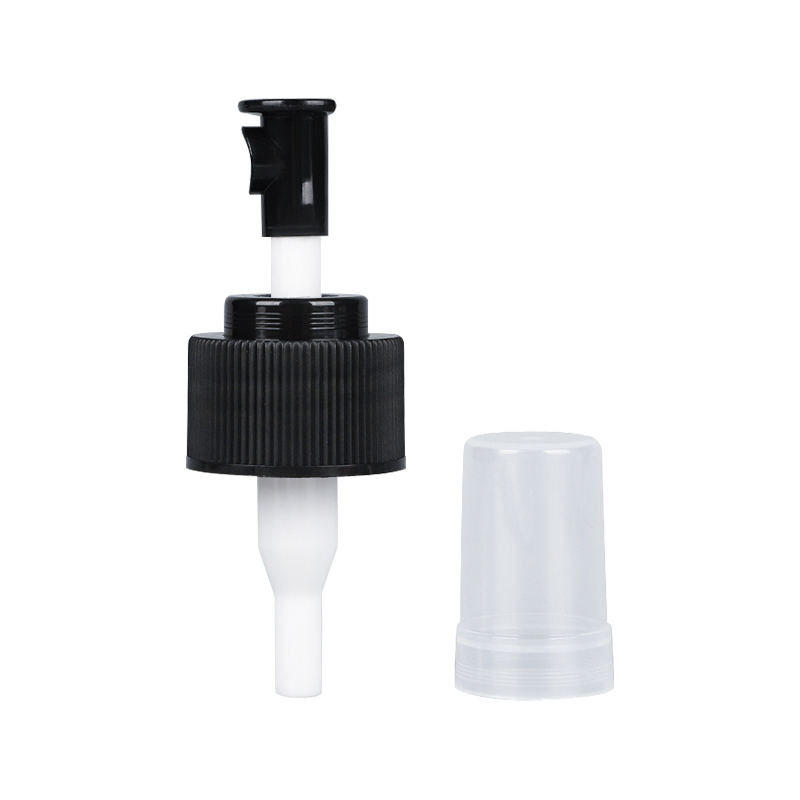 Black High Dose Sprayer for Large-Volume ApplicationsDelivers a higher spray volume per pull, ideal for industrial, janitorial, or cosmetic products needing broad coverage. Features an adjustable regulator to control flow and atomization.View Product →
On the chemical side, an all-plastic trigger sprayer removes the metal spring entirely. If your concentrate contains bleach, solvent, or a low-pH acid, this is the safer production choice and the more recycling-friendly one.
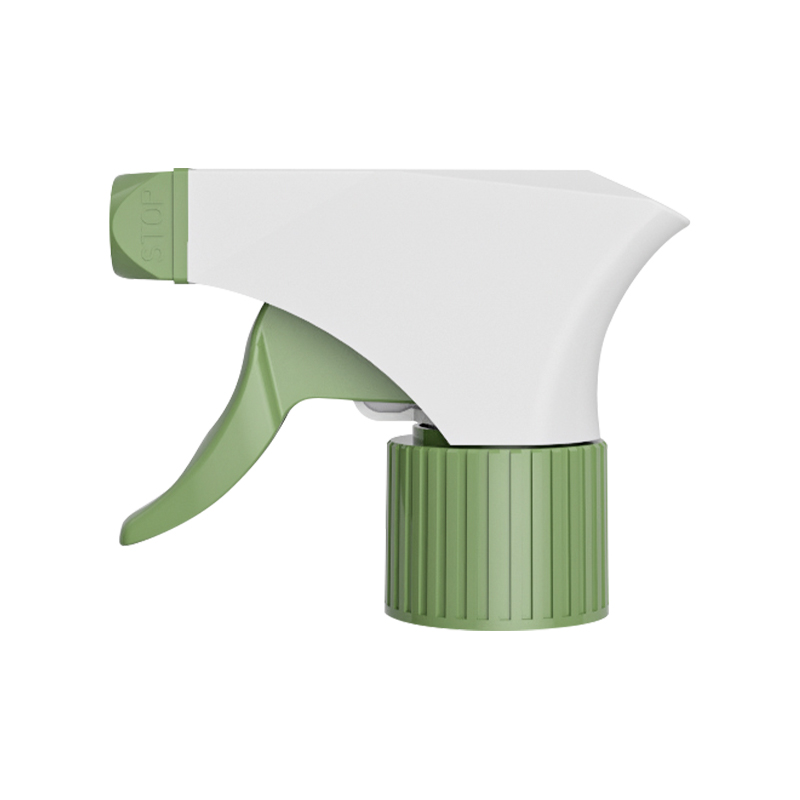 All Plastic Trigger Sprayer with Leak-Proof DesignEliminates metal springs, making it safer for bleach, solvents, or low-pH acids and more recycling-friendly. Its tight sealing works even when inverted or tilted, and it resists rust and corrosion.View Product →
Dip Tube Length, Neck Finish, and Container Fit
Many sprayer rollouts fail for a reason more basic than the pump: the dip tube does not reach the bottom of the bottle. Thick liquids do not flow sideways easily, so if the dip tube sits above the container floor, the last portion of the product stays stranded.
- Measure the internal height of your bottle, not the outer height. A dip tube cut to the inner depth ensures full evacuation.
- Trim the dip tube at an angle. A 45-degree cut prevents the intake from sealing flat against the container bottom.
- Check the neck finish — the thread size of the bottle opening — before ordering. Common finishes are 24-410, 28-400, and 33-400. The closure must thread on cleanly and seat the gasket evenly.
- For squat bottles, use a container with a center well so the dip tube does not bend against the shoulder.
Info: a dip tube that is too long curls at the bottom and blocks the intake; a tube that is too short strands valuable product. Measure before ordering.
A Five-Test Checklist Before You Commit
Laboratory results look promising, but the real verdict for a thick product comes from how the sprayer behaves off the line. Run these five checks with your actual formula in the actual bottle:
- Spray pattern consistency. Fire three consecutive pumps onto a clean surface and compare the delivery. Each dose should look the same.
- Drool test. After the third pump, wait ten seconds. If liquid beads up and dribbles from the nozzle, the vacuum seal is weak.
- Trigger return. Leave the filled bottle upright for 48 hours, then pull the trigger. It should return briskly without sticking.
- Chemical soak. Submerge the sprayer head in the formula for 72 hours at 40°C, then check the spring, ball, and gasket for swelling or rust.
- Transport drop. Fill the bottle to working level, cap it, and drop it from 1.2 meters. Check for cracks at the closure and leaks under the trigger.
These tests take less than a week and reveal most issues that otherwise arrive as customer complaints. If you are switching an existing package to a thicker formula, re-testing is essential — the old pump can silently fail on the new product. Our engineering notes on trigger sprayer mechanics and care cover the full picture.
The Bottom Line
A thick product changes everything downstream of the bottle neck. The right trigger sprayer for a viscous formula is high-output, all-plastic where the chemistry demands it, fitted with the correct dip tube, and verified with the real formula before you scale up. Get that right, and the sprayer becomes invisible — the consumer experiences the product, not the frustration of a jammed nozzle.
When you buy from a supplier that controls the full chain — research, precision molds, injection molding, and automated assembly — the advantage appears during sample iteration. You can request a different dip tube, a heavier spring, or a nozzle change without starting over. In over 30 years of building sprayers at our Yuyao plant, that is how good packaging projects become lasting products.
Success: brands that win with thick formulas treat the sprayer as part of product development, not as an afterthought. It is a small component, but it carries the entire user experience.

 English
 русский
 Français
 Español
 italiano