Adjustable Trigger Sprayers: One Head, Many Formulations
A practical sourcing guide for brand owners and contract fillers that need dose control, spray-pattern flexibility, and fewer components in the warehouse.
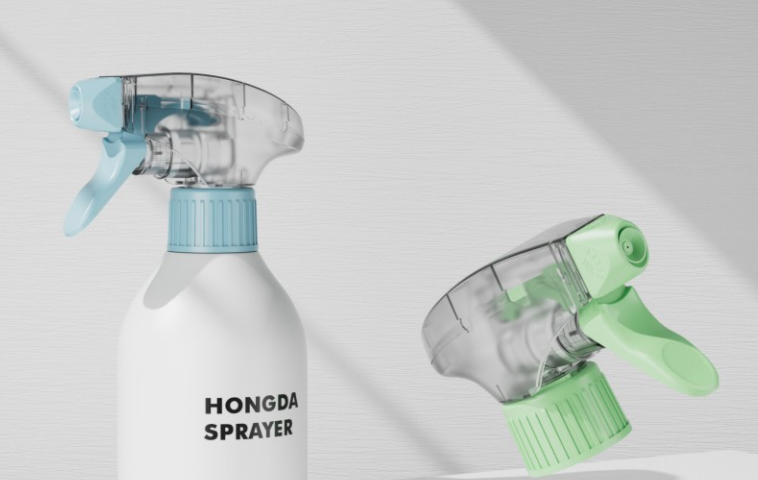
When a cleaning brand scaled from a single multi-surface spray to four formulations, its packaging team faced a familiar choice: stock four different trigger heads, or find one head that could behave differently with each liquid. The second option won. One adjustable trigger sprayer, with a nozzle that rotates from fine mist to a defined stream and a trigger that limits output per stroke, gave the entire range a single component number.
For most household, automotive, and personal-care launches, the conclusion is straightforward. An adjustable trigger sprayer reduces sourcing complexity while giving each formulation the spray behavior it needs, which is why it has become the default choice for new dispenser designs.
What "Adjustable" Means on a Trigger Sprayer
In packaging supply, "adjustable trigger sprayer" usually refers to three things: a nozzle that switches between mist and stream, an output that changes with trigger travel or a metering insert, and lock positions that control when the trigger can be pulled. Foam-style heads add a fourth variable by mixing air into the liquid stream.
Most adjustable trigger sprayers combine two or three of these mechanisms; the combination defines the product's dispensing profile.
| Adjustment |
What it changes |
When it matters |
| Nozzle rotation (mist to stream) |
Droplet size and coverage area |
Glass cleaners, fabric care, fine surface coating |
| Output per stroke |
Volume dispensed with each trigger pull |
Concentrated chemicals, dosing-sensitive formulas |
| Foam or air-mix selector |
Air-to-liquid ratio |
Degreasers, soap foams, stain pre-treatments |
| Trigger lock and stroke limit |
How far the trigger travels |
Transport safety, partial doses, accidental discharge |
The practical effect: one head can serve a mild surface cleaner and a stronger degreaser in the same bottle range, simply by changing the nozzle setting and the user's pull length.
Why Adjustable Output and Spray Pattern Matter
Spray pattern is not a cosmetic preference; it determines whether the formula works as intended. A fine mist clings to vertical surfaces long enough to act, while a stream is better for rinsing or targeting a narrow gap. Adjustable heads let the same bottle cover both situations.
For a production manager, the most valuable feature of an adjustable trigger sprayer is not the spray pattern. It is the single SKU that replaces three.
- Fewer purchased parts and less warehouse space for packaging components.
- One head across a product family simplifies quality checks and supplier audits.
- Consumers read adjustable heads as a sign of better performance, especially in cleaning and fabric care.
- Precise dosing reduces overuse, which matters for concentrated formulas and refill systems.
For refillable and concentrated programs, this matters even more. When the user dilutes a product at home, a head that can switch from mist to a full stream covers both the concentrated dose and the diluted everyday spray.
What to Verify Before You Commit to a Design
Not every adjustable trigger head performs the same way once it meets a real formulation. A head that works flawlessly with water can change its spray pattern, output, and trigger feel when paired with a solvent-heavy cleaner or a thick surfactant blend. Before committing, run the component through the same checks your final product will face.
A trigger sprayer that performs well with water can behave very differently with a solvent-heavy formula; always test with the final liquid.
| Check |
Why it matters |
What to confirm |
| Output per stroke |
Dose consistency in use |
Measure with your actual liquid, not just water |
| Neck finish and closure |
Bottle fit and leak path |
24/410, 28/400, or other thread; screw vs crimp |
| Dip tube length |
Complete liquid evacuation |
Tube trimmed to your bottle height |
| Trigger force |
User comfort and fatigue |
Pull resistance across the full stroke |
| Material compatibility |
Swelling, cracking, discoloration |
Chemical resistance data for your solvents and pH range |
| Spray pattern stability |
Consistency over the head's life |
Cycle testing with the final product |
WarningFormulations high in d-limonene, glycol ethers, or isopropyl alcohol can swell or crack standard polypropylene parts. Confirm the material set with the supplier before authorizing a large purchase order.
Material compatibility often comes down to the spring. A standard metal spring can corrode or introduce metal ions into aggressive formulas, and it creates a mixed-material recycling problem at end of life. If your product contains chlorides, chelating agents, or reactive solvents, a metal-free spring design removes that variable entirely.
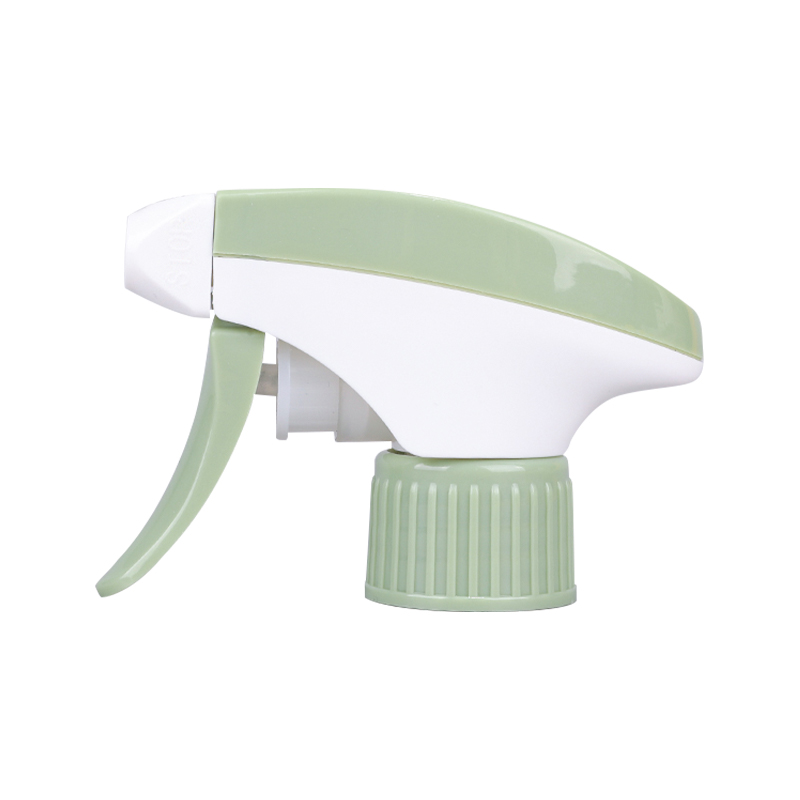
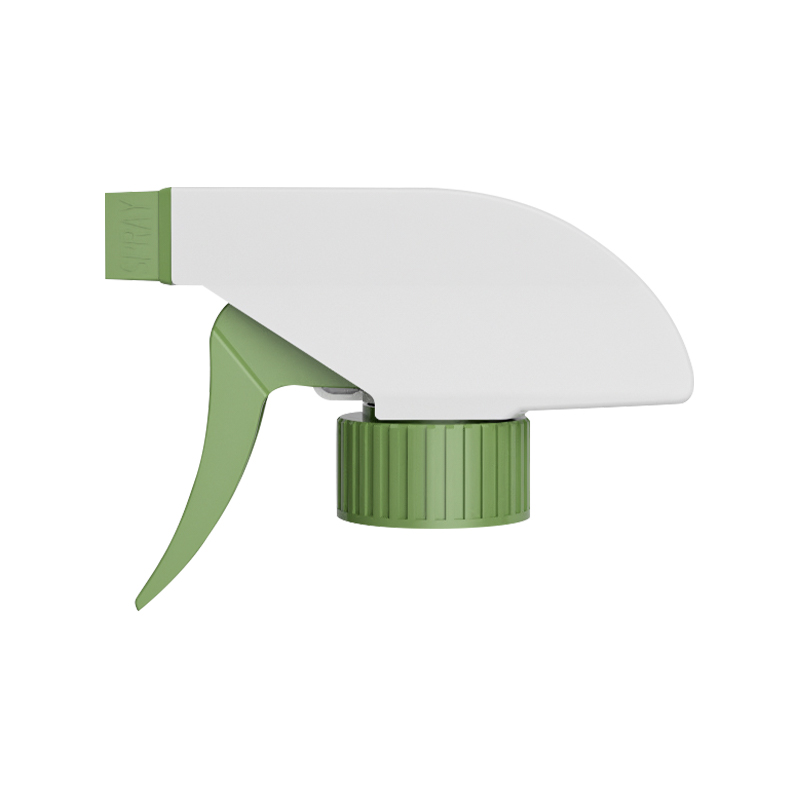 Metal-Free Spring Trigger Sprayer for Corrosive FormulasThis trigger sprayer replaces the metal spring with plastic or composite parts, eliminating rust and metal-ion contamination. It suits aggressive formulas with chlorides or reactive solvents and simplifies end-of-life recycling.View Product →
Material Selection and Chemical Compatibility
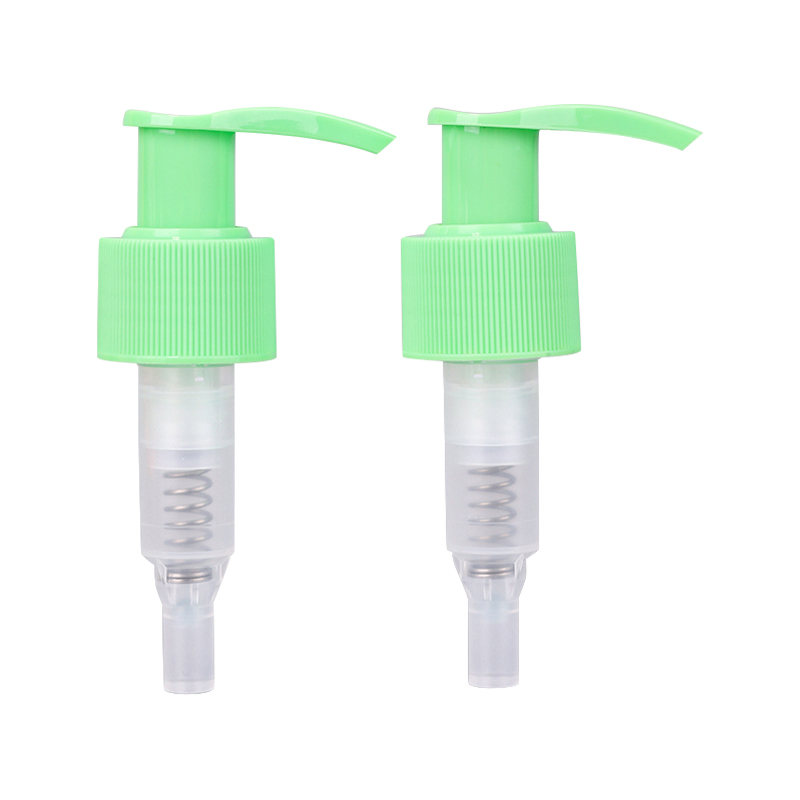
The material decision is usually the first filter in a sourcing project. All-plastic designs remove metal from the liquid path completely, which matters for formulas with corrosive salts or high chloride content. They also simplify recycling because the whole head can enter a single plastic stream at end of life.
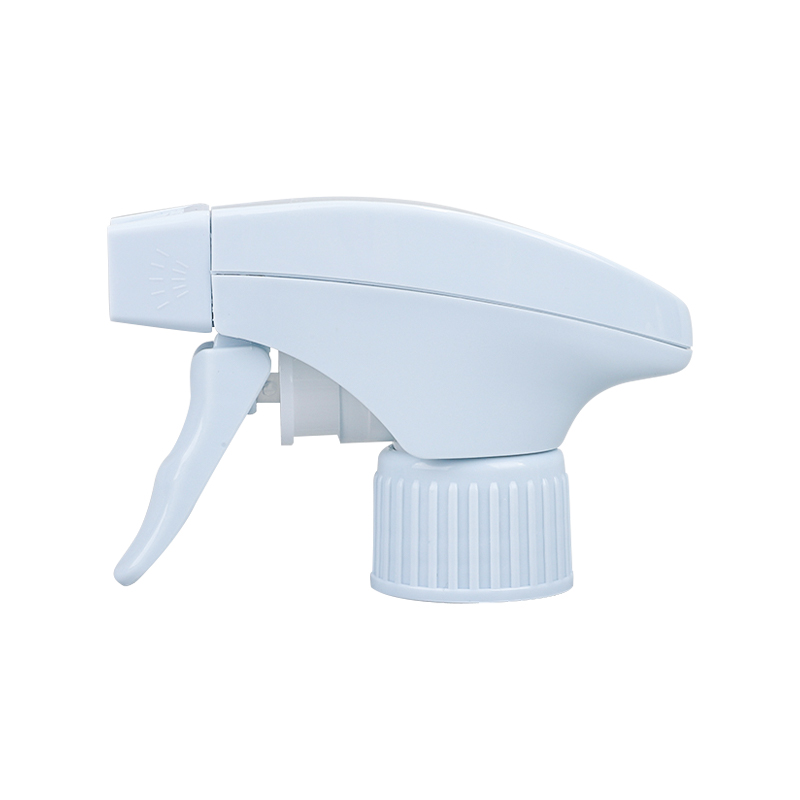
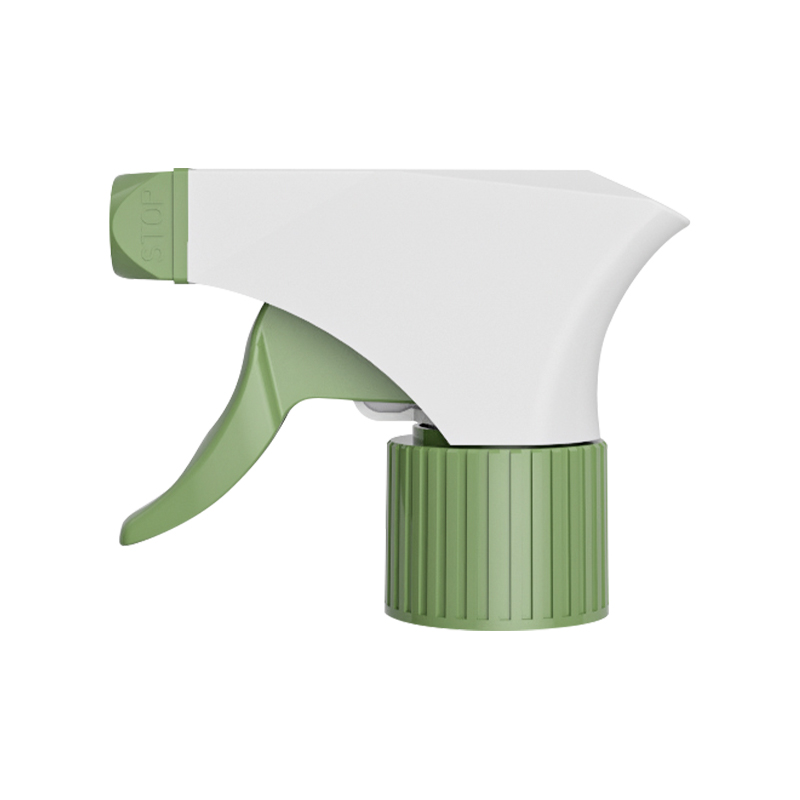 All Plastic Trigger Sprayer with Leak-Proof SealA fully plastic trigger sprayer with a tight sealing structure that prevents leakage even when inverted. It offers stable spraying, corrosion resistance, and lighter shipping weight, making it practical for humid filling lines and chemical-rich environments.View Product →
Material choice also affects logistics and filling. An all-plastic head is lighter in shipment, avoids corrosion in humid filling lines, and keeps the assembly process cleaner because there is no mixed-material residue to control.
Where Adjustable Trigger Sprayers Earn Their Keep
Adjustable heads pay for themselves in any category where one liquid needs more than one dispensing mode, or where a family of products can share a single component. The most common settings are:
- Household cleaning: surface sprays, glass cleaners, bathroom descalers, and stain removers that alternate between mist and a targeted stream.
- Automotive care: tire dressings, dashboard protectants, and degreasers that need a coarse spray for large panels and a stream for tight areas.
- Garden and plant care: foliar sprays and dilute chemical applications where droplet size directly affects coverage and safety.
- Personal care: setting lotions, body mists, and scalp treatments where users expect a fine, even mist.
- Light industrial and professional cleaning: concentrates diluted on site and applied through one head with locked or limited trigger positions.
NoteFor products shipped internationally or stored across seasons, confirm that seals and springs hold up between roughly -5 °C and 50 °C. Temperature swings change plastic flexibility and can turn a small leak into a costly return.
Leakage, Locking, and Safe Transport
Leaks are the most common field complaint in trigger sprayer packaging. They appear during filling, in the warehouse, and on retail shelves, usually traced to a mismatched closure, a weak seal, or a trigger that can be pulled accidentally. An adjustable head with a solid lock position closes that gap.
Lock positions do more than stop leaks. A half-locked trigger limits the stroke, enabling a controlled partial dose; a fully locked trigger prevents discharge during shipping and makes the bottle safer to handle in retail. For export packaging, that difference shows up directly in fewer damaged cartons and fewer customer returns.
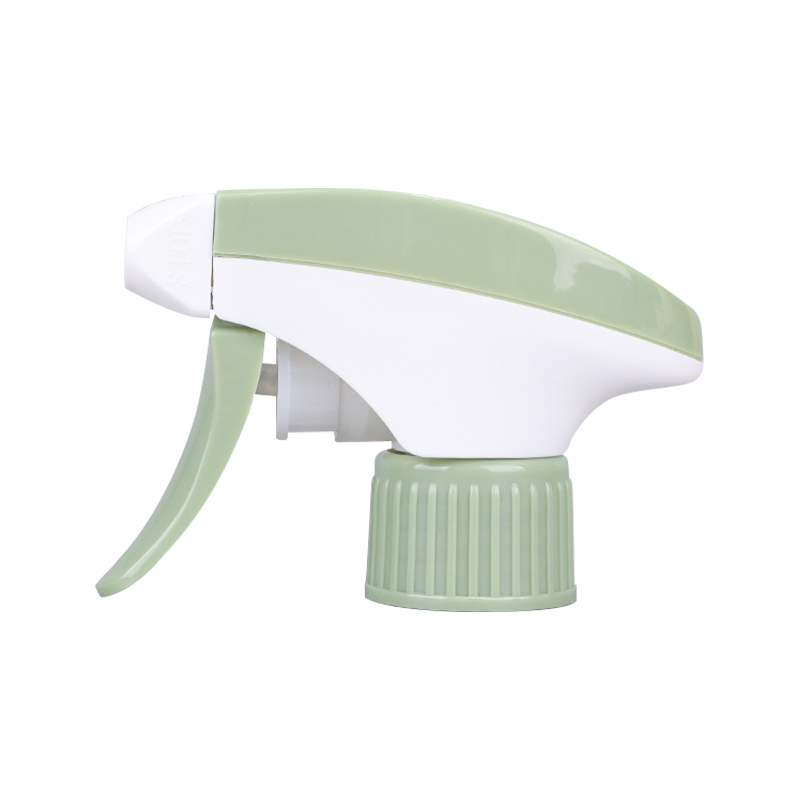 Leak-Proof Plastic Trigger Sprayer with Lock PositionsThis sprayer features a precise sealing structure and adjustable lock positions, preventing leaks during transit and enabling controlled dosing. Its plastic construction resists corrosion, making it reliable for export packaging and retail handling.View Product →
If you are moving into new export markets, consider how the head behaves under transit vibration and pressure changes. The same care principles we cover in our practical notes on trigger sprayer maintenance and environmental considerations apply to adjustable designs.
Working With a Supplier: Samples, Tolerances, and Timelines
Once the design is validated, sourcing becomes a question of execution. A trigger sprayer looks simple, but plastic grade, spring tension, and assembly tolerance all reveal themselves in batch-to-batch consistency.
- Request functional samples with your exact dip tube length and neck finish before discussing price.
- Ask for cycle test results and chemical compatibility data covering your formula range.
- Confirm pilot run quantities, lead times, and how defects found at filling are handled.
- Check the supplier's distance from your export ports; shorter sea freight reduces inventory pressure.
SuccessWhen the sample survives your own filling line, a transport simulation, and a 30-day storage trial, you have a design worth scaling.
Supplier location matters more than an attractive unit price. EAED operates from Yuyao, Zhejiang, close to both Ningbo and Shanghai ports, with mold making, injection molding, and automated assembly under one roof. That integrated structure shortens the gap between prototype and production run and makes specification changes easier to manage.
An adjustable trigger sprayer will not fix a weak formula, and it cannot turn a mismatched bottle into a perfect fit. But when the head, liquid, and bottle are designed as one system, an adjustable head reduces SKUs, improves the user experience, and lowers the total cost of packaging — not because it is the cheapest component, but because it replaces several.
Start with the bottle and the formulation. Confirm the adjustment points that matter for your audience. Validate with real-liquid samples, and then scale with a supplier who can hold tolerances across production runs. That sequence produces more successful trigger sprayer launches than any single component specification.
If you are mapping out a new dispenser line, the trigger sprayer range at EAED covers all-plastic, metal-free, leakproof, and high-output options, and the engineering team can help you decide which adjustable features fit your formula family.

 English
 русский
 Français
 Español
 italiano