EAED Procurement Brief
Choosing a Heavy Duty Industrial Trigger Sprayer That Survives the Job
The spec that matters is not how the plastic looks, but how the pump behaves after ten thousand strokes in contact with the liquid you actually use.
When a procurement team asks about heavy duty industrial trigger sprayers, the conversation usually starts with the wrong question: which model looks toughest. In our experience producing spray pumps for cleaning, personal care, and specialty chemical packaging, the units that fail early rarely break because the housing cracked. They fail because the spring corroded, the ball valve stuck, or the seal lost contact after weeks of chemical exposure. A heavy duty sprayer is not a heavier version of a household trigger. It is a different set of engineering priorities, applied to the realities of a filling line and a work floor.
What Makes a Trigger Sprayer Heavy Duty
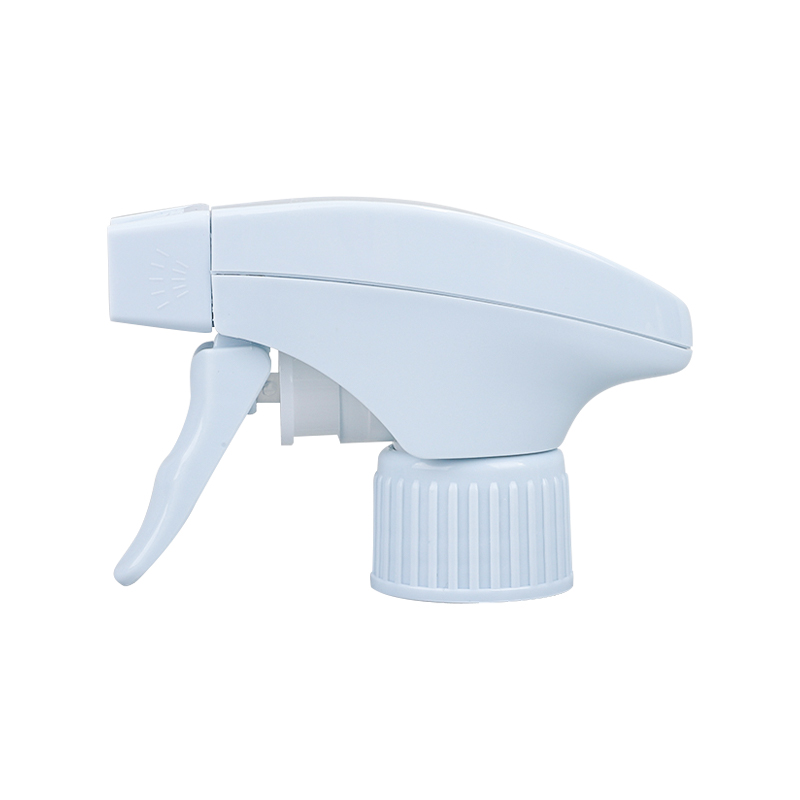
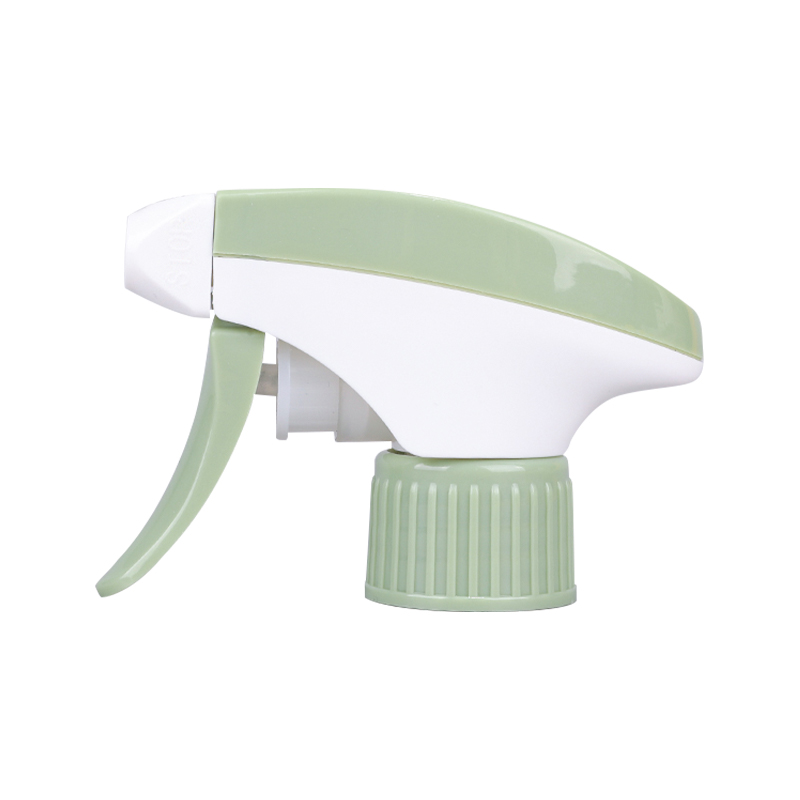
Three design decisions separate an industrial-duty sprayer from a household one: material compatibility, output consistency, and seal durability. You can evaluate all three before committing to a supplier.
- Material compatibility. The pump has to tolerate what it touches every shift. Metal springs in standard sprayers corrode when exposed to bleach, degreasers, or acidic cleaners. An all-plastic pump or a metal-free spring design removes that entire failure path.
- Output consistency. Heavy duty means each pull of the trigger produces a predictable dose. In degreasing, disinfection, or mold release, inconsistent output changes how much chemistry reaches the surface, and that changes the result.
- Seal durability. Liquid has to stay inside the system. Leaks around the trigger pivot, the nozzle, and the closure cause lost product, messy bottles, and packaging line downtime.
The most expensive trigger sprayer is the one that fails fifty thousand strokes before the bottle is empty. By then, you have already paid for it in downtime and rework.
Start With the Liquid, Not the Sprayer
Industrial trigger sprayers meet aggressive liquids, and the single most common cause of early failure is incompatibility between the pump's internal materials and the chemical being sprayed. Chlorine-based cleaners, solvent degreasers, and acidic descalers attack different parts of the pump in different ways. Before you compare prices, compare the bill of materials against your formulation.
Liquid chemistry determines which heavy duty sprayer specification can actually survive daily service.
| Liquid family |
What the sprayer needs |
Typical failure without it |
| Oxidizing cleaners (bleach, hydrogen peroxide) |
Metal-free spring, all-plastic internals |
Spring corrosion, stuck trigger |
| Solvent-based degreasers |
Chemical-resistant seals, PP housing |
Seal swelling, housing softening |
| Acidic descalers |
Acid-tolerant spring and ball |
Metal etching, valve leakage |
| High-viscosity lubricants |
High-output pump, larger internal passages |
Starved suction, weak spray |
| Foaming detergents and soaps |
Foam nozzle or high-output liquid path |
Inconsistent foam, overspray |
Warning A sprayer that is safe for one chemical family is not automatically safe for another. The housing may tolerate a formula while the spring or the gasket fails within days. Ask the manufacturer for material compatibility data before you standardize on any heavy duty trigger sprayer.
For chlorinated or oxidizing formulas, a metal-free spring trigger sprayer sidesteps the most common corrosion failure point. Removing the metal spring changes the maintenance profile of the pump, which is why this configuration is increasingly specified for concentrated cleaning lines.
Output Per Stroke Changes Everything
Industrial users do not think in grams per stroke; they think in jobs per bottle. A typical household trigger sprayer delivers in the neighborhood of one milliliter per pull, which forces an operator to squeeze several times to cover a surface. A high-output heavy duty sprayer is engineered to move more liquid per stroke, cutting the number of pulls per bottle and reducing hand fatigue across a shift.
Useful benchmark During sample evaluation, count the strokes required to empty a one-liter bottle. A truly heavy duty unit should complete the job with visibly fewer strokes than a standard trigger. If it does not, the difference between the two products is mostly cosmetic.
Output becomes even more relevant when the liquid is thick. High-viscosity formulations, from lubricants to heavy degreasers, need a larger internal channel and a spring strong enough to recover the pump chamber reliably. A sprayer that starves for liquid on the upstroke will produce a sputtering pattern no matter how sturdy the housing feels.
A high-dose sprayer addresses exactly this gap. It is built for applications where each squeeze has to deliver enough chemistry to matter, and where viscosity would defeat a standard pump chamber.
Seals, Leak Paths, and the Cost of Downtime
A leak is not just a messy bottle. On a packaging line, a leaking sprayer contaminates labels, jams capping stations, and creates product loss that is hard to trace. In a workplace, it puts concentrated chemicals on hands and floors. The seals around the nozzle, the trigger pivot, and the closure are the parts most often under-specified.
Leakproof configurations close off the usual escape routes, and inverted trigger sprayer designs let the pump operate when the bottle is stored upside down, which is useful for cleaning products that must spray into tight spaces without tipping the container. If your filling line runs fast or your product ships in mixed orientations, this is not a premium feature; it is the baseline.
Danger Never pressurize a trigger sprayer bottle. Trigger sprayers are designed for atmospheric dispensing, not continuous pressure. A flexible container under pressure can burst and send chemical toward the operator. If the application requires pressure, specify a regulated pressure sprayer instead of trying to make a trigger unit perform beyond its design.
Leakproof plastic trigger sprayers are a direct answer to these concerns. They are specified when transport, storage, or repeated handling makes a dripless pump a practical requirement rather than an afterthought.
A Procurement Checklist That Predicts Performance
Formal specs mean little if the sample fails under your conditions. Run every candidate heavy duty industrial trigger sprayer through the same routine before you commit.
- Confirm the neck finish first. A 28-400 and a 28-410 opening look similar but thread differently; this single mismatch has stopped more packaging projects than any pump defect.
- Measure output per ten strokes with the real chemical, not with water. Viscosity and surface tension change how the pump behaves.
- Cycle the trigger at least twenty thousand times under a realistic load, then inspect the spray pattern for air suction and drift.
- Soak the disassembled pump in the chemical for seventy-two hours. Check the spring, the ball, and the gasket for weight loss, swelling, or discoloration.
- Test the bottle in the orientation it will actually be stored and used. Upright, inverted, and side positions produce different leak and suction behavior.
- Ask how the pump is assembled. Automated assembly lines produce far more consistent trigger action than hand assembly, especially over long production runs.
Vertical integration matters here. We build the molds, run the injection molding, and assemble the pumps in the same facility, which gives us control over the tolerances that determine service life. When we ship a heavy duty trigger, the quality is not a batch lottery.
A deeper explanation of trigger sprayer functionality and application can be found in the technical guide to trigger sprayer functionality and applications we published for packaging teams.
Reading a Supplier's Heavy Duty Claim
Documentation matters more than adjectives. A credible supplier will share material data, cycle test results, and compatibility charts, and will ask you for the chemical formula before recommending a configuration. If a sales page says heavy duty but cannot explain what actually changed inside the pump, treat the claim as marketing.
Success indicator When a supplier looks at your formulation and, within a week, recommends a specific spring material, seal elastomer, and nozzle style, you have found a partner you can build a packaging line around.
Geography matters more than most buyers expect. Our production base in Yuyao sits within easy reach of both Ningbo and Shanghai ports, which shortens lead times and makes emergency restocking a logistics conversation rather than a supply crisis.
The complete range of trigger sprayer configurations, including structural variations such as metal-free springs, leakproof seals, and foam nozzles, is available on the EAED official website.
The right heavy duty industrial trigger sprayer is the result of a simple engineering conversation: what liquid is inside the bottle, how many strokes will the sprayer make per shift, and what happens when it stops working correctly. Once those three questions are answered, the decision stops being about how the sprayer looks and starts being about internal materials, seal geometry, and output rate. A sprayer that respects your chemistry, keeps its output predictable through hundreds of thousands of strokes, and never leaks is not a commodity component. It is one of the cheapest insurance policies your packaging line will ever buy.

 English
 русский
 Français
 Español
 italiano