Every Part of a Trigger Sprayer, and Why It Matters
The nozzle gets the credit, but the piston, spring, valves, gasket, and dip tube decide how a sprayer performs on the line, on the shelf, and in the customer's hand.
A customer complaint arrives three weeks after a new all-purpose cleaner reaches the shelf: the sprayer spits, drips, and leaks around the neck. The formula is stable, the label is approved, and the bottle passes its drop test. The problem is mechanical, and it lives inside the trigger sprayer.
For brands, private-label producers, and contract fillers, the trigger sprayer is the most user-facing part of the package. It determines how much liquid each squeeze delivers, whether the bottle arrives dry, and whether the product feels precise or messy. This guide breaks down each part of a trigger sprayer, explains what that part does under real use, and lists what to verify before you approve a production order.
The trigger sprayer is the only moving part on the entire package. Every moving interface is a place where quality shows up or fails.
How the Pump Mechanism Works in a Trigger Sprayer
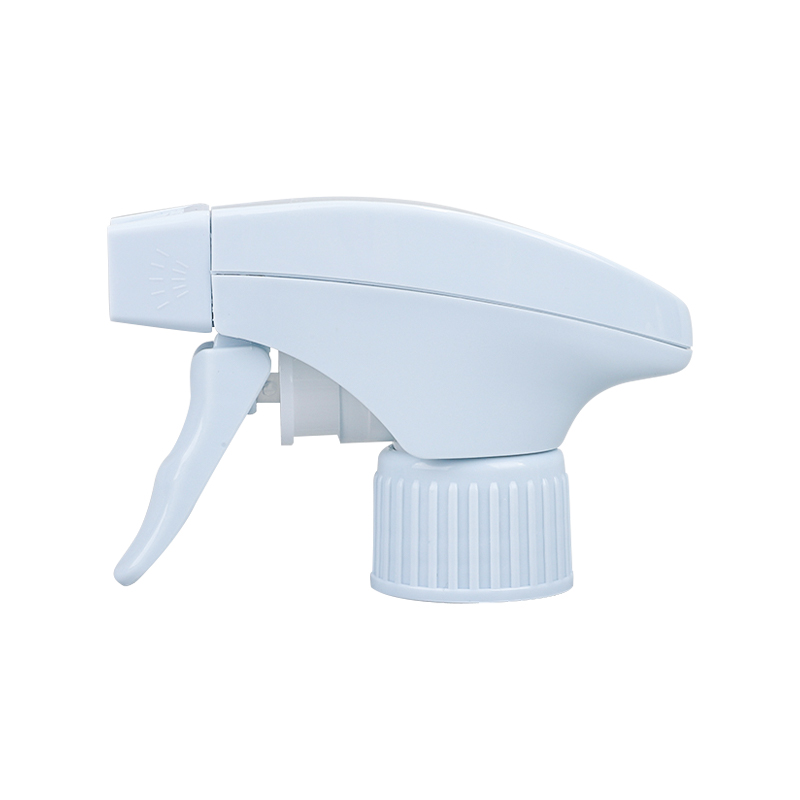
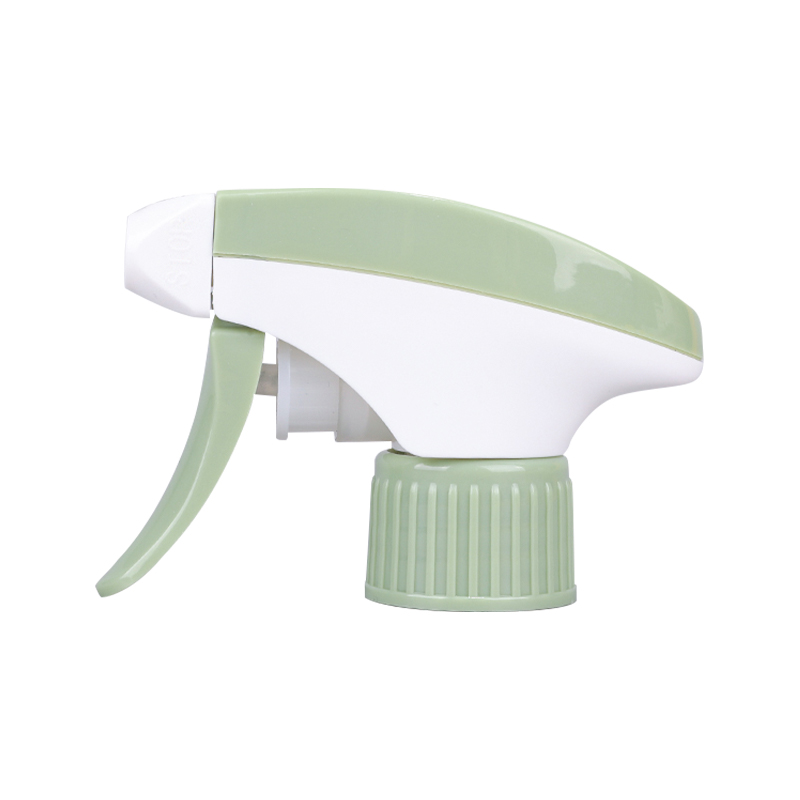
A trigger sprayer is essentially a small positive-displacement pump. Pressing the trigger pushes a piston forward inside a cylinder, closing the intake valve and forcing pressurized liquid out through the discharge channel and the nozzle. Releasing the trigger lets a return spring push the piston back; that return stroke opens the intake valve and draws a fresh charge of liquid up through the dip tube. Each complete cycle therefore meters a fixed volume of liquid.
The trigger lever is the user interface. Its pivot width, arm length, and finger-pad geometry determine how comfortable the sprayer feels over dozens of pulls. A lever that flexes at the pivot or binds partway through the stroke is one of the first weaknesses reported in durability testing.
The piston moves inside the pump cylinder and is usually molded from polypropylene or polyethylene. It must hold a close but smooth fit. Too much clearance produces a weak seal, which makes the sprayer lose prime or drizzle from the nozzle; too tight a fit makes the trigger stiff. In practice, the piston-to-cylinder tolerance is a stronger quality signal than the apparent thickness of the outer plastic.
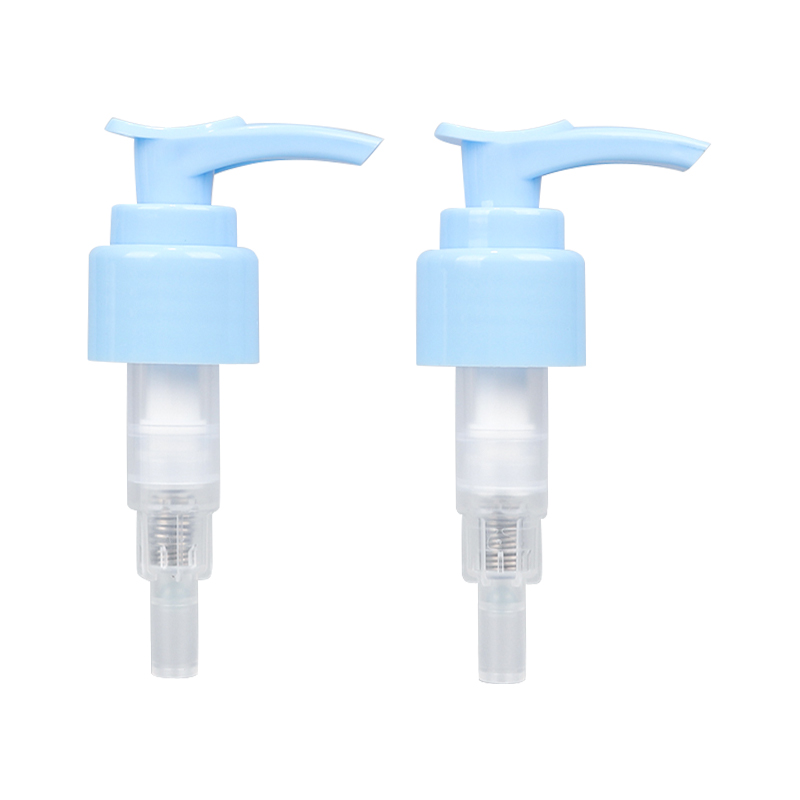
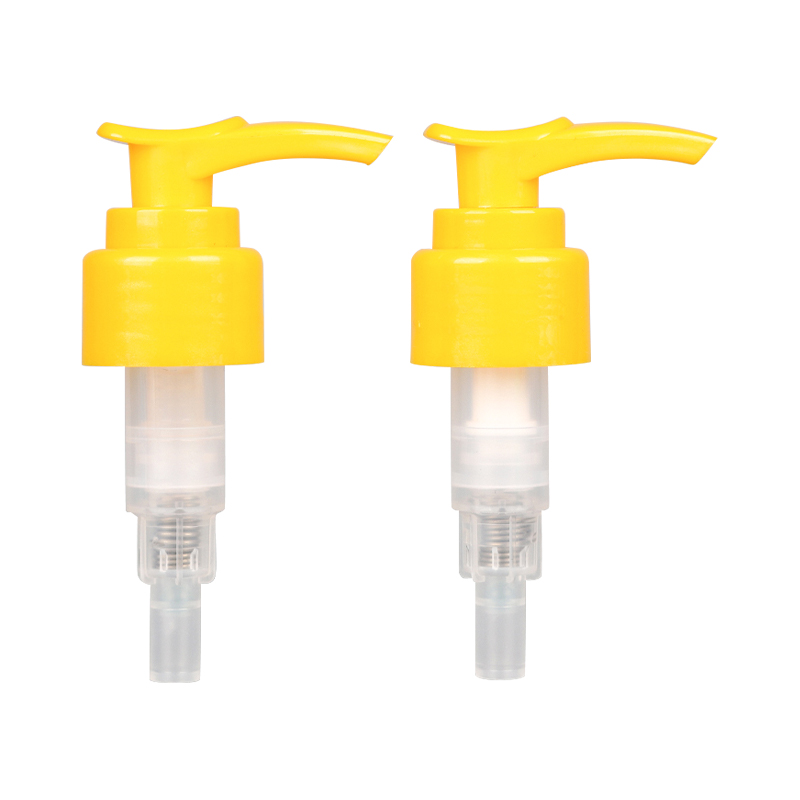
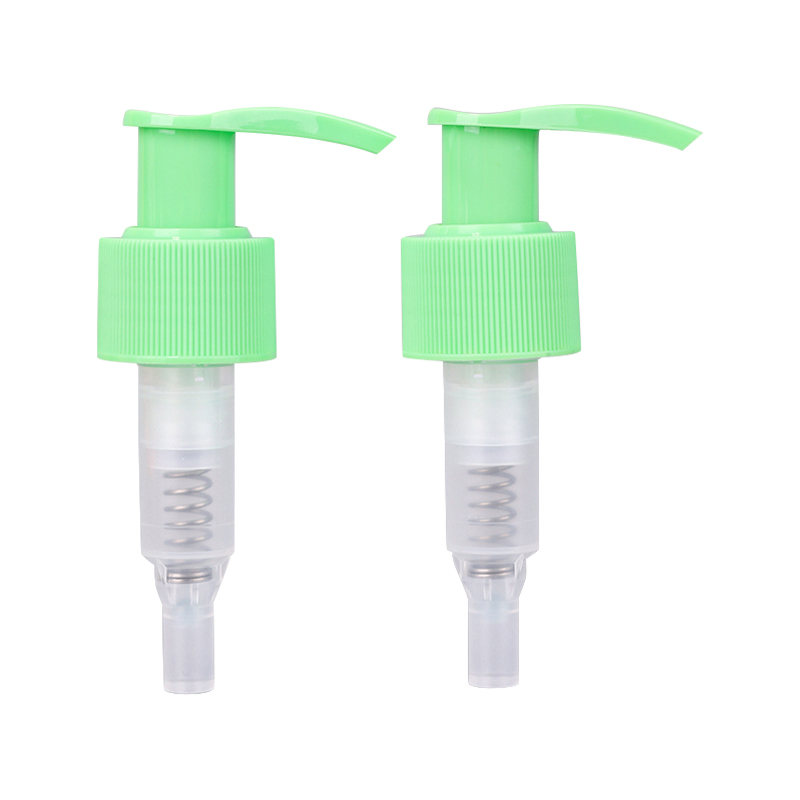
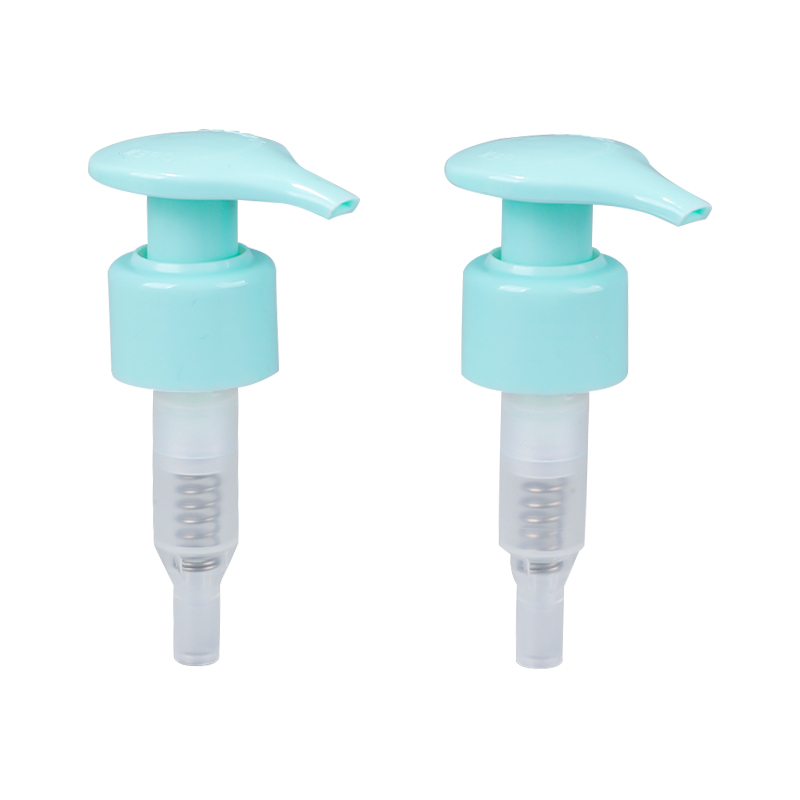
The spring returns the piston and keeps the pump ready for the next cycle. Stainless steel springs resist corrosion in most formulas, but products containing bleach, hydrochloric acid, or strong oxidizers can attack metal over time. Corrosion reduces stroke volume, tints the liquid, and shortens service life. That is why all-plastic, metal-free spring constructions are increasingly specified for cleaning chemicals.
Why all-plastic matters beyond chemistry: a metal-free construction also simplifies recycling. If your brand communicates recyclability on the label, a trigger sprayer without exposed steel is materially easier to position credibly.
The Nozzle and the Spray Pattern It Produces
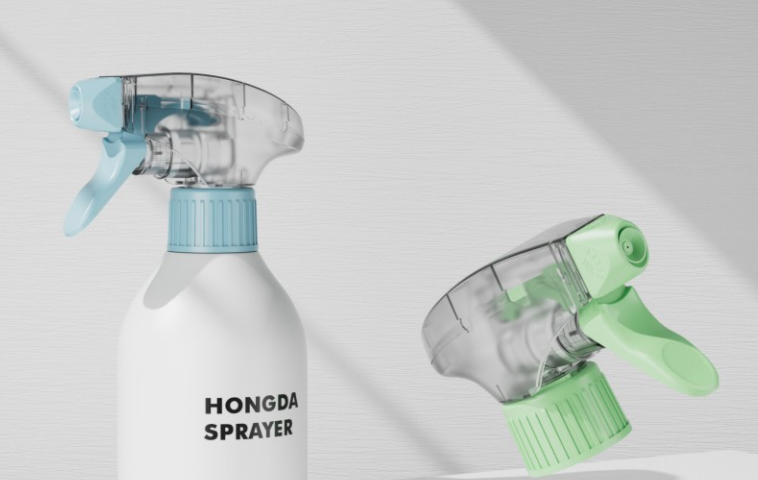
The nozzle is the visible tip, but it is really a metering device. Inside it, a swirl chamber and a precisely sized orifice shape the liquid into a mist, a jet, or a foam. Output volume and spray width are decided here, and they determine whether the user experiences a fine even cover or a narrow forceful blast.
Spray patterns by application
- Fine mist — droplets in the 50–150 micron range, ideal for fragrances, disinfecting sprays, and plant care where even coverage matters more than speed.
- Stream — a concentrated jet for spot cleaning, automotive chemicals, and crack-and-crevice applications.
- Adjustable — a rotating collar that switches between mist and stream, giving a single bottle two behaviors.
- Foam — a nozzle with an internal mesh that mixes air with liquid, used for soap and surface cleaners where cling and visible coverage help.
Some nozzles also carry the shut-off valve. In an adjustable nozzle, rotating it to the closed position seals the discharge opening and keeps liquid inside the pump during transport. This is a separate seal from the bottle-neck gasket, and it is a common place for inexpensive sprayers to leak after weeks on the shelf.
Foam nozzle designs add a mixing stage and a few extra parts. They are popular because foam clings to vertical surfaces, gives clear visual feedback, and consumes less liquid per application.
Check the output number: output is usually stated in cubic centimeters per stroke. A standard trigger sprayer delivers roughly 0.6–0.8 cc; high-output models reach 1.2–1.5 cc. Match this to the dosage instructions printed on your label.
The Dip Tube Determines Pickup and Residual Liquid
The dip tube runs from the pump body to the bottom of the bottle. Liquid is drawn through its lower end on every suction stroke. The distance between the tube end and the container floor is the residual, the amount your customer cannot reach. A tube cut too short leaves usable product behind; a tube that is too long presses against the bottom, deforms, and can block the intake.
Most dip tubes are polyethylene, which suits typical household and personal-care formulas. Aggressive solvents can soften some tube materials, so the tube must be checked against the formulation just like the gasket and spring. Many tubes are bevel-cut at the tip so the opening does not sit flat against the container wall.
Inverted trigger sprayers avoid the dip tube entirely. They use a weighted inlet or a ball valve at the side of the pump body, which keeps the pickup point in the liquid even when the bottle is upside down. These designs are common for under-sink cleaners and car detailing products, but they depend on a leak-proof seal across the entire pump.
Closure, Gasket, and the Seals That Stop Leaks
The closure, or cap, fixes the sprayer to the bottle. The critical specification is the neck finish, the standardized thread-and-diameter code such as 24-410 or 28-400. The closure must match the bottle's finish exactly in thread pitch, diameter, and sealing surface. Forcing a 24-410 sprayer onto a 24-400 bottle can cross-thread, leak, or both.
The gasket sits between the closure and the bottle rim. Loose LDPE and foam inserts are common, as are bonded in-mold gaskets. The gasket absorbs microscopic roughness on the rim, and its material compatibility is easy to overlook until leaks appear.
Gasket compatibility is chemistry: not all gaskets tolerate alcohol, hydrocarbons, or concentrated surfactants. A foam gasket can swell in ethanol and lose its seal; some elastomers become brittle in acid cleaners. Verify gasket compatibility with your formula before committing to a production run.
Two more seals complete the system. A piston seal inside the cylinder prevents liquid bypass during priming, and a turret seal keeps liquid from migrating between the pump body and the closure. In well-executed all-plastic sprayers, these seals are formed by precision-molded interference fits rather than by added rubber parts, which removes a common aging failure point.
Two Small Valves Control Every Drop
Every trigger sprayer contains two check valves. The intake valve, at the bottom of the pump cylinder or at the top of the dip tube, opens on the suction stroke and closes when the piston presses forward. The discharge valve does the opposite, preventing liquid in the discharge channel from falling back into the chamber.
The classic intake design is a ball valve: a plastic or stainless-steel ball that rests in a conical seat. If the ball is not perfectly round, or the seat carries molding flash, the valve can hang open or closed. The symptoms are a sprayer that refuses to prime, one that sucks air, or one that needs several pulls before the first full spray.
A filter or strainer at the bottom of the dip tube is a low-cost addition that stops particles from reaching the valve. It is especially worth specifying when filling into glass bottles, where rinse-water scale or tiny fragments can migrate into the pump and cause intermittent jams.
What to Inspect Before You Place a Trigger Sprayer Order
Trigger sprayer performance rarely matches what a catalog photo implies. Field complaints follow a predictable pattern, and each pattern points to a specific part worth checking before production.
Table 1. Key trigger-sprayer parts, common failure modes, and the inspection points that prevent them.
| Part |
Typical failure |
What to check |
| Trigger lever |
Breaks at the pivot or flexes |
Pivot width, molded-in hinge design, material grade |
| Piston / cylinder |
Weak output, drooling, loss of prime |
Piston-to-cylinder clearance, surface finish |
| Spring |
Corrosion, loss of return force |
Material: stainless steel or metal-free plastic |
| Nozzle |
Wrong spray pattern, tip leaking |
Orifice geometry, swirl chamber, nozzle shut-off seal |
| Dip tube |
High residual, blocked intake |
Tube length, bevel, material, presence of a filter |
| Closure / gasket |
Neck leak, cross-threading |
Neck-finish compatibility, gasket material and recovery |
| Ball valve |
Fails to prime, air in the line |
Ball roundness, seat cleanliness, spring tension |
A qualified supplier will share dimensional drawings, resin data, cycle-test results, and leak-test conditions. If the supplier cannot explain how the spring, valve, and gasket behave with your chemistry, that is a red flag. Ask for the numbers — output per stroke, cycle count, leak-test temperature and duration — and compare them across quotes.
Approve the right sample: only approve a sprayer on the basis of a production sample made with the same tooling, same resin, and same assembly line. A hand-built prototype says nothing about consistency across millions of units.
Because “heavy duty” is not a regulated term, the label alone is worthless. The specification is what matters. Standardize your test protocol, keep a control sample from every batch, and write the supplier's data into the contract. For a broader view of how trigger sprayers are used across cleaning and personal-care categories, see our detailed guide to trigger sprayer functionality and applications.
A trigger sprayer is a small assembly of roughly ten to fourteen parts, depending on the nozzle type and the inlet configuration. The quality of each part matters less than the quality of the interfaces between them. The nozzle determines perceived spray quality; the valve system determines priming speed; the spring determines durability; the gasket determines whether the bottle reaches the shelf dry.
When you compare sprayers, start with four questions. Is the spring material compatible with the formula? Does the closure match the bottle neck finish? Is the dip tube sized for your bottle geometry and residual target? Is the nozzle output matched to the label dosage? Answer those four, and most of the common field failures will never reach your customers.

 English
 русский
 Français
 Español
 italiano