PCR Mini Trigger Sprayers: What Recycled Resin Really Costs You
A buyer's guide to mini trigger sprayers built with post-consumer recycled resin: what each PCR band changes, which tests decide approval, and why small geometry fails before big geometry does.
Ask a packaging engineer what goes wrong when a mini trigger sprayer moves onto post-consumer recycled resin, and you rarely hear about the spray pattern. You hear about a living hinge that whitened after three thousand strokes, a batch of white bodies that arrived the colour of weak tea, and a container load of bottles with a film of cleaner on the cartons.
So here is the conclusion first. Thirty to fifty percent PCR is routine for mini trigger sprayers today. Seventy percent is achievable, but it changes your colour tolerance, your cycle time and your drop-test margin. Near-100 percent mono-material builds work only when the body, lever, spring, dip tube and closure move into the same resin family together. The mini format sharpens every one of those constraints, because a 10-gram body has far less material in it to absorb a weak batch of recyclate than a 30-gram full-size trigger does.
How Much Recycled Content a Mini Trigger Can Actually Carry
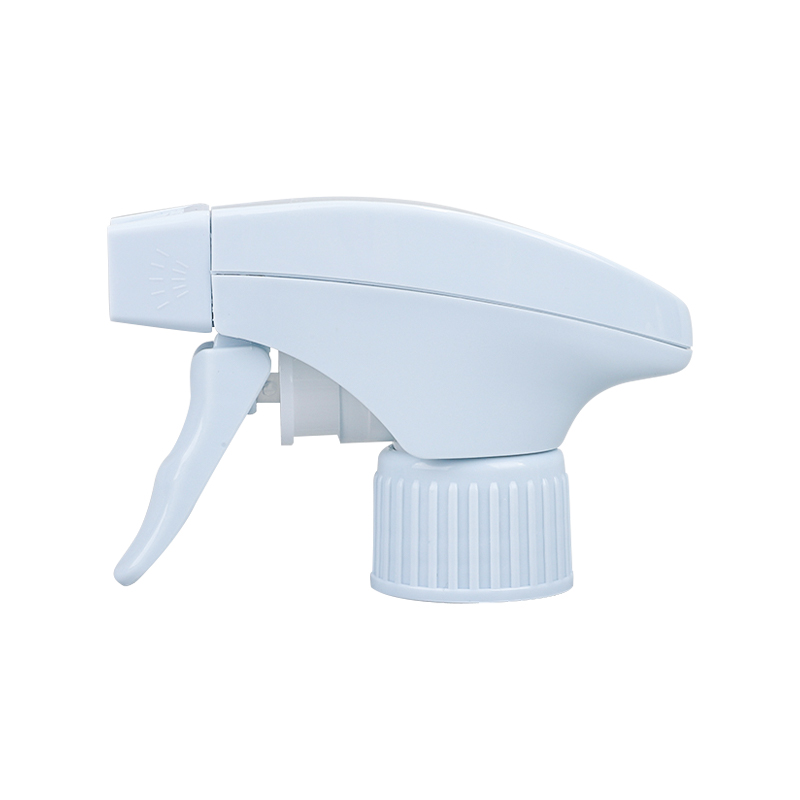
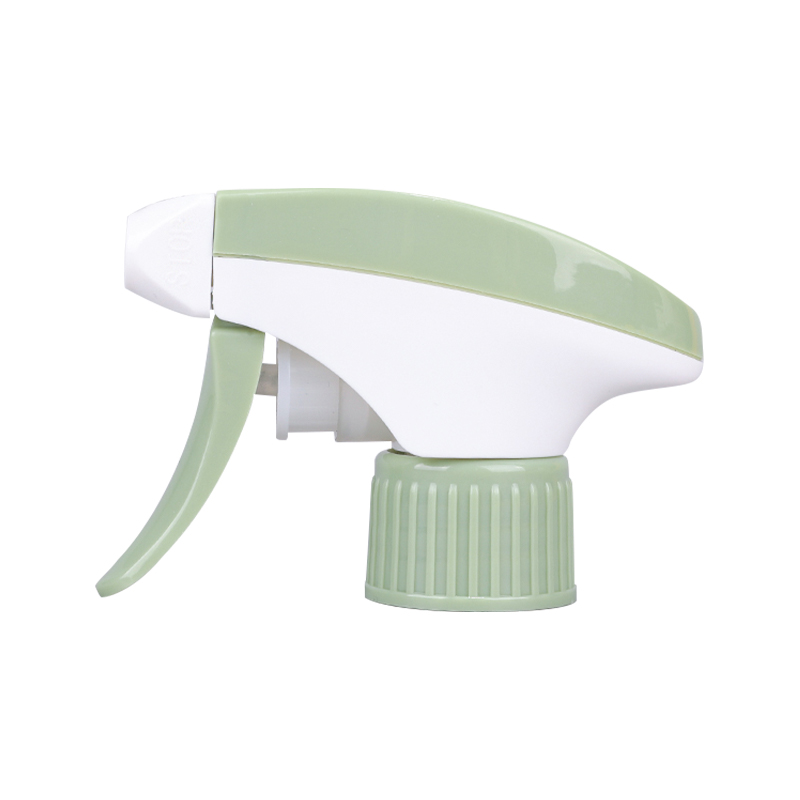
Mini trigger sprayers commonly weigh 9 to 14 grams, against 25 to 32 grams for a standard 28/410 full-size trigger. That gap is the whole story of PCR in this format: the same recycled percentage has to carry the same mechanical duties through thinner walls, a shorter flow path and a smaller hinge.
Recyclate is not virgin resin with a green label. Post-consumer rPP arrives with residual odour, gel particles, occasional black specks and a wider melt-flow window from lot to lot. In a heavy body a molder can work around some of that variation; in a mini trigger the process window is narrow enough that it shows up as flash at the nozzle post or short shots in the lever pivot.
Three bands cover most projects. Up to 30 percent rPP, colour matching to a Delta-E around 1.0 is realistic and the cost gap against virgin is small. At 50 percent, colour drift becomes visible under retail lighting, so brands shift toward darker or neutral palettes. At 70 percent and above, odour control becomes its own project, cycles typically stretch by 8 to 12 percent, and incoming inspection needs a speck count rather than a glance.
Why Mini Geometry Punishes Recycled Resin First
The living hinge fails first. A mini trigger is expected to survive 5,000 to 10,000 actuations, and the hinge flexes through a full arc every time. Recycled polypropylene has lower impact strength and lower elongation at break than virgin, so the hinge whitens earlier and can split along the fold line. Thickening that section by 0.2 mm often fixes it, at a cost in weight and in the feel of the lever.
Cold weather exposes the same weakness. A unit that passes a room-temperature drop test can crack at minus 10 degrees, which a brand shipping into northern markets discovers at the worst possible moment.
Recycled content starts as a material decision. In mini trigger sprayers it quickly becomes a geometry decision, because the grade that passes in a 30-gram body can fail in a 12-gram one.
Matching the PCR Level to the Liquid Inside the Bottle
Chemistry and recycled content have to be chosen together. Environmental stress crack resistance is the link: recycled PP and HDPE carry more residual contamination and more crystalline variation, which makes them more sensitive to surfactants, solvents and fragrance under constant load from the spring and the closure.
Indicative PCR bands for mini trigger sprayers; the final level depends on the grade, the wall section and the chemistry inside the bottle.
| PCR content |
Typical resin |
Comfortable chemistry |
Main trade-off |
| 25-30% |
rPP from post-consumer packaging |
Dilute all-purpose, glass and water-based formulas |
Minimal; colour and cost stay close to virgin |
| 40-50% |
rPP or rPP and rHDPE blend |
Household cleaners with 1-3% surfactant |
Slight colour drift; ESCR testing becomes mandatory |
| 60-70% |
Closed-loop rPP, opaque grades |
Neutral colours, low-fragrance formulas |
Odour, longer cycles, black speck control |
| 90-100% |
Mono-material rPP body, lever, spring and tube |
Water-based, low-solvent formulas |
Tooling tweaks, new sealing validation, narrow colour range |
A quick way to sanity-check any proposal is to ask which grade, from which source stream, and what the ESCR result was with your concentrate rather than with water.
Info: "PCR rPP" can mean post-industrial regrind, which behaves quite differently from post-consumer bottle flake. Ask for the technical data sheet and the source stream before you quote a percentage to your own customers.
Five Checks Before You Approve a PCR Mini Trigger
Approval testing for recycled mini triggers is not much longer than for virgin ones, but the sequence matters. Run these five before you sign off a mould or a colour master.
- Drop test hot and cold. Six-face drops from 1.2 m at minus 10 C and at 40 C, on filled and capped samples, because recycled bodies lose impact strength at both ends of the range.
- ESCR immersion. Fill with the real concentrate, hold at 50 C for 72 hours, then inspect the closure thread and body shoulder for crazing.
- Hinge cycling. 5,000 strokes minimum and 10,000 preferred, checked under magnification every 1,000 strokes for whitening and micro-cracks.
- Output consistency. Weigh 20 consecutive strokes; plus or minus 5 percent around the nominal dose is a reasonable production window for a mini trigger.
- Odour and colour panel. Sniff-test capped samples after 24 hours, then measure Delta-E against the approved master under both daylight and warm retail lighting.
Warning: Transport simulation is where PCR mini triggers separate from virgin ones. Vibration combined with 40 C storage loosens tolerances that looked fine on the bench, so test the packed shipper rather than the sprayer alone.
Spring, Seal and Closure: The Recycling Details Buyers Forget
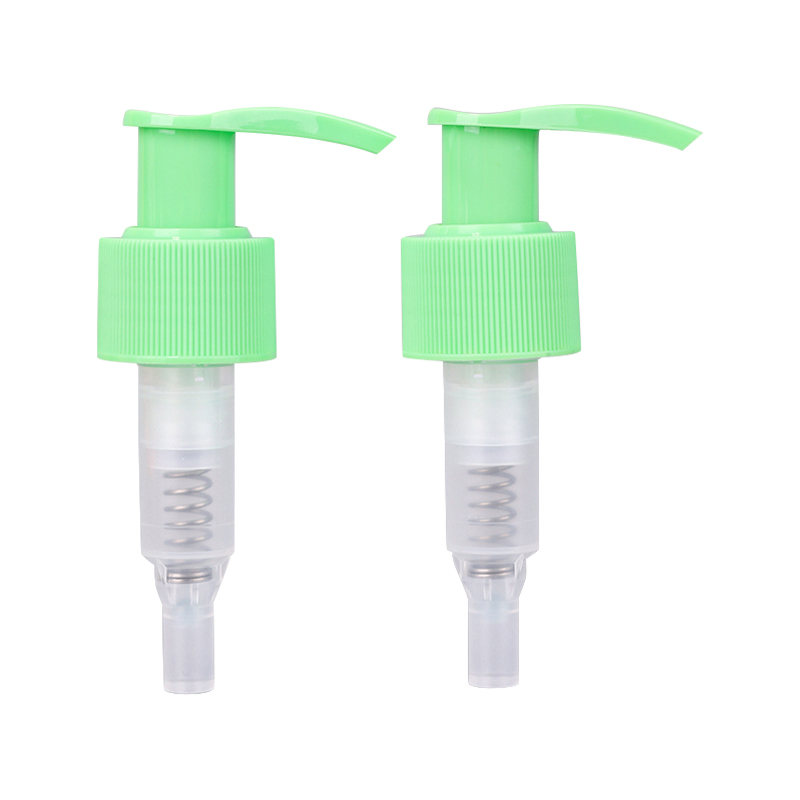
The PCR number printed on the body is the headline; the spring is the real recyclability story. A stainless steel spring inside a PP sprayer forces the consumer to separate parts, and in practice the whole assembly goes to residual waste. Metal-free and all-plastic designs solve that, which is why mono-material triggers have moved from a niche request to a standard line item in European tenders, especially since the new sustainable packaging standard pushed design-for-recycling requirements further into the supplier qualification file.
Closure sizing deserves the same attention. Mini triggers are usually built on 24/410 or 28/410 necks, and recycled resin shrinks slightly differently from virgin, which shows up as torque variation after a week on the bottle. Specify a torque range, a liner material and a re-torque check at 24 hours, then verify again at eight weeks.
Success: When the body, lever, spring, dip tube and closure liner are all polypropylene, the sprayer can usually stay on the bottle in a mono-material recycling stream, and that claim can be verified with a simple float-sink and magnet check.
Leak Integrity: The Test That Fails Most Often
Leakage is the complaint that reaches the brand, not the molder. Two failure modes dominate in PCR mini triggers. The first is creep: recycled resin deforms slowly under the constant load of the spring and the closed nozzle, so a unit that seals perfectly on day one can weep after six weeks in a warehouse at 35 C. The second is inverted use. Triggers designed to spray upside down, for bathroom and glass cleaners, put the seal under a different stress path, and any porosity in a recycled nozzle post becomes a drip.
Store filled, assembled samples horizontally and upside down for eight weeks at 40 C, and run a packed-carton vibration profile before approving the design.
Cost, MOQ and Lead Time in Real Projects
Recycled content is rarely the cheapest line on a quote, and rarely the most expensive. The variables that move most are these.
- Resin price. PCR rPP often trades at or slightly above virgin depending on market and source stream, so the return sits in brand positioning rather than unit cost.
- Colour. Hitting a light shade at 50 percent PCR usually needs higher masterbatch loading, which offsets part of the resin saving.
- Cycle time. Expect 8 to 12 percent longer moulding cycles at 70 percent PCR, because the melt is stiffer and cooling behaviour changes.
- Start-up scrap. First-run scrap of 5 to 8 percent over the first two weeks is normal while the process window is settled.
- MOQ. A colour-matched PCR mini trigger typically starts around 30,000 to 50,000 pieces, with tooling amortised separately.
- Lead time. Add two to three weeks for grade qualification, ESCR testing and a colour master approval cycle.
What a Workable PCR Mini Trigger Programme Looks Like
Lock the chemistry first, then the PCR band, then the geometry. That order prevents the most expensive mistake in recycled packaging, which is committing to a percentage before anyone has tested the concentrate against the resin.
From there the sequence is straightforward: pick a grade with a documented source stream, mould a pilot run of 2,000 to 5,000 units, run the five approval checks, and only then release the colour master and the tooling. Brands that follow it usually settle at 30 to 50 percent PCR with a stable supply chain. Brands that skip a step usually end up re-qualifying a mould six months into production.
Mini triggers rarely ship alone, and the same PCR brief normally covers lotion pumps, foam pumps and closures that sit in one supplier qualification file. Keeping those parts with one molder who controls mould making, injection and automated assembly shortens every change you will need to make later, from wall thickness to colour. It also helps to see the wider range of dispensers and sprayers that sits around a mini trigger in the same packaging programme.

 English
 русский
 Français
 Español
 italiano