PCR Trigger Sprayers: Specifying Recycled Content Without Gambling on Leaks
Recycled resin flows through a mould differently from virgin pellets. What decides a launch is rarely the phrase on the brief, but how the recycled content is allocated part by part and tested against the liquid the trigger will spray.
A category buyer at a household cleaner brand once wrote a brief with four lines: 25% post-consumer recycled content in the trigger sprayer, no leakage after a 1.2 metre drop, spray rate within 8% of the existing tool, launch in five months. Three suppliers replied that PCR was available. Only one asked which components, which resin grade, and what liquid the trigger would spray. That question is the difference between a workable PCR trigger sprayer and a season of returns.
Here is the short version. Recycled content starts as a purchasing decision and becomes a performance decision the moment it is moulded. Lock the resin grade, decide which parts carry the recycled load, then qualify the assembled sprayer with the real formula instead of water. The sections below explain how those three steps interact, and where the risk usually hides.
What "PCR" Means Once It Reaches the Moulding Floor
Post-consumer recycled resin comes from material that has already been used by a household or a business: collected bottles, crates, caps and containers, sorted, washed, flaked and re-pelletised. Post-industrial regrind is factory scrap that never reached a consumer. Both can be useful in a workshop, but only the first counts toward most recycled-content claims, and the two process very differently once they are heated.
Three grades dominate packaging conversations, and each brings its own appetite:
- rPET is the most mature stream, with reliable food-grade quality, but it is used mainly in bottles rather than in sprayer bodies.
- rHDPE has strong supply from milk and detergent bottles and runs easily, yet it can carry odour that survives pelletising.
- rPP is the closest match to a trigger sprayer, since the shroud, trigger, nozzle and cap are usually polypropylene. It also has the tightest supply, the widest price swing, and the most variation between lots, because the feedstock mix behind it is broader.
The practical consequence is that rPP tolerances are looser than virgin PP tolerances. Melt flow index can drift several units between batches, shrinkage shifts with it, and a tool that was tuned on one lot may flash or short-shot on the next. A supplier who understands this will set processing windows wider and inspect more often, not simply swap pellets and hope.
Ask whether the recycled content is physically present in the part or attributed through a mass-balance chain of custody. Both approaches exist, both can be documented, but they are not interchangeable in a specification or in a public claim.
Which Components Can Carry Recycled Content
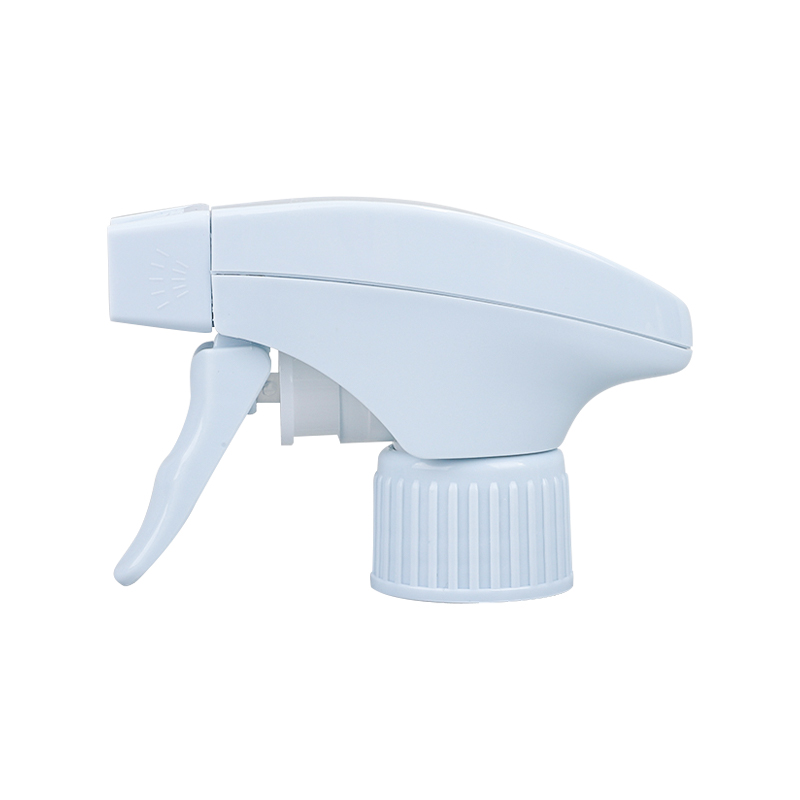
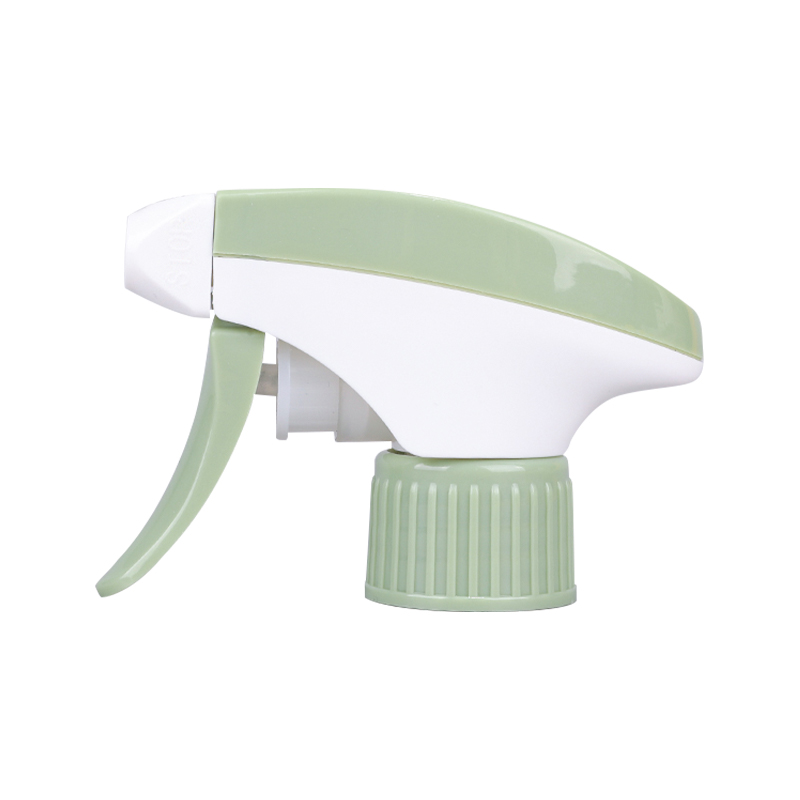
Not every part of a trigger sprayer tolerates recyclate equally. Thick, decorative, low-tolerance parts absorb recycled resin easily. Thin, flexing, dimension-critical parts do not. Splitting the load by component is what keeps performance stable while the headline percentage stays high.
Typical starting points for allocating PCR content across a trigger sprayer; final percentages must be confirmed by mould trials and customer validation.
| Component |
Typical material |
PCR feasibility |
What to watch |
| Shroud and outer cover |
PP |
High, often 30-100% |
Colour streaking and slight gloss variation on pale shades |
| Trigger lever and piston |
PP or POM |
Medium, roughly 20-30% |
Stiffness shift changes actuation force and return speed |
| Nozzle and orifice insert |
PP |
Medium |
Dimensional tolerance directly controls spray pattern and rate |
| Dip tube |
LDPE |
Low to medium |
Flexibility, kinking and pick-up at the bottom of the bottle |
| Spring |
Stainless or carbon steel |
None |
A metal-free design keeps the whole assembly in one recycling stream |
| Bottle, if supplied together |
HDPE or PET |
High |
Different resin family with a different recycling class |
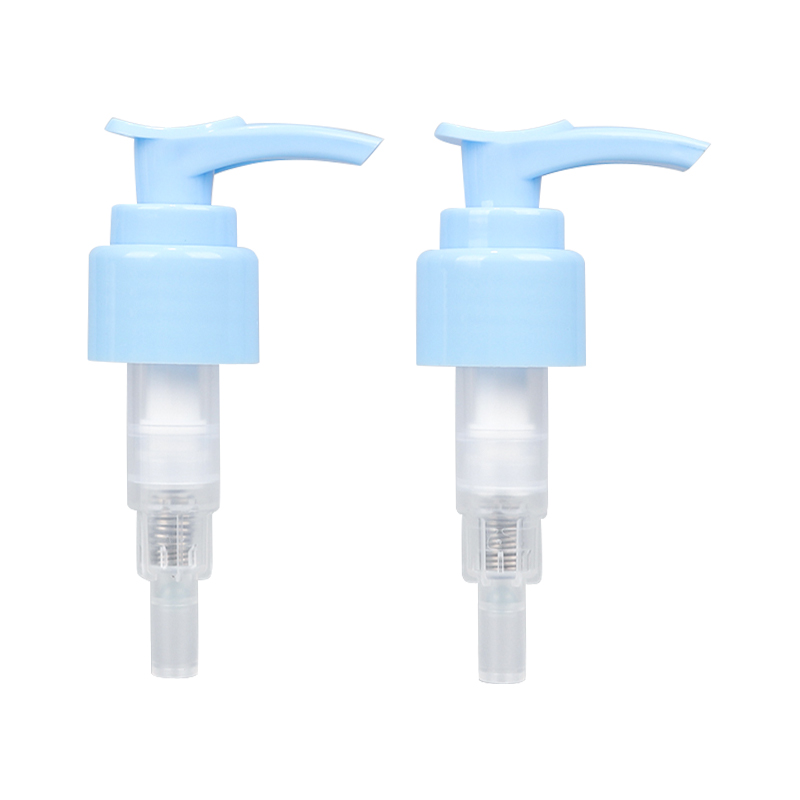
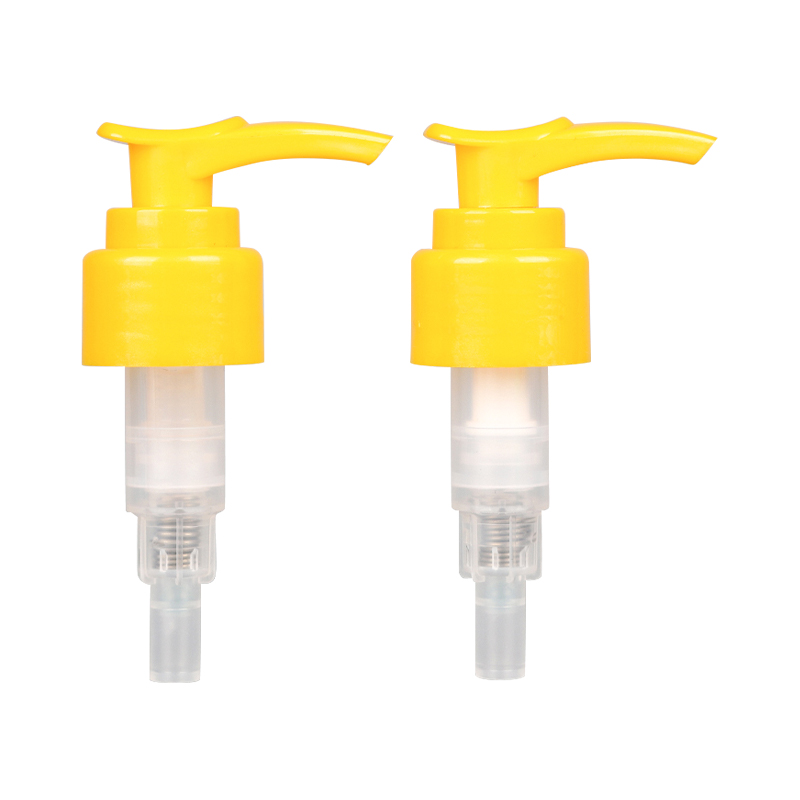
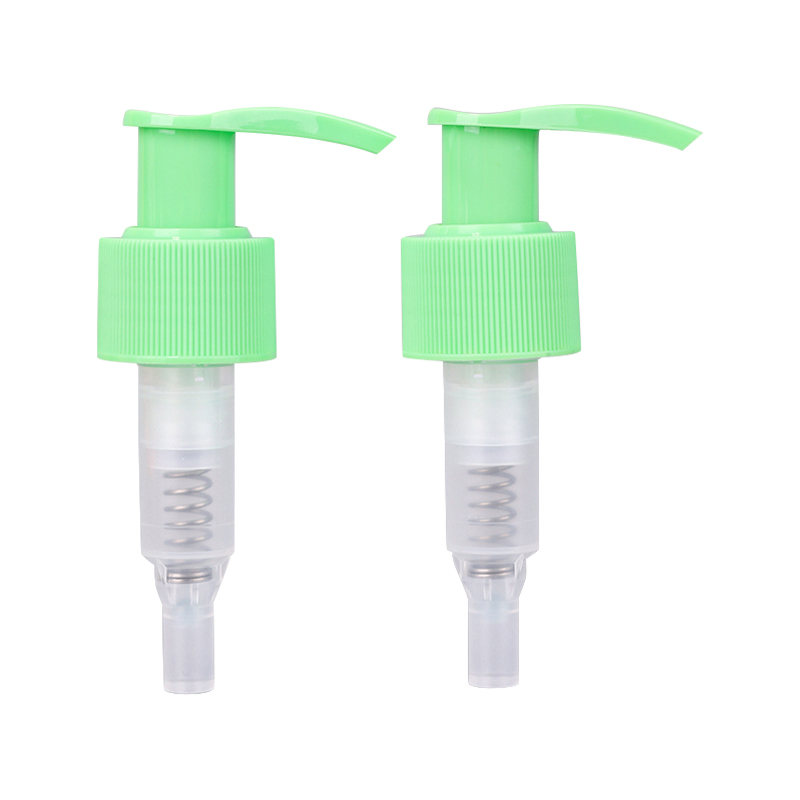
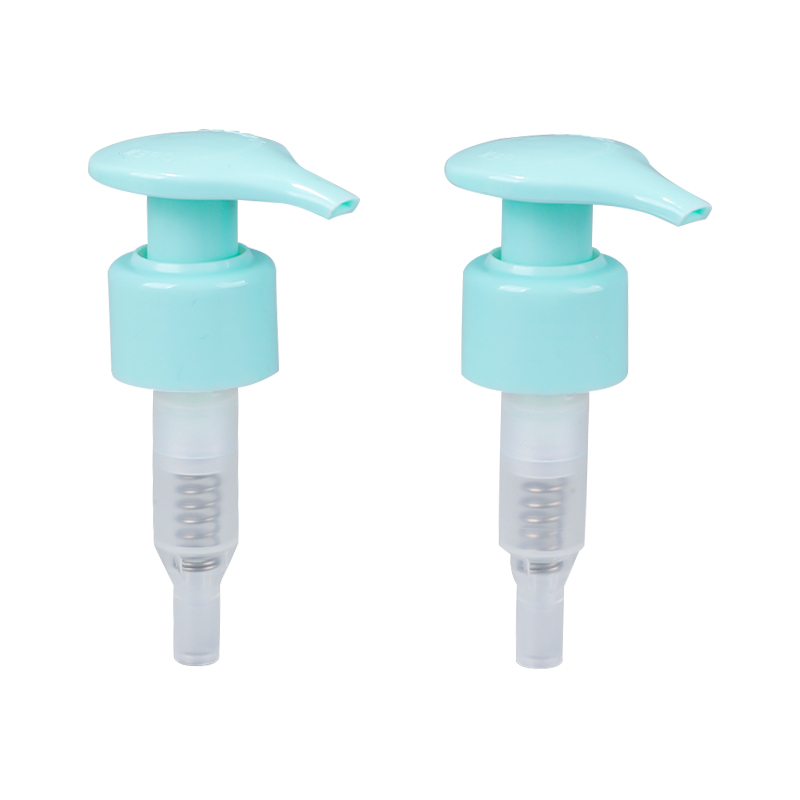
A useful rule of thumb: put recycled resin where the wall is thick and the tolerance is forgiving, and keep virgin material where a hundredth of a millimetre changes the spray. Trigger sprayers built around mono-material, metal-free construction make this split far easier, because the whole unit can move in one direction instead of being held back by a steel spring.
Design Choices That Decide Whether PCR Works
Mono-material construction first
When shroud, trigger, nozzle, piston and dip tube sit within one polymer family, recycled content can be distributed across several parts without creating a mixed-material object that recyclers reject. This is also why metal-free spring designs matter commercially: a package that claims recycled content but cannot be separated at end of life invites criticism from exactly the buyers who requested the PCR in the first place.
Wall thickness where the part flexes
Recyclate batches vary in melt flow, and thin living hinges or slender trigger levers are where that variation shows up as cracking or a mushy feel. Adding five to ten percent wall thickness in high-stress areas, plus a modest rib, usually costs less than scrapping a tool and re-cutting it later.
Colour strategy chosen early
rPP frequently carries a grey or green undertone. Dark navy, black, deep green and saturated colours hide lot-to-lot variation well. A bright white shroud demands a light-stabilised rPP grade at a premium, or a thin virgin cap layer over a recycled core. Deciding this after the artwork is approved is the most common cause of a delayed launch.
Recycled content is a purchasing decision on paper, but it is judged as a performance decision in the field. Drop height, leak rate and spray pattern do not negotiate.
How to Write PCR Into the Specification
Vague recycled-content language is where disputes begin. A specification that a moulding supplier can actually work against reads like this:
- State the recycled percentage by weight and by part, not only for the finished assembly, so a 25% target is not met by loading everything into one shroud.
- Name the resin grade and source tier, for example bottle-to-bottle rPP, mixed post-consumer rPP, or a food-contact approved grade.
- Require documentation: supplier declarations, third-party certification, and the conversion factors used where mass balance applies.
- Fix colour tolerance as a numeric value measured on the shroud, agreed against a retained master sample.
- Define the drop test precisely: filled bottle, 1.2 metres onto concrete, three orientations, at room temperature and after conditioning.
- Define leakage as a measurable result, such as thirty minutes inverted at 50 degrees Celsius with no visible seepage at the nozzle, the closure or the vent.
- Set an actuation force window and a prime stroke count, because a stiffer recycled lever changes both.
- Confirm chemical compatibility with the actual formula, including surfactants, acids, solvents and essential oils.
That last point is easy to underestimate. A trigger sprayer that performs perfectly on water can swell, stress-crack or lose its seal within weeks when the bottle holds a solvent-rich degreaser or a citrus-based cleaner. The liquid is part of the specification, not an afterthought.
Procurement Risks Worth Pricing In
Recycled material introduces several risks that do not appear in a virgin-resin quote, and they are cheaper to plan for than to discover in production.
- Supply volatility. rPP availability and price can move quickly; qualifying a second source before the first order protects the schedule.
- Tool wear. Contaminants and fillers in recyclate can abrade gates and nozzle inserts, so shorter maintenance intervals and spare cavity inserts should be budgeted.
- Lot variation. Colour and odour can shift between deliveries; keeping a retained sample from every lot makes acceptance decisions objective.
- Claim accuracy. Marketing language, packaging labels and regulatory filings must all describe the same recycled content figure.
- Cost reality. PCR is not automatically cheaper. Some grades trade above virgin resin, and the price advantage, when it exists, comes from regulatory fees and brand value rather than from the pellet itself.
Recyclability rules and extended producer responsibility fees increasingly reward designs that can actually be sorted and reprocessed, not merely designs that contain recycled input. A trigger sprayer with a metal spring and a mixed-material nozzle may satisfy a PCR percentage and still fail the direction packaging regulation is moving.
Qualification Steps Before Mass Production
Once the specification is agreed, the sequence matters more than the paperwork. A workable qualification path usually runs in this order:
- Review the resin lot data and confirm melt flow, colour and odour against the approved master.
- Run a single-cavity mould trial and record cycle time, shrinkage and any flashing before committing to multi-cavity production.
- Assemble samples with production dip tube lengths held inside their tolerance band, typically within one millimetre.
- Bench test spray rate, pattern diameter at a fixed distance, prime strokes, actuation force and leakage.
- Fill with the real formula and condition the bottles, for example four weeks at 40 degrees Celsius, then inspect seals and part dimensions again.
- Run a transit simulation with the final carton, because a sprayer that survives a laboratory drop can still fail on a pallet.
Each step costs a little time up front and removes a category of failure that would otherwise appear after the first container ships.
Working With a Dispenser Manufacturer on a PCR Program
The pace of a PCR project depends heavily on whether the supplier controls its own tooling. Zhejiang Eaed Technology Development Co., Ltd., which trades as EAED and traces its roots to Yuyao Hongda Sprayer, runs mould design and manufacturing, injection moulding and automated assembly under one roof in Yuyao, Zhejiang, close to the Ningbo and Shanghai ports. For a recycled-content program, that combination matters: gate positions, wall thickness and processing windows can be adjusted on the tool rather than negotiated across three vendors, and a new rPP lot can be trialled within days instead of weeks.
A practical starting point is the part of the range built for mono-material assembly and stable sealing, since those two properties carry most of the risk in a recycled trigger sprayer.
Where the bottle holds an aggressive cleaner, sealing behaviour deserves as much attention as recycled content, and the technical case for precision-built plastic trigger sprayers is a useful reference when comparing tooling approaches.
The Three Decisions That Settle the Project
Most PCR trigger sprayer programs come down to the same three choices. Pick a resin grade whose supply you can actually secure for twelve months. Allocate the recycled content by component, keeping virgin material where tolerance is critical and concentrating recyclate where walls are thick. Then qualify the finished assembly with the real liquid, at the real drop height, in the real carton.
Get those right and the recycled percentage becomes an ordinary line in a specification rather than a source of doubt. Get them wrong, and the first complaint will not mention sustainability at all, only a leaking bottle on a shelf.

 English
 русский
 Français
 Español
 italiano