Market & Procurement
The Plastic Trigger Sprayer Market Runs on Neck Size, Spring Position, and Recyclability
Every forecast lands somewhere between 4% and 4.7% annual growth. What actually decides whether a trigger sprayer ships or fails is a 28/410 thread, a metal spring, and one recycling test.
What the market numbers actually tell a buyer
Most research houses that publish on the plastic trigger sprayer segment land inside a fairly narrow band. Recent estimates put the base year between roughly USD 430 million and USD 500 million, with projections of about USD 670 million to USD 750 million by the early 2030s and compound annual growth between 4% and 4.7%.
That is a mature category curve. It tracks household cleaning frequency, refill penetration, disinfection habits and retail expansion in emerging markets — not the invention of a new application. For procurement teams, the only useful conclusion is this: supplier competition will concentrate on cost, compliance and delivery stability, not on differentiation stories.
That does not make selection easier. When every credible supplier can produce a trigger that works, the real differences drop down to millimetres and material choices.
Neck size is the first filter, not the last
Trigger sprayers attach to bottles through standardised threads. The most common specification is 28/410, where 28 refers to the neck diameter in millimetres and 410 describes the thread profile. The 28/400, 24/410 and 20/410 formats also appear across the category.
The point worth remembering: 28/410 and 28/400 share a diameter but not a thread, so they do not interchange. In factories running household cleaners and garden products on the same filling line, this is a routine source of mix-ups.
Neck sizes are expressed as millimetre diameter plus thread profile. 28/410 is the most common choice in household cleaning, but it will not screw onto a 28/400 bottle.
| Neck format |
Typical bottle |
Common application |
Procurement risk |
| 28/410 |
500 ml to 1 L household bottles |
Multi-surface cleaners, glass cleaners, disinfectants |
Most widely available, but thread tolerances vary widely between suppliers |
| 28/400 |
Large refill and industrial bottles |
Garden care, automotive, commercial cleaning |
Same diameter as 28/410 but not interchangeable, which invites line errors |
| 24/410 |
250 to 500 ml personal care bottles |
Fabric care, smaller-format cleaning |
Fewer high-output trigger options in the market |
| 20/410 |
Travel and sample sizes |
Portable sanitising, trial packs |
Constrained pump geometry makes sealing harder to engineer |
The quieter problem is tolerance. Even within 28/410, the thread pitch diameter, crest width and anti-rotation features differ from supplier to supplier — and that changes tightening torque, seal quality and how the cap feels when a consumer opens it. This is why larger buyers ask for physical bottle samples to run match tests rather than approving from drawings alone.
Where the spring sits decides where the product can be sold
A trigger mechanism needs a return spring, and it sits in one of three places: inside the liquid path, outside it, or nowhere at all.
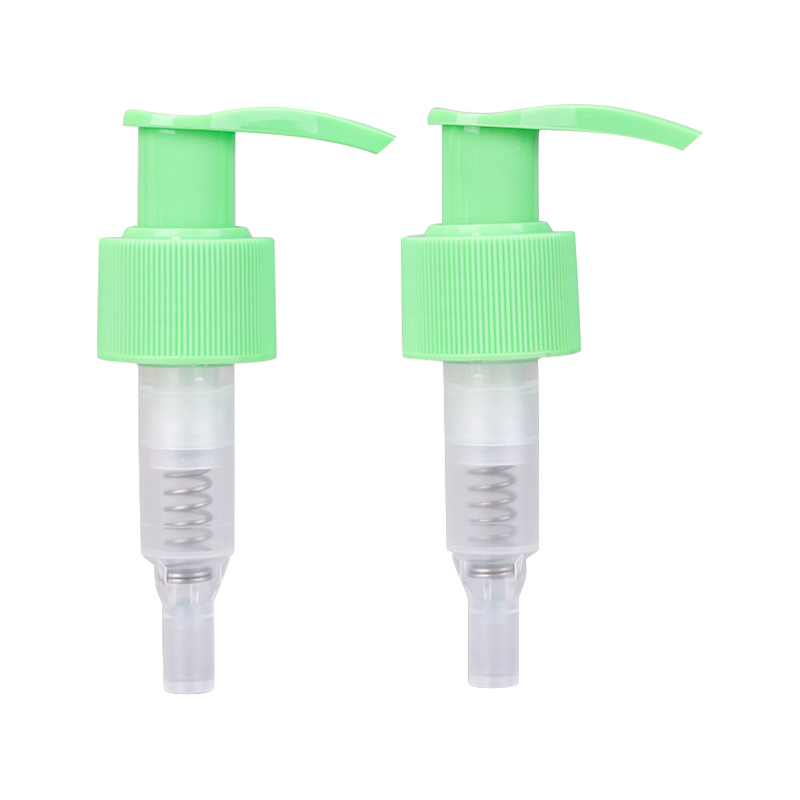
Inside-spring designs are compact and visually clean, which is why they dominate household cleaning. The weakness is that the spring shares a chamber with the formula, so aggressive acidic or alkaline systems are a poor match. The metal also complicates end-of-life separation.
Outside-spring designs move the metal out of the fluid channel. That makes them suitable for disinfectants, acidic cleaners and other corrosive contents, at the cost of extra parts and a bulkier silhouette.
All-plastic construction removes the metal spring entirely and is designed around the recycling stream. The whole assembly uses a single material family such as polypropylene, so in theory it can stay on the bottle instead of being stripped off first. Adoption in Europe has moved faster than elsewhere, and the driver is not consumer preference — it is extended producer responsibility, which pushes packaging recovery costs back onto brand owners' books.
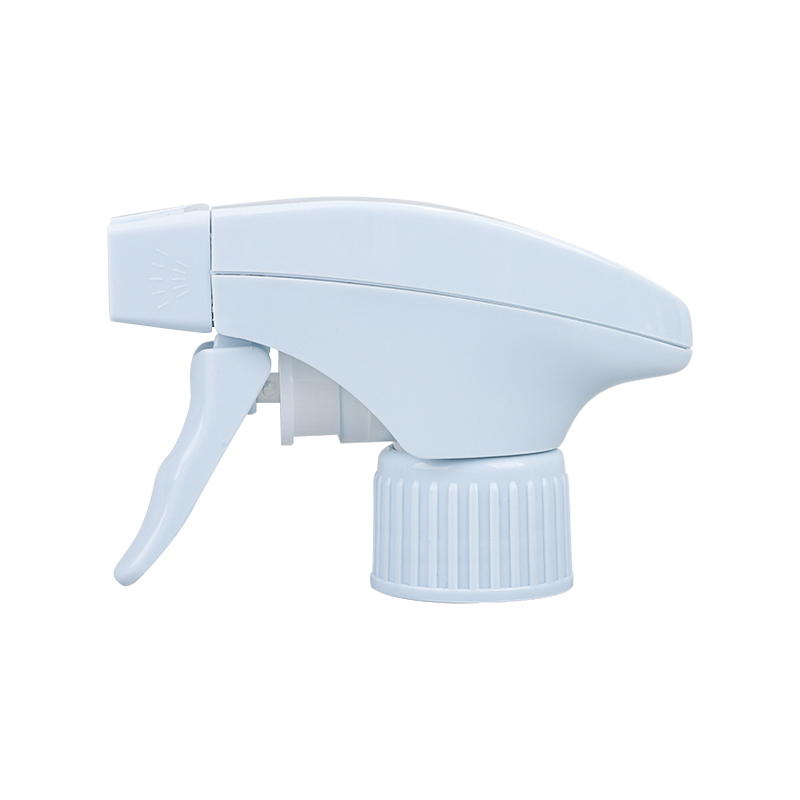
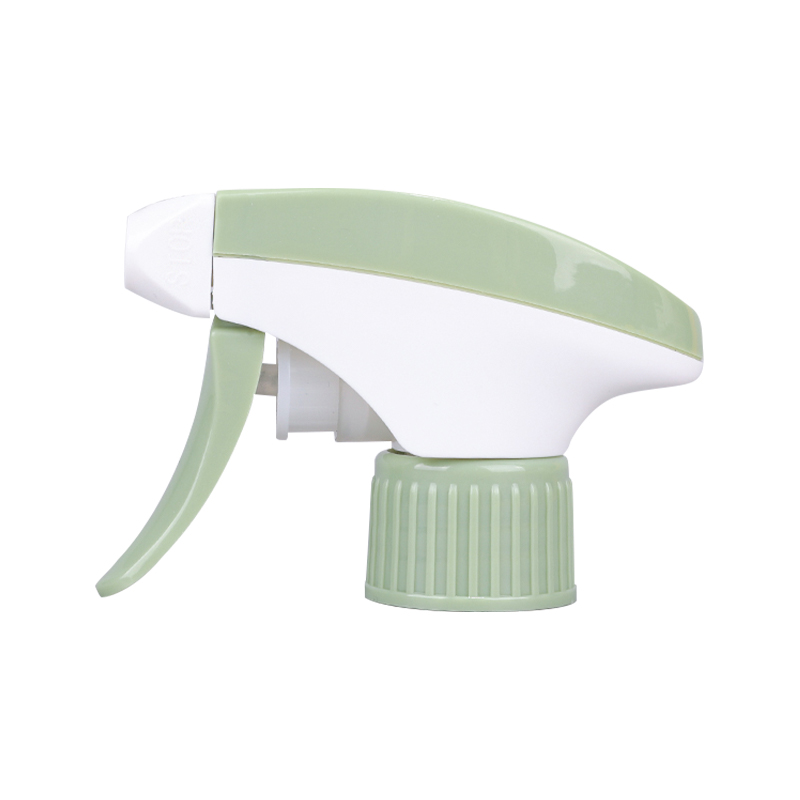
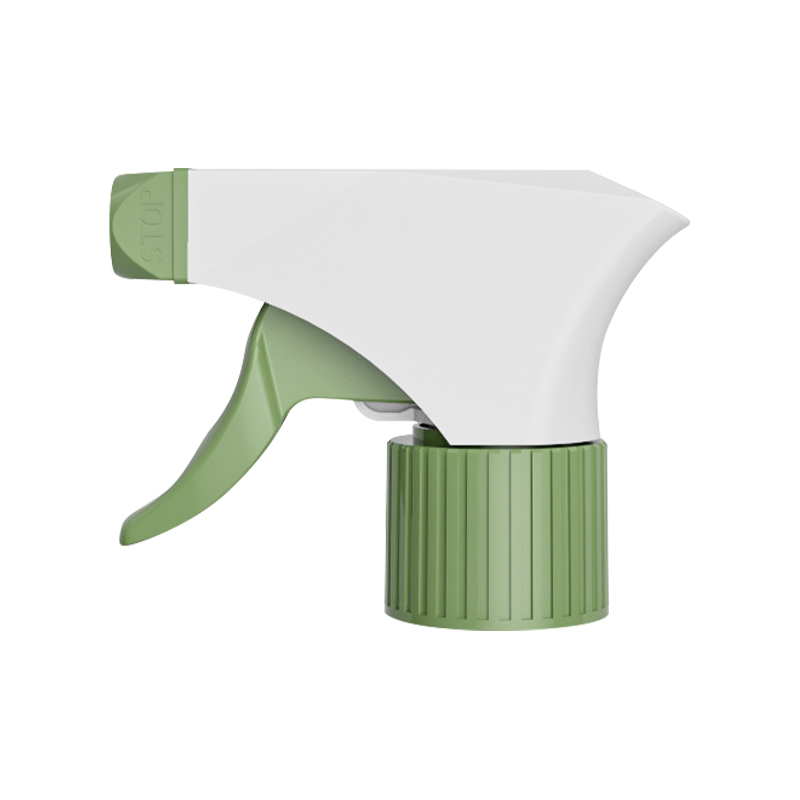 All Plastic Trigger Sprayer for WholesaleAll-plastic trigger sprayer for wholesale, presented with leak-proof sealing and stable output; relevant where metal-free construction and recyclability are being weighed.View Product →
Info
All-plastic does not automatically mean recyclable. If the trigger still contains a metal ball, a silicone gasket or a seal made from a different polymer, most recovery streams will treat the whole unit as contamination. Judge by the material declaration, not the marketing label.
For a closer look at how tolerance and fatigue life translate into real-world performance, see our breakdown of the technical advantages of plastic trigger sprayers. Regulatory pressure is also reshaping material choice; our summary of the new ISO sustainable packaging standard covers what that means for component suppliers.
Leakage is a logistics metric, not a feature claim
A trigger sprayer costs cents at the factory gate. If it leaks inside a container, the loss is measured in pallets and rejected lots.
Vibration, stacking pressure, air pressure swings and the negative pressure of air freight all expose weak sealing. The usual failure points are a loose fit between valve seat and ball, a poorly anchored dip tube, insufficient clip strength at the nozzle, and the absence of a shipping lock.
Four things are worth confirming before the purchase order: whether a transport lock exists and whether it is a lock-down tab or a twist mechanism; whether simulated transport vibration testing has been run; which materials the valve ball and seals use; and whether the unit still draws liquid reliably when held inverted or at an angle.
A trigger sprayer might land for a few cents. When it leaks, the cost is a rejected pallet, a missed launch window and a customer audit.
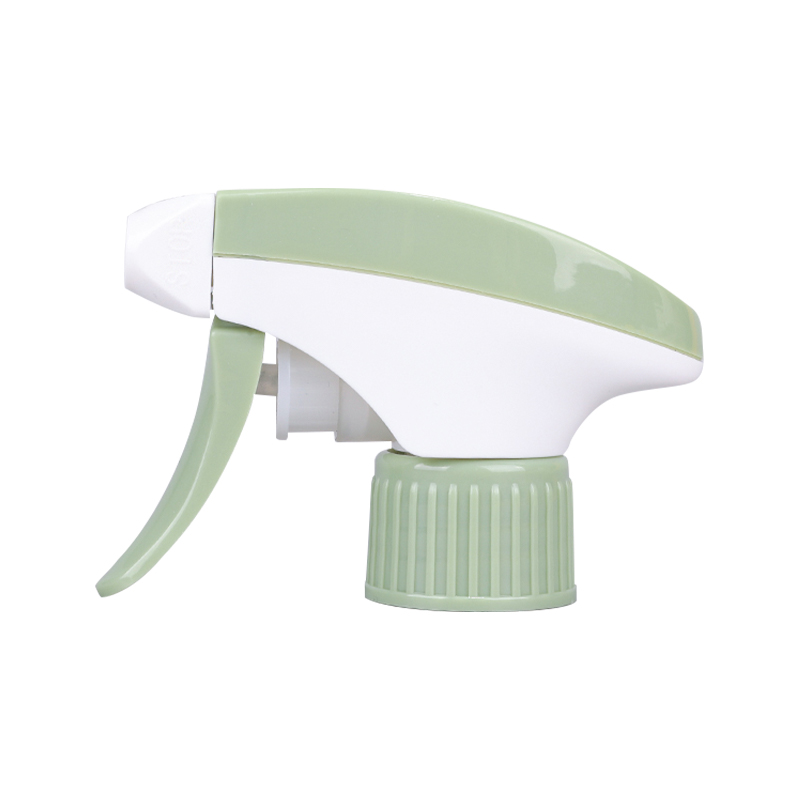 Leak-Proof Plastic Trigger Sprayer for WholesalePlastic trigger sprayer with a leak-proof sealing structure and fine-mist output, positioned for cleaning, gardening and cosmetics; check seal details before ordering.View Product →
This is also where cheap quotations tend to unravel. A lower unit price often reflects a simpler seal geometry or a thinner wall in the pump body, and those savings surface months later as returns.
Inverted triggers and the high-viscosity exception
An inverted trigger moves the dip tube from the base of the bottle to the neck side, so the unit keeps drawing liquid while pointing downward. The structure is mainly used for ceilings, high windows, exterior glass and elevated surfaces — situations where a user cannot physically tip the bottle over.
The other frequently overlooked branch is high-viscosity formulation. Standard triggers are viscosity-sensitive: once a formula thickens, output per stroke drops and atomisation degrades. Those contents need a larger valve seat bore, an extended pump chamber, or a switch to a foam nozzle altogether.
 Inverted Plastic Trigger Sprayer for Multi-Angle UseInverted trigger sprayer designed for spraying at any angle, with adjustable trigger control; useful for hard-to-reach areas and multi-angle applications.View Product →
Foam nozzles are a separate line. Square foam nozzles and long-handle foam triggers work by raising the air-to-liquid mixing ratio, so output arrives as foam rather than droplets. Foam clings longer and resists running down vertical surfaces, which is why it shows up in kitchen cleaning, bathroom cleaning and automotive interior care.
Seven things to confirm before you approve a sample
- Neck specification and thread profile, plus whether a physical bottle match test has been run.
- Spring position and material, and whether the formula's pH range is compatible with the spring and seals.
- Output per stroke and spray angle, checked against formulation viscosity and the intended use case.
- Transport lock design and the availability of simulated transport vibration test reports.
- Material declaration and the basis for any recyclability claim, especially metal parts and elastomers.
- Mould ownership and change-over cost — where the limits sit for colour, nozzle angle and trigger travel.
- Delivery rhythm and port access, including whether tooling, injection and assembly sit on the same site.
The first three determine whether the product works. The last four determine whether the project survives past its second season.
Industrial clusters still matter for lead time
Global capacity for plastic trigger sprayers is concentrated in East Asia, and Yuyao in Zhejiang province is one of the denser clusters. Tooling, injection moulding, automated assembly and surface finishing sit within a few kilometres of each other, which usually shortens the path from mould start to production sample compared with sourcing components across separate regions.
Yuyao is roughly an hour from Ningbo port and two to three hours from Shanghai. For export orders, that compresses factory dispatch to vessel loading into a single day and removes a layer of intermediate warehousing and handling risk.
Clusters also breed sameness. Within one region, suppliers differ little on standard models; the genuine separation sits in mould precision, automation level and batch-to-batch consistency. None of that is visible on a quotation sheet, so it has to be verified through sample testing and short trial runs.
Warning
Inside a single cluster, price gaps usually reflect the age of the tooling, the degree of automation and the grade of resin — not simply different margin expectations. A conspicuously low quote almost always means something in the process has been compressed.
Where this leaves buyers
Growth in the plastic trigger sprayer market will most likely stay in the single digits. That part is settled.
What is shifting is the weight each factor carries in a purchasing decision. Recyclability is moving from a bonus to an entry requirement. Leak resistance is moving from a selling point to a logistics baseline. Neck specification is moving from a technical footnote to shared language between packaging, formulation and supply chain teams.
If you are specifying a trigger for a cleaning or personal care product, the most useful starting point is not a market report. It is one bottle, one formula, and one real shipping route.

 English
 русский
 Français
 Español
 italiano