Chemical-Resistant Trigger Sprayers: Materials, Seals and Sourcing Checks
Chemical-Resistant Trigger Sprayers: What Survives Bleach, Acid and Solvent
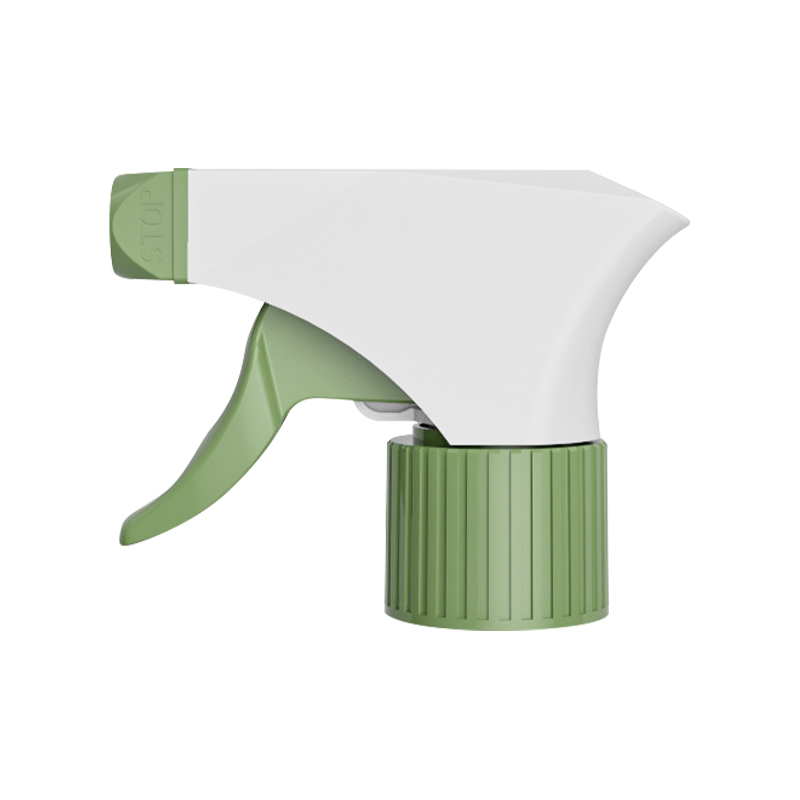
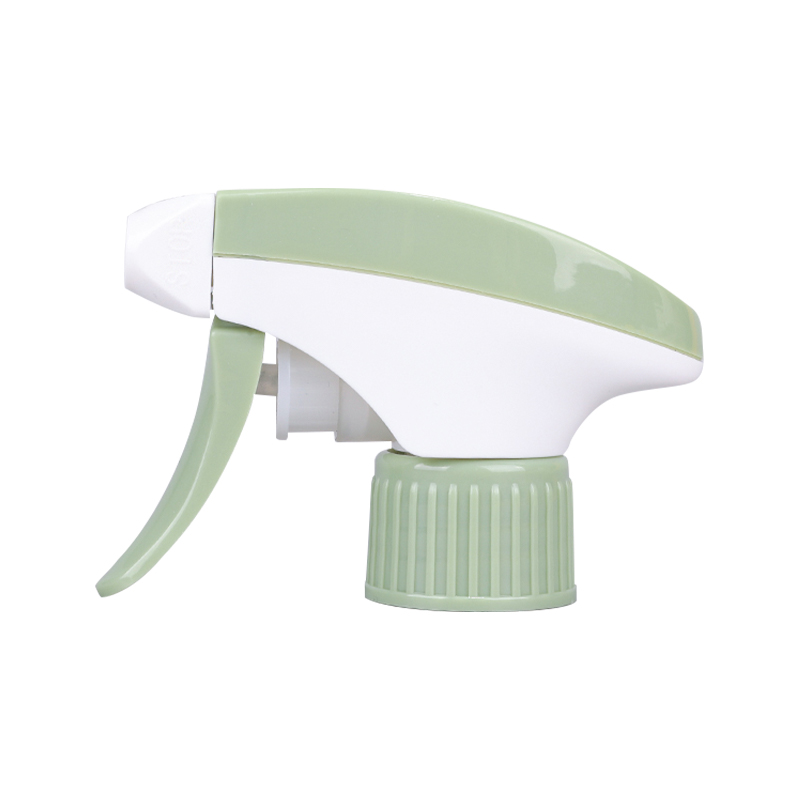
A chemical-resistant trigger sprayer is not a product category. It is a specific combination of polymer grade, spring material and seal elastomer, and if any one of the three is wrong, the bottle fails in the customer's hand rather than in the lab.
What “Chemical Resistant” Actually Covers
The conclusion first: on a trigger sprayer, chemical resistance is decided by three variables. The polymer used for the body, the material of the spring, and the elastomer inside the seals. Colour, trigger feel, decoration and unit price only become relevant once those three are compatible with the formula being filled.
The reason is fairly mechanical. A bottle of hypochlorite-based bathroom cleaner can fail on a sprayer that performs perfectly in a drinking-water trial. The failure is rarely about build quality. It is about chemistry at the contact points: metal spring steel releasing ions into an oxidising liquid and depositing a rust stain around the nozzle orifice, or an NBR gasket swelling in a solvent that makes up a small share of the formula but touches the seal for months on a warehouse shelf.
Damage of this kind is progressive. The first trigger pulls feel normal, the spray pattern widens slightly, then the pump starts to weep at the closure. By the time a consumer complains, the entire batch is suspect.
All-Plastic Versus Metal-Spring Construction
Metal-spring sprayers are not obsolete. For neutral soap, glass cleaner and general-purpose detergent in the pH 4 to 9 band, a stainless spring gives predictable return force and the lowest cost per unit. The trouble starts when the liquid becomes aggressive enough to attack the spring or the plating around it.
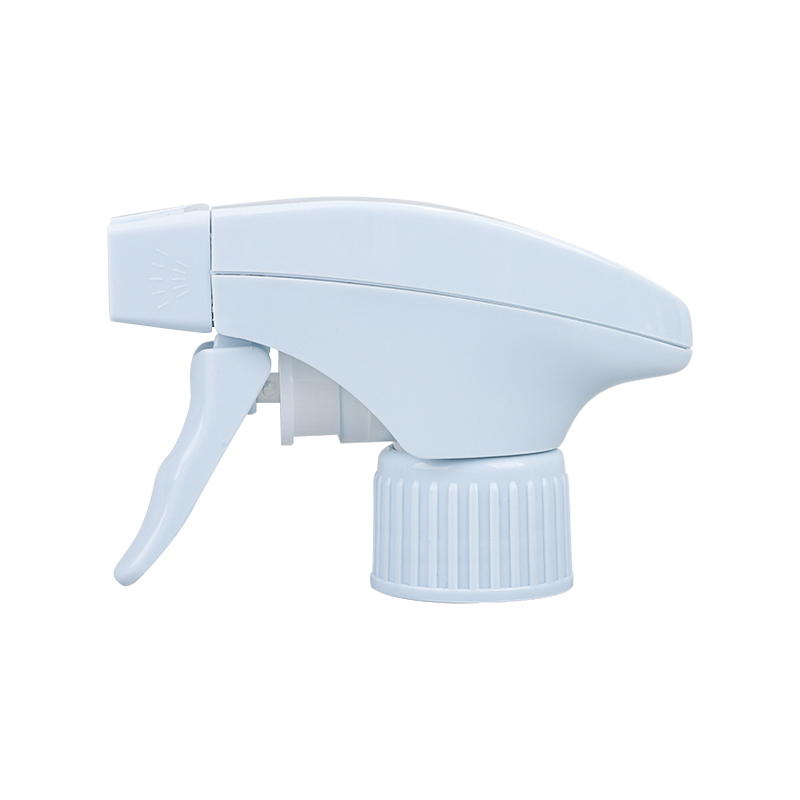
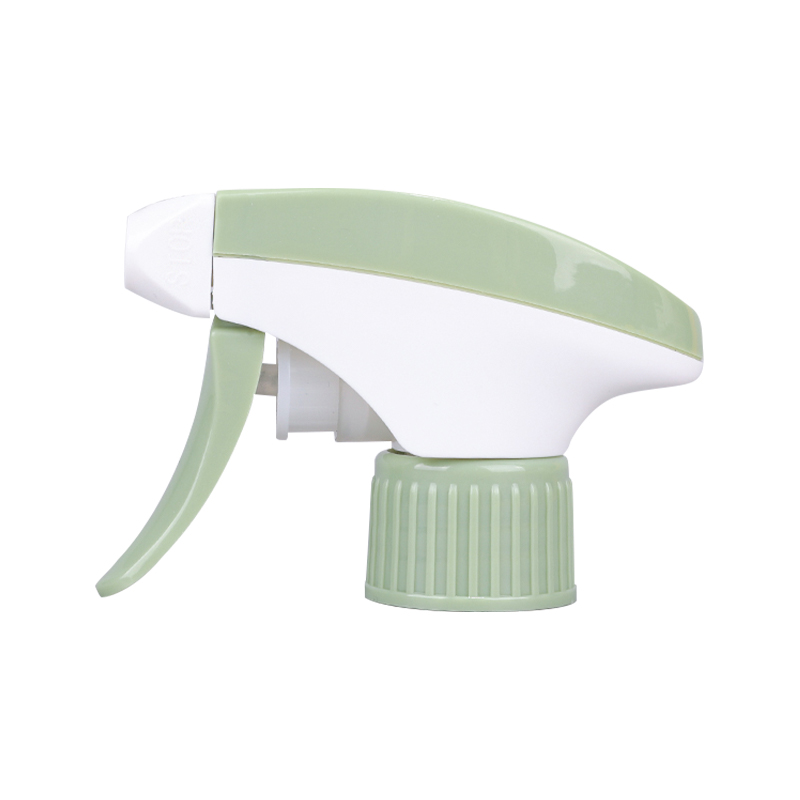
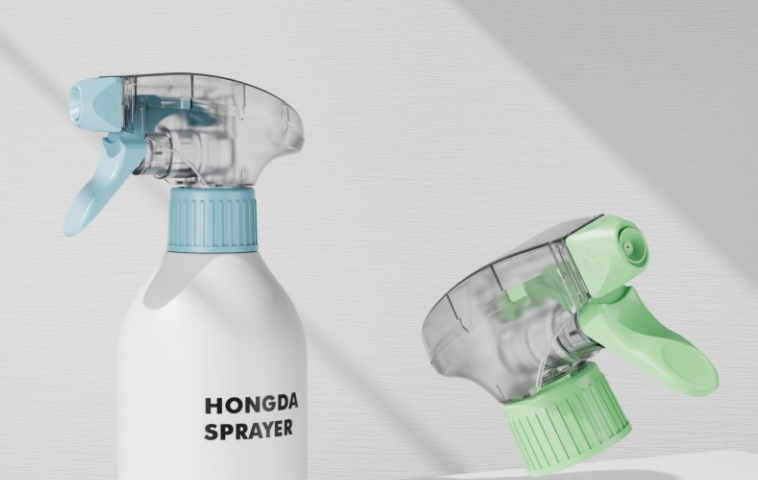
Structure comparison: springs and seals fail in different ways when exposed to acid, alkali and solvent.
Structure
Parts exposed to the liquid
Where it fits
Typical failure mode
PP body with stainless spring
Steel spring, NBR gasket
Neutral soap, pH 4 to 9 detergents
Spring attacked by hypochlorite or acid, iron deposits stain the nozzle and narrow the orifice
Moulded-in stress cracking under long-term load; metal contamination risk removed
Metal-free spring version
Plastic spring, EPDM or silicone seals
Oxidising cleaners across pH 2 to 12
Creep in the plastic spring shortens trigger travel over time
Reinforced leak-control version
Higher-grade elastomer, thicker gasket
Solvent-heavy formulas, travel sizes
Elastomer softens after long solvent contact and a slow drip appears
For oxidising cleaners, an all-plastic structure removes the metal problem by design rather than by coating or passivation. That matters when a single brown spot on a white bottle is enough to trigger a retail rejection, and it also simplifies recycling conversations with the brand owner.
Where the formula still needs spring force for a thick gel or a high-viscosity bathroom cleaner, plastic spring variants keep the metal out of the flow path. The trade-off sits in the tooling and the creep behaviour, not in the chemistry.
Seals, Gaskets and the Real Leak Path
Leaks rarely begin at the outer wall. They start at two contact surfaces: the piston-to-cylinder interface and the gasket that sits between the sprayer and the bottle neck. Both are elastomer decisions, and both are decided before any performance claim is made.
NBR handles oils and many solvents well, but degrades quickly in strong oxidisers and long ozone exposure.
EPDM is the dependable choice for hypochlorite, dilute acid and alkaline cleaners, yet performs poorly with mineral oils and aromatic solvents.
Silicone tolerates a wide temperature range but swells and permeates with a long list of solvents, which shows up as a slow neck leak.
FKM works with solvents and acids, but is a poor match for chlorine-based bleach systems.
A sprayer that survives the lab but dies on the shelf is still a failed package. The only meaningful test includes the bottle, the closure torque and the fill line.
Closure torque deserves a sentence of its own. A gasket can be chemically correct and still leak if the capping torque on the filling line is too low for the bottle finish, or if the finish is ovalised enough that the gasket never seats evenly. In practice, chemical failures and mechanical failures look identical to a consumer: a wet bottle.
That is why leak-control designs concentrate on the neck interface and the piston cup rather than on the visible shell. When a formula is solvent-heavy, the seal is the component that decides the shelf life of the whole pack.
Output, Orifice Size and Spray Pattern Under Aggressive Formulas
Chemical resistance and spray performance are linked more tightly than most specifications admit. An oxidising cleaner releases gas inside the bottle, so the valve needs enough seating force to stay closed between trigger pulls. A thickened acid gel needs a wider orifice or the trigger becomes stiff and the user over-pulls, which accelerates wear on the return spring.
Solvent-based degreasers add a third variable: internal pressure swings. A sprayer that vents poorly will dribble at the nozzle after each stroke, and that dribble is often mistaken for a seal problem when the real cause is air management.
If you want to look at the internals of the trigger, the venting path and the maintenance cycle in more detail, this practical breakdown of trigger sprayer structure and long-term care is a useful companion to the material decisions above.
<
Where Chemical Resistance Gets Tested in Real Use
Three application families account for most of the chemical-resistant demand in cleaning and household care.
Bathroom and toilet cleaners. Hypochlorite or acid, low viscosity, frequent use, and often stored on its side in a shower caddy. Seal choice and gas venting matter more than trigger style.
Descalers and acidic surface cleaners. Weak acids over long exposure attack springs and plated inserts first; plastic springs and EPDM gaskets hold up better.
Inverted and under-rim spraying. Rim cleaners, grout sprays and toilet-bowl products are used upside down, which puts the liquid against components that stay dry in an upright bottle.
Inverted use is the scenario most often overlooked during sampling. A sprayer that behaves perfectly in a bench test can drip through the vent once the bottle is held nozzle-down for twenty seconds, and that drip reaches the user's hand before it reaches the surface.
A Practical Checklist Before You Place the Order
Most supplier conversations can be settled with six questions. None of them require a laboratory, and all of them reduce the chance of a launch-stage surprise.
What is the exact resin grade for the body, and is it the same in every colourway?
Is there metal anywhere in the flow path, including the spring, the ball and any plated insert?
Which elastomer compound is used for the piston cup and the neck gasket, and what is its hardness?
How long was the sample immersed in the actual formula, at which temperature, and in upright and inverted positions?
Was the test run on the production bottle and closure, or on a generic lab container?
What changes when the formula is reformulated, and how much notice does the tooling need?
The fourth question is where quotations usually fall apart. A 24-hour immersion test tells you very little about a product that sits in a warehouse for eight months. Asking for 72-hour and 30-day observations on the real bottle, with closure torque recorded, is a fair request for a packaging partner that claims chemical resistance as a capability rather than a claim.
Chemical resistance is not a badge and it is not a single material property. It is the result of matching body polymer, spring construction and seal elastomer to the exact formula, then verifying that match on the bottle and closure the customer will actually hold. Get those three right and the rest of the specification becomes ordinary packaging work: output, spray angle, colour and cost. Get them wrong and no amount of trigger refinement will recover the batch.

 English
 русский
 Français
 Español
 italiano