Agriculture Trigger Sprayers: What Really Decides Whether a Bottle Survives a Season
Dose per stroke, spring chemistry, venting and trigger comfort. Get those four right and the rest of the specification usually falls into place.
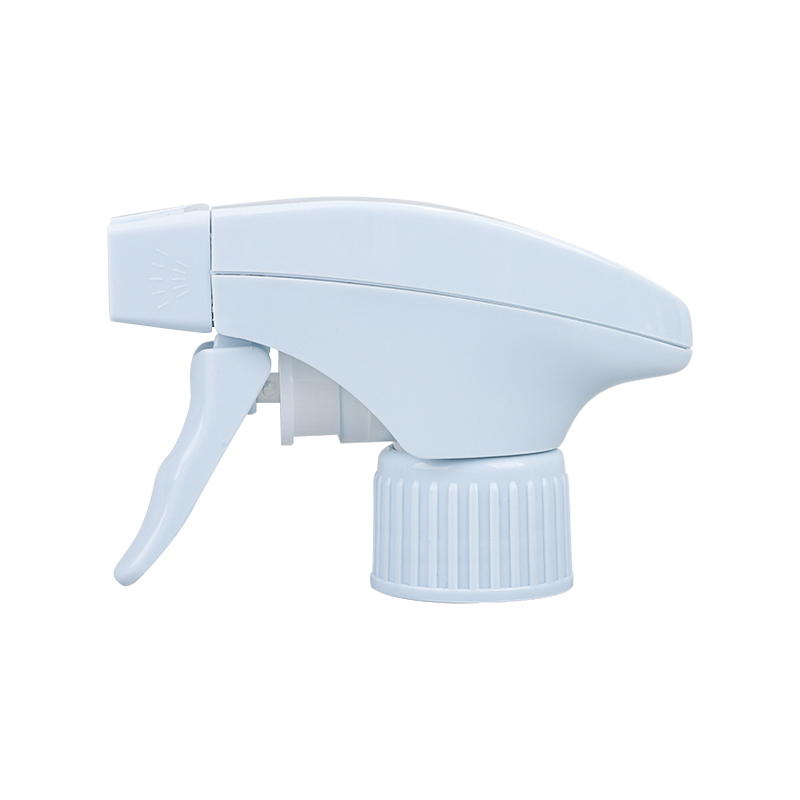
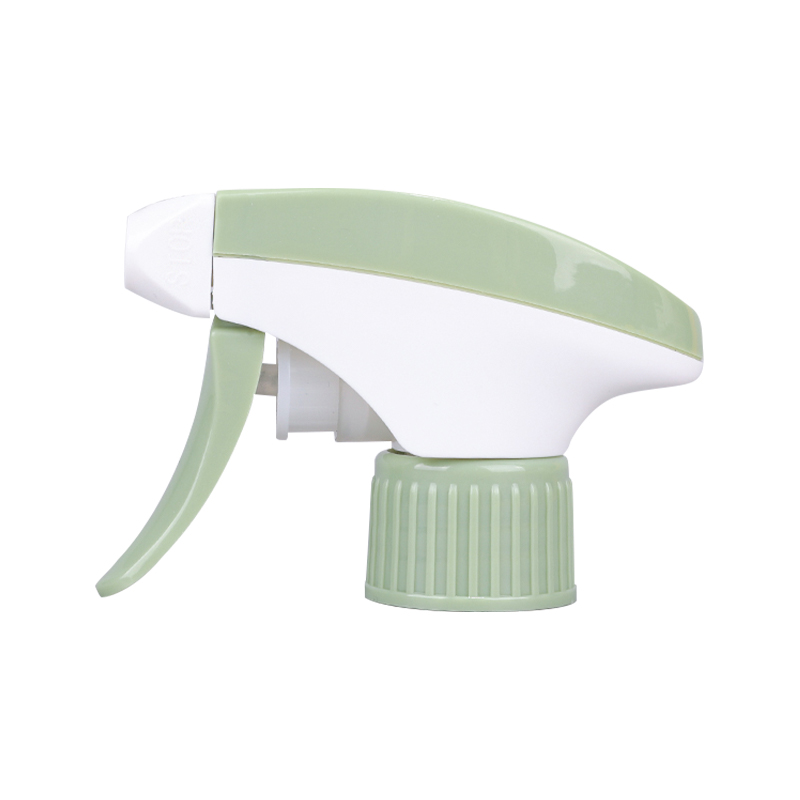
A 750 mL bottle of foliar feed, a knapsack that ran dry halfway down the row, and one sprayer head that has to work inside a gloved hand for three hours. That is the real brief for an agriculture trigger sprayer, not a product photo on a white background. The failures we see are rarely dramatic: a trigger that drips onto the label, a spring that turns the formulation brown after two weeks in the bottle, a nozzle that drifts from mist to a straight jet by mid-season.
What follows is the order in which those decisions are worth making, and the numbers that make each one checkable before tooling starts.
Fix the dose per stroke before anything else
Conclusion first: output per stroke shapes the whole pack. In agricultural and horticultural use, trigger heads typically sit between 0.9 mL and 1.5 mL per full stroke, with high-output variants pushing toward 1.8 mL. Move outside that band and the user's mental arithmetic changes, because how many pumps per plant, how many bottles per hectare and how much active ingredient actually lands on the leaf are all derived from that one figure.
A 1.2 mL head on a 750 mL bottle delivers roughly 625 full strokes. At three strokes per plant that is about 200 plants per bottle, and a grower will notice immediately if the real number turns out to be 140.
Match the pattern to the job
Foliar feeding wants a fine, even cone that wets the leaf without runoff. Contact insecticides and surface sanitizers usually want a slightly coarser droplet so the spray stays on target instead of drifting. Spot treatment along a fence line or between rows wants a straight jet that reaches 400 to 600 mm. An adjustable nozzle covers all three, but the adjustment ring is also the first component to seize when a formulation is left sitting in the head, so the detents need to be positive rather than friction-only.
Typical values for agricultural trigger sprayers; confirm the final figures against your own formulation and bottle before tooling begins.
| Specification |
Typical agricultural range |
Why it matters |
| Output per stroke |
0.9 to 1.5 mL (up to 1.8 mL high-output) |
Sets pumps per plant and cost per treated area |
| Spray pattern |
Adjustable cone through to straight jet |
One head covers foliar, contact and spot work |
| Droplet size |
80 to 200 microns for foliar mist |
Too fine drifts, too coarse runs off the leaf |
| Neck finish |
28/410 or 28/400 |
Determines bottle compatibility and changeover cost |
| Dip tube length |
Cut to 2 to 4 mm above the base |
Prevents starvation when the bottle tilts |
| Trigger stroke force |
18 to 30 N at full stroke |
Drives fatigue across a 200-bottle shift |
| Spring material |
304 stainless or metal-free PP and POM |
Decides compatibility with aggressive formulations |
| Vent |
Sized to stroke volume |
Stops paneling, gurgling and shoulder seepage |
| Body resin |
PP, HDPE or recycled-blend PP |
Chemical resistance plus recycled-content targets |
Chemical compatibility: the spring is the weak point
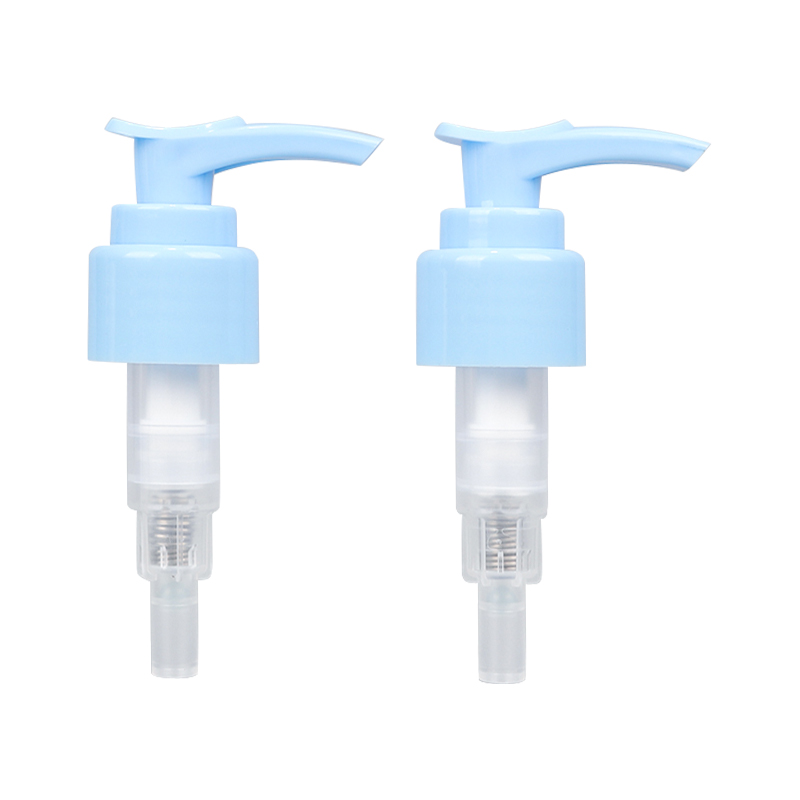
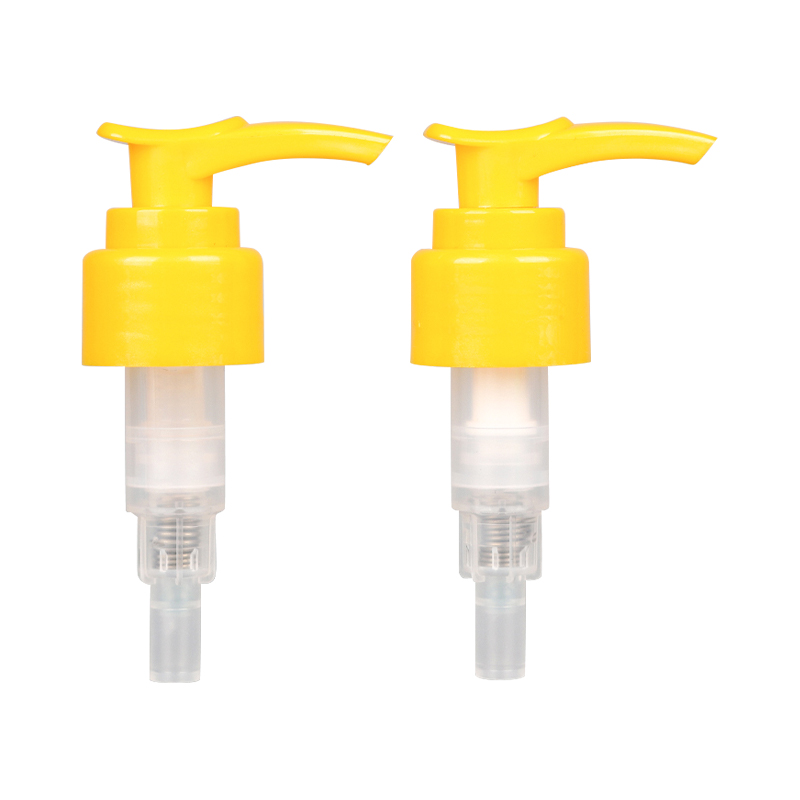
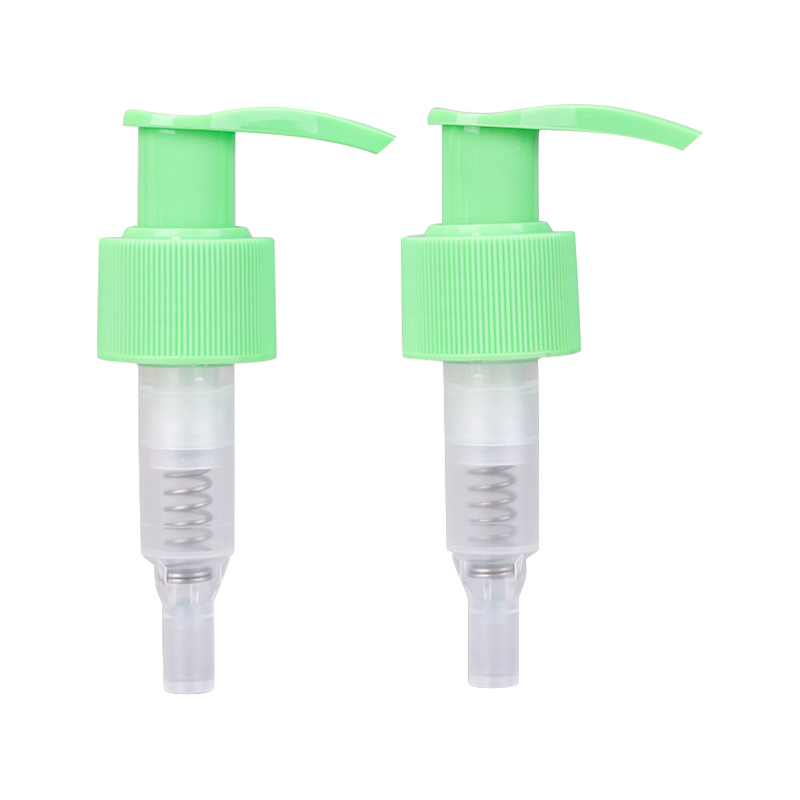
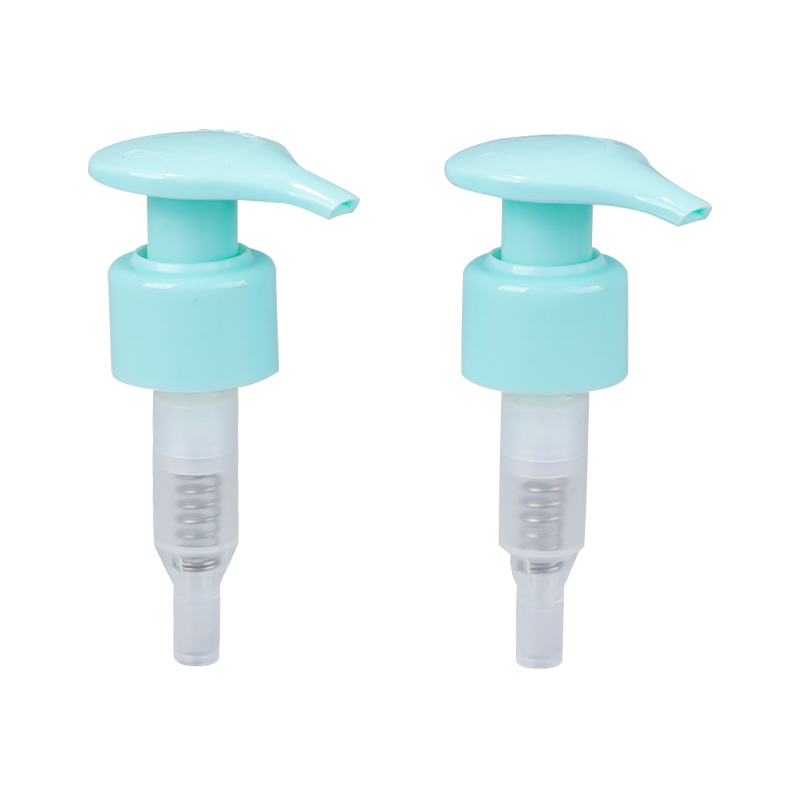
Most trigger sprayers hide a stainless steel spring directly in the product path. Grade 304 copes well with near-neutral water-based formulations, which covers a large share of garden and home products. It copes far less well with sulfur-based and copper-based crop products, acidic tank mixes, and some oily adjuvants, all of which can pit the wire and leave a rust-coloured tint in the bottle within weeks. If the formulation is aggressive, the practical answer is a metal-free spring in PP or POM, so the only materials touching the liquid are the same polymer family as the body.
A full-plastic build removes the metal question entirely and simplifies recycling at end of life, which increasingly matters to buyers with packaging targets attached to their own sustainability reporting.
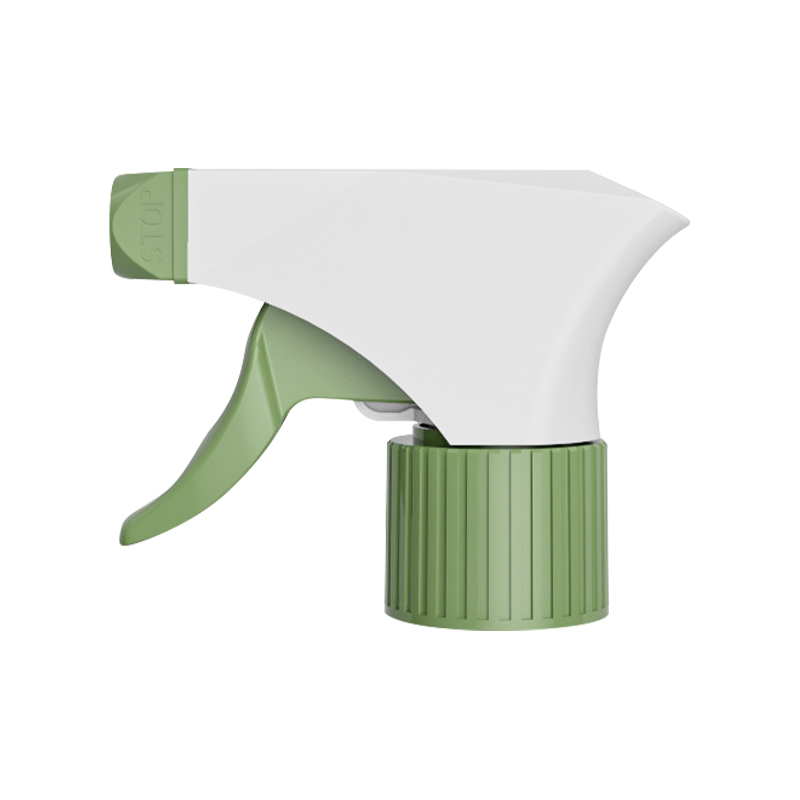 All-Plastic Trigger Sprayer for Wholesale SupplyA full-plastic trigger sprayer with leak-proof sealing and stable output, suited to humid or chemical-rich environments and simplified end-of-life recycling.View Product →
Where a metal-free design is specified for compatibility reasons rather than recycling, look for a spring rated for continuous compression rather than a light wire that softens after a few thousand strokes.
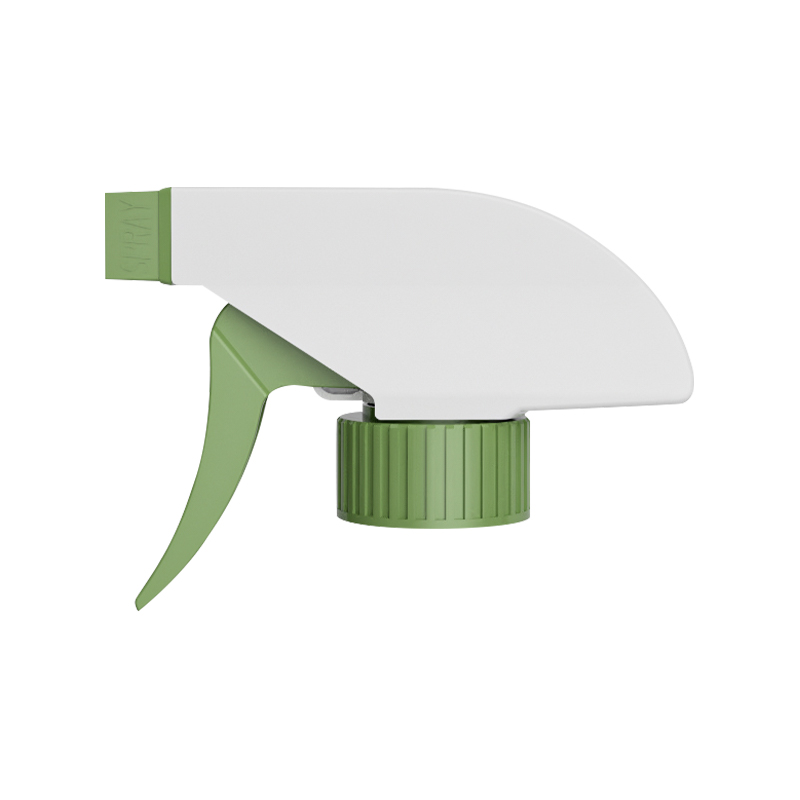 Metal-Free Spring Trigger Sprayer for Chemical CompatibilityA trigger sprayer with a plastic or composite spring, designed to resist chemicals, humidity and UV while avoiding metal-spring corrosion and fatigue.View Product →
Warning
Never approve a trigger sprayer on the basis of a water test alone. Soak the head in the actual concentrate for 72 hours at 40 °C, then check spring condition, body crazing, nozzle free movement and colour of the liquid. Compatibility problems rarely appear on day one; they appear on the retailer's shelf in month four.
Leaks, venting and spraying upside down
A trigger sprayer is a vented system: every stroke pushes product out and pulls air back in. If the vent is undersized, the bottle panels inward and the head begins to starve and gurgle; if it is oversized, the bottle weeps at the shoulder whenever it lies on its side in a delivery crate. Vent sizing belongs in the same conversation as the stroke volume, not as an afterthought once the mould is cut.
Inverted spraying deserves its own line in the specification. Growers routinely need to reach the underside of leaves, the base of a stem or the inside of a spray hood, and a standard head simply stops delivering once it is turned past horizontal. A dedicated inverted trigger keeps the dip tube submerged in that orientation and is the difference between a usable tool and a workaround.
 Inverted Plastic Trigger Sprayer for Multi-Angle SprayingAn inverted trigger sprayer for reaching undersides and difficult angles, with adjustable trigger control for controlled output during multi-angle use.View Product →
Leak testing should be written into the purchase order in plain language: no seepage at the nozzle, the vent or the closure after 24 hours stored on its side at 40 °C, and no failure after a 1.2 m drop test on a filled bottle.
Field complaints almost never say "the output was 0.1 mL low". They say the bottle leaked in the truck, the trigger stuck, or the spray stopped halfway through the row. Each of those traces back to a specification that was never written down.
Trigger feel, lock-on clips and gloved hands
Ergonomics is where cheap heads reveal themselves. A stroke force of 18 to 30 N feels trivial in a showroom and exhausting after 200 bottles on a filling line or an hour of spraying in the field. A lock-on clip, whether a simple friction catch or a positive ratchet, turns a continuous foliar pass into one squeeze instead of thirty. Handle length matters too: a longer trigger lever spreads the load across more fingers and stays usable when the user is wearing nitrile or leather gloves.
It is worth reviewing the wider range against these criteria rather than judging a single sample, since the same body mould can be offered with very different spring, nozzle and lock configurations. The plastic trigger sprayer range is organised along exactly those structural lines, which makes side-by-side comparison quicker than sampling blind.
What belongs on the specification sheet
Once the four core decisions are made, the remaining work is documentation. A short, unambiguous sheet prevents most of the arguments that surface after the first shipment.
- Output per stroke in mL, with a stated tolerance and the test method used to verify it.
- Spray pattern at each nozzle setting, described by angle and approximate droplet band.
- Materials in the product path, listed individually, including the spring and any gasket.
- Neck finish, dip tube length and the bottle the head will actually be paired with.
- Lock-on type, stroke force range and handle geometry for gloved use.
- Leak, drop and compatibility test conditions, plus the acceptance criteria.
- Packaging format, carton count and any transport test the buyer requires.
Buyers moving into agricultural and garden categories for the first time often find the structural vocabulary unfamiliar. A practical primer on how trigger heads are built, and where each variant earns its place, is a useful companion to the checklist above: a guide to trigger sprayer functionality and applications.
Info
Ask for samples from the same tool and cavity as the production order. A hand-built sample from a different mould can pass every test and still tell you nothing about the parts that will arrive on a pallet six months later.
An agriculture trigger sprayer is a small, inexpensive component that carries a disproportionate share of the user's experience. The bottle may be well designed, the formulation well tested, the label immaculate, and none of it matters if the head drips in the storeroom or the spring discolours the product before the season ends.
Start with output per stroke, settle the spring and seal materials against the real chemistry, size the vent to the stroke, and treat trigger comfort as a specification rather than a preference. Everything else on the sheet follows logically from those four, and the result is a sprayer that behaves the same in the third month as it did on the first day.

 English
 русский
 Français
 Español
 italiano