The Home Clean Trigger Sprayer: Where a Cleaning Brand Earns Its Second Purchase
A trigger that dribbles, a mist that lands on the counter instead of the glass, a nozzle that stiffens in a warm warehouse. None of these are formula failures. They are specification choices, made months before filling.
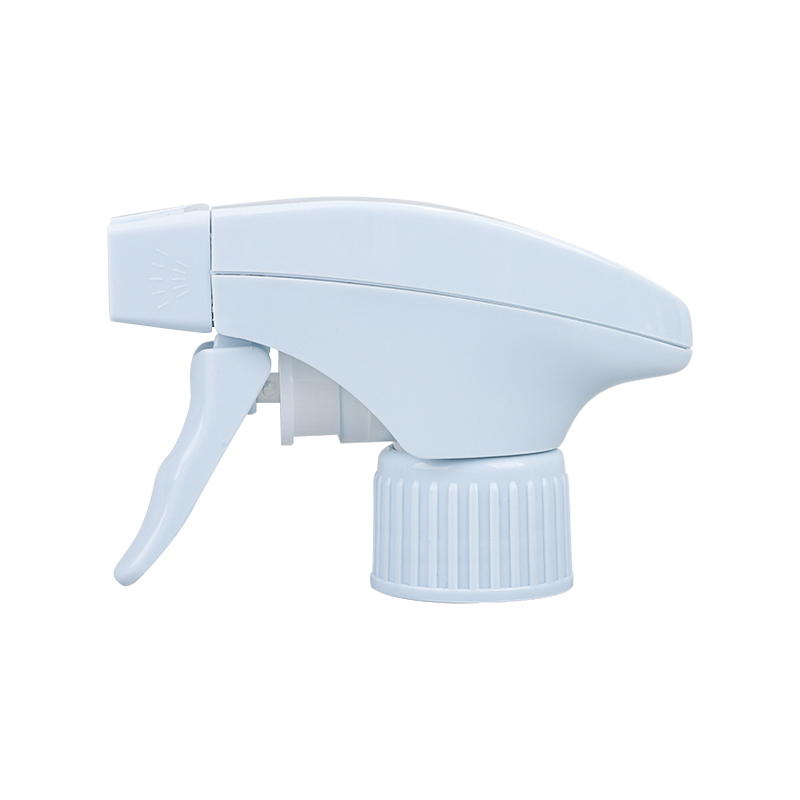
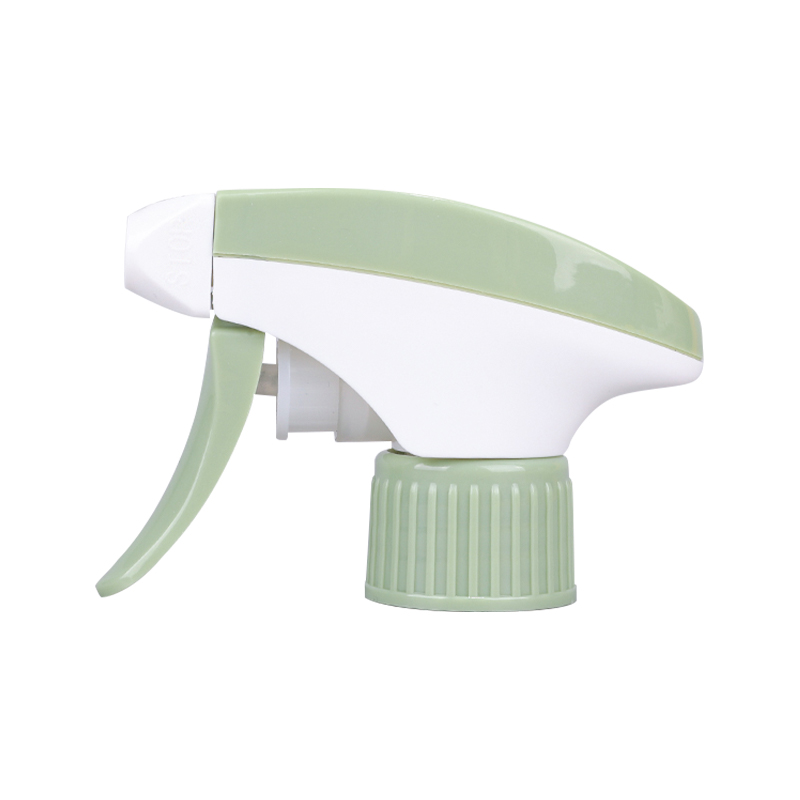
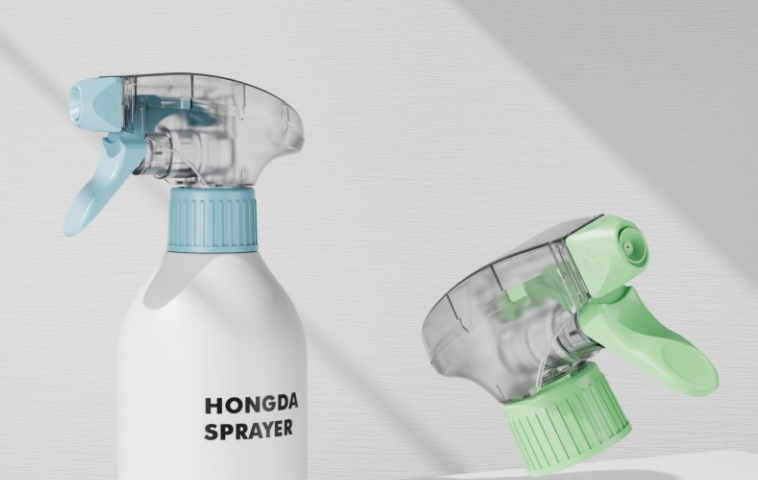
Pick up three multi-surface cleaners from the same shelf and squeeze each trigger once. One snaps back and lays down an even fan. One sputters. One feels like it is grinding sand. The liquids inside may all work equally well, but the hardware on top decides which bottle the shopper buys a second time.
The short version for anyone building or buying a household cleaning range: specify the trigger sprayer on five variables, then validate it with a handful of physical tests on your own formula before tooling is approved. Colour, shroud shape and unit price sit downstream of those decisions, not in front of them.
The Five Variables That Decide Everything
The order matters more than the list. Buyers who start with price usually end up re-tooling; buyers who start with chemistry rarely do.
- Neck finish. Household cleaner bottles are dominated by 28/410 and 24/410 finishes, and the thread, sealing land and gasket have to match exactly.
- Dose per stroke. How much liquid leaves the nozzle per full squeeze, and how stable that dose stays over hundreds of strokes.
- Chemical compatibility. Bleach, acids, solvents and concentrated surfactants attack different materials in different ways.
- Viscosity. A thick, gelled or surfactant-heavy formula flows, foams and clings differently from a thin one.
- Spray pattern. Fan, stream, mist or foam, and whether the bottle has to spray upwards.
Price is the last variable worth negotiating on a trigger sprayer. By the time you reach it, chemistry, dose and neck finish have already fixed the floor.
Dose per Stroke: Match Output to the Formula, Not the Bottle
Most general-purpose household triggers deliver roughly 0.8 to 1.2 ml per full stroke, depending on orifice diameter and chamber volume. That range suits thin liquids such as glass cleaner, multi-surface spray and light disinfectant. Thicken the formula and the same trigger delivers less per squeeze, so the user presses twice as often.
The answer is not to thin the product. It is to specify a larger orifice, a higher-displacement chamber, or a sprayer built for high-viscosity liquids. Dose also drifts: a trigger that delivers 1.0 ml on stroke ten may deliver noticeably less on stroke eight hundred if the spring or piston is wearing badly, so ask for a dose curve rather than a single headline number.
Info
Dose is measured, not assumed. Weigh output on your own formula at your filling line temperature; catalogue values are usually taken with water.
Chemistry Comes First: Metal Springs vs Metal-Free Designs
The spring is the most exposed part inside any trigger sprayer, and it is where household chemistry does its damage. Stainless steel survives most water-based cleaners perfectly well. Sodium hypochlorite and strong acids do not leave it alone: the spring corrodes, the product discolours, rust particles appear and the trigger stiffens within weeks.
Metal-free trigger sprayers replace the steel spring with a moulded plastic element, usually PP or POM. That removes the corrosion path entirely, which is why bleach sprays, limescale removers and acidic bathroom cleaners are the classic metal-free applications.
Danger
Never approve a metal-spring trigger for a bleach or strongly acidic formula. The failure is slow, invisible in a one-day sample test, and expensive once the pallet sits in a warm warehouse.
Seals matter too, since an all-plastic body does not help if the gasket swells. Confirm compatibility by immersing the actual sprayer in the actual formula at elevated temperature for at least two weeks.
Leaks Rarely Start in Use, They Start in Transit
A sprayer that weeps inside the carton costs more than the gap between two suppliers. Every trigger needs a vent path to replace the liquid leaving the bottle, and that path has to stay shut when the bottle lies on its side in a case and survive thermal expansion on a pallet in summer. A trigger that seals perfectly upright can still weep after two days at 40 degrees Celsius with the nozzle pointing down.
Warning
Test filled packs, not bare sprayers. Clamp the bottle, fill it, lay it down and hold it at elevated temperature for two days before you judge the seal.
Simple hardware choices help: a lock-off clip or defined shipping position, a shroud that shields the nozzle from stack pressure, and a nozzle seal sized for the neck your filler actually uses.
Inverted and Foam Designs for Awkward Cleaning Jobs
Two cleaning gestures push standard trigger designs past their limits.
The first is spraying upward: shower walls, ceilings, under-sink cabinets, the underside of a worktop. A conventional trigger with a straight dip tube runs dry the moment the bottle tips past roughly 45 degrees. Inverted trigger sprayers rearrange the tube and valve so the pack keeps feeding while held above the head.
The second is clinging foam. Foam nozzle triggers mix air into the liquid on the way out, so the product sits on a vertical surface instead of running down it. That is what makes an oven or bathroom foam cleaner feel like it is working.
Both designs are inexpensive to specify and awkward to retrofit, which is why they belong in the original packaging brief rather than a second-year cost review.
Trigger Sprayer Types at a Glance
The table below maps the main trigger sprayer families used in household cleaning packs against the jobs they are normally asked to do.
Common trigger sprayer families for household cleaning packs, matched to the cleaning gesture rather than to unit price.
| Family |
Typical dose |
Usual household job |
Main risk |
| Normal trigger sprayer |
Around 0.8 to 1.2 ml |
Glass, kitchen and multi-surface sprays |
Metal spring limits bleach and acids |
| All-plastic, metal-free trigger |
Similar range, firmer feel |
Bleach, limescale, acidic bathroom cleaners |
Trigger force can feel heavier |
| Foam nozzle trigger |
Low liquid volume, high air mix |
Oven and bathroom foam cleaners |
Needs a surfactant-rich formula to foam |
| High-output, high-dose |
1.3 ml and above |
Thick, gel-like, high-viscosity cleaners |
Coarser pattern, larger orifice |
| Inverted trigger sprayer |
Standard range |
Overhead and upward spraying |
Tube and valve arrangement |
Ergonomics: What Happens on the Five-Hundredth Squeeze
Trigger feel is not decoration. Window cleaner, floor spray and disinfectant are used in long sessions, and a stiff trigger on a narrow lever becomes genuinely uncomfortable after a few hundred strokes.
Force is measured in newtons at the fingertip, and it changes during a cycle test as the spring and piston bed in. A trigger that starts comfortably and stiffens by 30 percent will generate complaints even though every unit passes a bench inspection. For a closer look at how moulding tolerance and spring design shape that feel, see the precision and durability advantages of plastic trigger sprayers.
- Measure trigger force at the first and the last strokes of a long cycle run, not once at the start.
- Check that the nozzle stops dripping within a second or two of release.
- Confirm the shroud is comfortable and grippy with wet hands.
- Watch the pattern: a fan that narrows over the cycle signals wear.
Validation: The Checks Worth Running Before You Approve Tooling
Reviews go wrong when samples are judged by eye. These five checks settle most of the risk on the bench, using your own formula.
- Dose consistency: weigh output at intervals through a full cycle test and watch for drift.
- Trigger force: record newtons at the beginning and the end of the same test.
- Leak and inversion: filled pack, laid down and inverted, held warm for two to three days.
- Drop test: filled pack dropped onto a hard floor on the corner and on the trigger.
- Compatibility: sprayer parts immersed in the real formula at elevated temperature for two weeks.
Success
If a sprayer clears dose, force, leak, drop and compatibility checks on your own formula, the remaining risk is mostly cosmetic: colour, gloss and print.
Sustainability and Refill-Friendly Hardware
Recyclability requirements in several major markets are pushing household cleaner packs toward mono-material polypropylene construction, and that pressure lands directly on the trigger. Mixed-material assemblies, a steel spring inside a plastic body, are harder to sort and harder to defend in a specification review.
The refill and concentrate trend adds a second pressure: the same sprayer may be unscrewed, rinsed and reused many times. Metal-free, all-plastic triggers were once a niche request tied to bleach products. They are now a standard line item in many household cleaning specifications, and the price gap has narrowed accordingly.
The trigger sprayer is the only part of a household cleaner that the shopper physically touches, and it is usually the part signed off last. Reversing that order is the single most useful change a packaging team can make.
Start with chemistry and viscosity, fix neck finish and dose, validate on filled packs, and only then argue about unit price. Buyers who work in that sequence spend less time on returns and re-tooling, and they ship packs that feel as good as the formula inside them. EAED manufactures trigger sprayers, lotion pumps and foam pumps for household, personal care and cosmetic packaging, with mould making, moulding and automated assembly under one roof in Yuyao, Zhejiang.

 English
 русский
 Français
 Español
 italiano