The nozzle orifice size of a Normal Trigger Sprayer directly affects droplet particle size in the mist setting. A smaller orifice produces finer droplets (typically 50–150 microns), while a larger orifice generates coarser droplets (200–400 microns or more). This relationship is governed by fluid dynamics and has significant practical implications for how effectively a product is applied, how far it travels, and how it interacts with the target surface.
Understanding this connection is essential for anyone selecting or using a Normal Trigger Sprayer in cleaning, personal care, agriculture, or industrial applications.
The Science Behind Orifice Size and Droplet Formation
When liquid is forced through the nozzle orifice of a Normal Trigger Sprayer, it undergoes a process called hydraulic atomization. The liquid jet breaks apart into droplets due to surface tension, velocity, and the physical diameter of the orifice opening. The key principle is simple: the smaller the orifice, the more energy is concentrated per unit of fluid, which breaks the liquid into smaller, more uniform particles.
Several fluid dynamics factors interact in this process:
- Orifice diameter: Directly determines the initial jet width before breakup.
- Flow velocity: Higher velocity through a narrow orifice increases shear force, reducing droplet size.
- Surface tension of the liquid: Liquids with lower surface tension (e.g., solutions with surfactants) atomize more easily into fine droplets.
- Liquid viscosity: Higher viscosity resists atomization, often requiring a larger orifice or greater trigger force to maintain output.
In a standard Normal Trigger Sprayer, the orifice diameter typically ranges from 0.3 mm to 1.2 mm depending on the design intent. Fine-mist variants commonly use orifices in the 0.3–0.5 mm range, while general-purpose or stream-capable models may go up to 1.0–1.2 mm.
Droplet Size Ranges and Their Practical Significance
Droplet size is measured in microns (µm) — one micron equals one-thousandth of a millimeter. The droplet size produced by a Normal Trigger Sprayer's mist setting has direct consequences for application efficiency, coverage, and safety.
Table 1: Droplet size ranges and typical use cases for Normal Trigger Sprayer mist settings
| Droplet Size (µm) |
Classification |
Typical Application |
Orifice Size Estimate |
| 10–50 µm |
Ultra-fine / aerosol-like |
Fragrance, disinfectant fogging |
~0.2–0.3 mm |
| 50–150 µm |
Fine mist |
Hair care, facial mist, light cleaning |
~0.3–0.5 mm |
| 150–300 µm |
Medium spray |
General household cleaning |
~0.5–0.8 mm |
| 300–500+ µm |
Coarse spray |
Garden watering, heavy-duty degreasers |
~0.8–1.2 mm |
Finer droplets cover a wider surface area per milliliter of liquid and remain airborne longer, which is ideal for disinfectants or fragrance mists. Coarser droplets deposit more rapidly and are less likely to be inhaled, making them preferable for garden or industrial use.
How Adjustable Nozzles on the Normal Trigger Sprayer Change Droplet Behavior
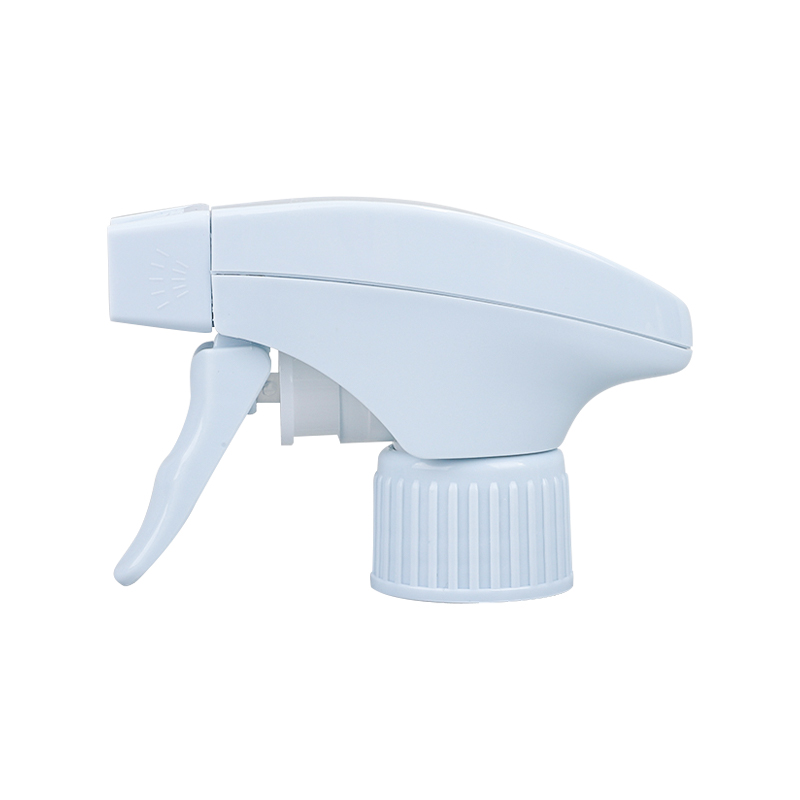
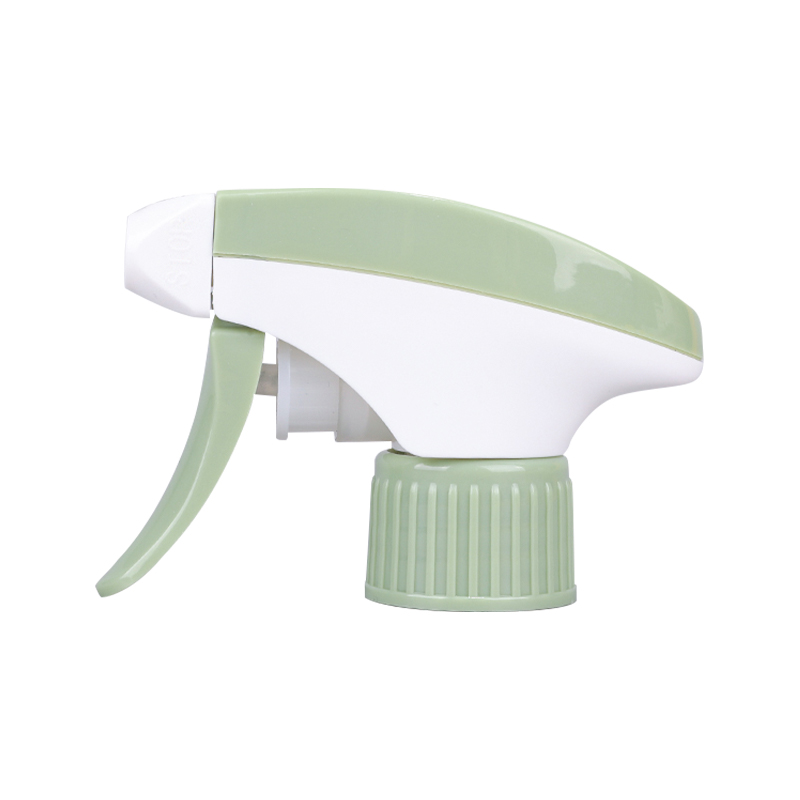
Many Normal Trigger Sprayer models feature a rotatable nozzle head that allows users to switch between mist, spray, and stream modes. This rotation physically alters the effective orifice geometry — either by changing the outlet shape, introducing a swirl chamber, or redirecting the liquid path — all of which modify the resulting droplet size.
Mist Mode
In mist mode, the nozzle typically engages a swirl insert or vortex chamber that imparts rotational energy to the liquid before it exits. This combines with the small orifice to produce droplets in the 50–150 µm range, ideal for even surface coverage with minimal liquid waste.
Stream Mode
In stream mode, the vortex chamber is bypassed and liquid exits as a focused jet. The effective orifice is larger, producing large droplets or a continuous stream rather than atomized particles. This is useful for targeted application at distance but provides less coverage per actuation.
Off / Locked Position
Most Normal Trigger Sprayer nozzles include a closed position that seals the orifice entirely, preventing leaks during storage or transport. This position does not affect droplet size but is important for safe handling of chemical products.
Impact of Orifice Size on Spray Coverage and Chemical Efficiency
The orifice size of a Normal Trigger Sprayer has a measurable impact on how efficiently a liquid product is used. Finer mist droplets increase the total surface area of liquid — for example, 1 ml of liquid atomized into 100 µm droplets covers approximately 3–4 times more surface area than the same volume dispensed as 300 µm droplets. This means:
- Cleaning products cover larger areas per trigger stroke.
- Disinfectants achieve better surface contact with pathogens.
- Cosmetic mists feel lighter and more uniform on skin or hair.
- Less product is wasted through runoff or pooling.
However, very fine droplets (below 50 µm) can present an inhalation risk if the liquid contains hazardous chemicals. For such products, a coarser spray setting — using a wider orifice — is recommended to keep droplets large enough to fall quickly and not linger in the breathing zone.
Factors That Interact With Orifice Size to Influence Droplet Quality
The orifice size is not the only variable at play. When using a Normal Trigger Sprayer, the following factors also interact with orifice geometry to determine final droplet size and spray quality:
- Trigger actuation speed: A faster trigger pull increases momentary pressure, which can temporarily reduce droplet size.
- Liquid formulation: Alcohol-based or surfactant-rich liquids have lower surface tension and atomize more finely than water alone through the same orifice.
- Liquid temperature: Warmer liquids have reduced viscosity and surface tension, producing slightly finer droplets.
- Dip tube condition: A blocked or partially clogged dip tube reduces effective flow rate, which can alter spray consistency even if the orifice is unchanged.
- Nozzle wear: Over time, repeated actuation can slightly enlarge or deform the orifice, leading to coarser and less consistent droplets.
Choosing the Right Normal Trigger Sprayer Orifice for Your Application
Selecting the correct orifice size in a Normal Trigger Sprayer should be based on the specific product being dispensed and the intended use. The following guidelines provide a practical framework:
Table 2: Recommended Normal Trigger Sprayer orifice size by application type
| Application |
Recommended Orifice Size |
Expected Droplet Size |
| Facial or body mist |
0.3–0.4 mm |
50–100 µm |
| Household disinfectant |
0.4–0.6 mm |
100–200 µm |
| All-purpose cleaner |
0.5–0.8 mm |
150–300 µm |
| Garden pesticide / herbicide |
0.6–1.0 mm |
200–350 µm |
| Industrial degreaser |
0.8–1.2 mm |
300–500 µm |
For applications involving hazardous chemicals, always verify that the Normal Trigger Sprayer's orifice and material construction are rated for the specific formulation — particularly for solvents, strong acids, or alkaline solutions that may degrade standard polypropylene or nylon components over time.
Maintenance Tips to Preserve Orifice Performance in the Normal Trigger Sprayer
Keeping the Normal Trigger Sprayer's nozzle orifice clean and undamaged is essential for maintaining consistent droplet size over time. Here are key maintenance practices:
- Flush after use: After dispensing chemical solutions, spray clean water through the nozzle to prevent crystallization or residue buildup inside the orifice.
- Soak to clear clogs: If mist quality deteriorates, remove the nozzle and soak it in warm water or a mild vinegar solution for 10–15 minutes to dissolve mineral deposits.
- Avoid metal tools for cleaning: Never use pins or metal objects to clear a blocked orifice — this risks enlarging the opening and permanently altering droplet size.
- Inspect for wear regularly: Check the nozzle orifice periodically for signs of cracking, deformation, or enlargement. Replace the nozzle head if spray pattern becomes inconsistent.
- Store properly: Always close the nozzle to the locked/off position when not in use to prevent sediment from settling in the orifice channel.
Consistent maintenance ensures that your Normal Trigger Sprayer continues to deliver the precise droplet size your application demands, preserving both product effectiveness and user safety over the sprayer's full service life.

 English
 русский
 Français
 Español
 italiano