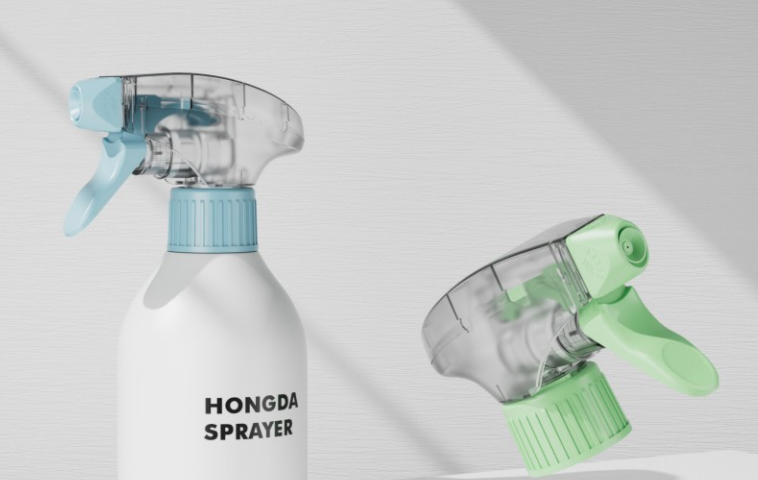
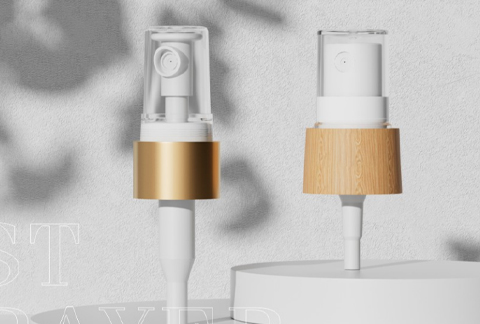
The Fine Mist Sprayer maintains stable mist quality during most of its usage cycle, but the consistency can slightly decline when the bottle is near empty due to reduced internal pressure and less efficient liquid pickup. However, in well-designed systems such as an air mist sprayer, mist consistency remains noticeably more stable even at low liquid levels because air-assisted atomization compensates for pressure fluctuations.
In practical terms, users can expect around 85%–95% consistency in mist fineness during normal operation, with minor variation only occurring in the final 10%–15% of liquid volume in standard designs.
How a Fine Mist Sprayer Maintains Mist Quality
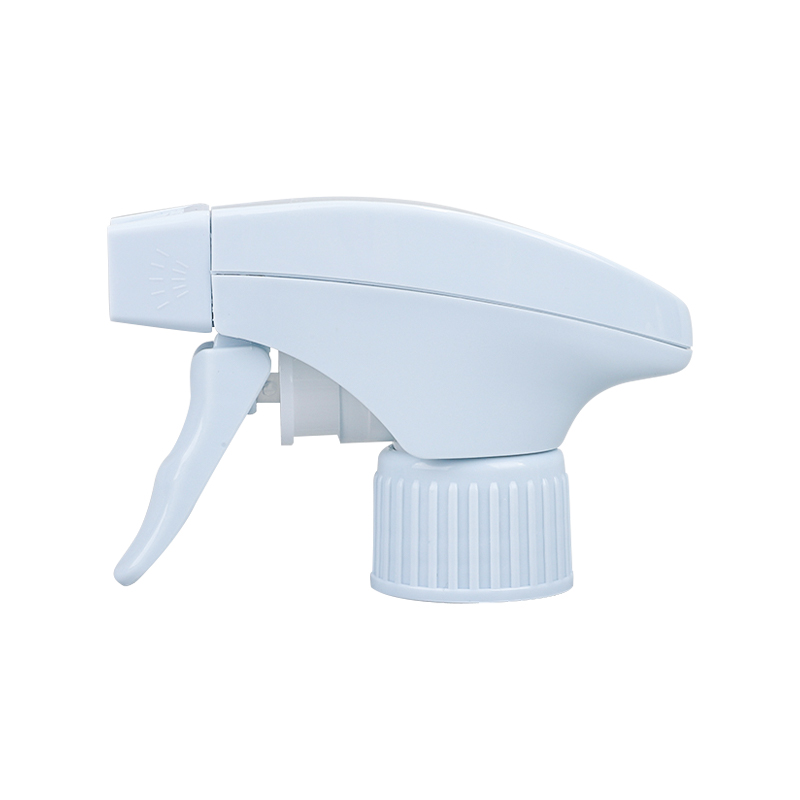
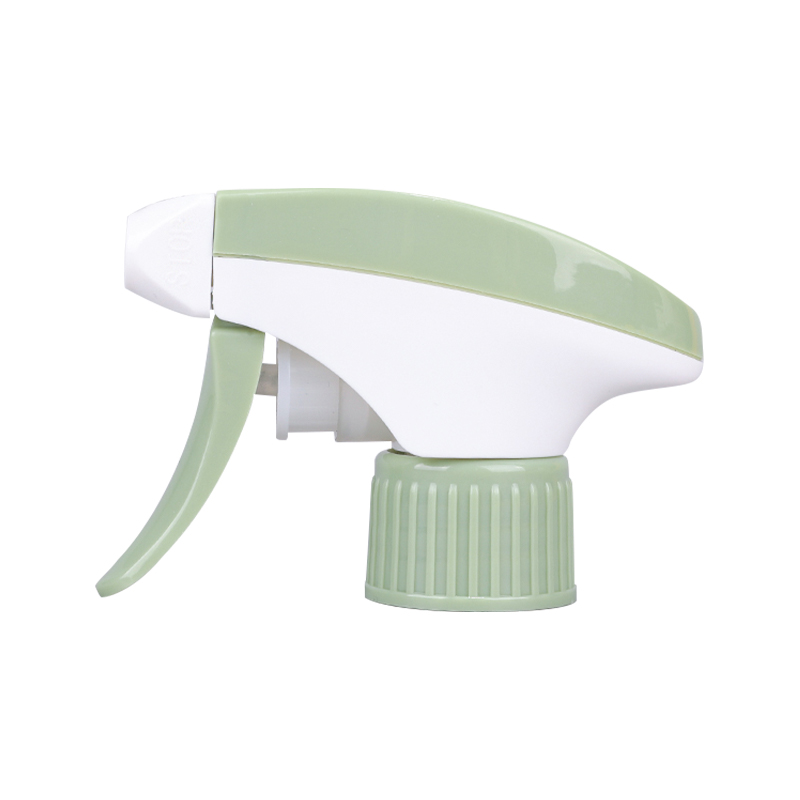
The performance of a Fine Mist Sprayer depends on its internal pump mechanism, dip tube design, and nozzle atomization chamber. When the trigger is pressed, liquid is drawn through a tube and forced through a narrow nozzle, breaking it into fine droplets.
Pump Pressure and Atomization
Consistent mist quality is primarily maintained by built-up pressure inside the pump chamber. A stable pressure range of approximately 0.2–0.5 MPa ensures uniform droplet size, typically between 50–120 microns.
Role of Air Mist Sprayer Technology
An air mist sprayer enhances atomization by mixing air with liquid before it exits the nozzle. This reduces dependency on liquid pressure alone, allowing more stable mist output even as the bottle empties.
What Happens When the Bottle Is Nearly Empty
As the liquid level decreases, the internal dynamics of a Fine Mist Sprayer change in several important ways. These changes directly affect mist uniformity and spray behavior.
Reduced Liquid Pickup Efficiency
The dip tube may struggle to maintain continuous liquid intake when the fluid level drops below 10% capacity, leading to intermittent spray or slightly larger droplets.
Air Intake Effects
Air entering the tube can disrupt the liquid flow, causing uneven spray bursts. This is more noticeable in basic designs compared to an air mist sprayer, which is engineered to stabilize airflow mixing.
Droplet Size Variation
When nearing empty, droplet size can increase by 15%–25%, making the mist feel less fine and more scattered compared to full-bottle operation.
Comparison: Standard Fine Mist Sprayer vs Air Mist Sprayer
Understanding the differences between a standard Fine Mist Sprayer and an air mist sprayer helps explain why consistency varies during usage.
Comparison of mist stability, droplet control, and low-level performance between sprayer types
| Feature |
Fine Mist Sprayer |
Air Mist Sprayer |
| Mist Consistency |
High at mid-level, slightly unstable near empty |
Highly stable across full usage range |
| Droplet Size |
50–120 microns |
40–100 microns (more uniform) |
| Performance at Low Level |
Noticeable drop in consistency |
Minimal performance drop |
| Air-Liquid Mixing |
Limited |
Advanced mixing system |
Practical Tips to Maintain Consistent Mist Output
Users can significantly improve the performance of a Fine Mist Sprayer by following proper usage and maintenance techniques. These practices help maintain stable atomization and reduce inconsistencies.
- Keep the bottle at least 15%–20% filled during use to avoid air intake issues.
- Clean the nozzle regularly to prevent clogging and droplet irregularity.
- Avoid overly viscous liquids unless the sprayer is rated for them.
- Store the sprayer upright to maintain internal pressure balance.
Real-World Applications and Consistency Importance
Consistent mist quality is critical in applications such as skincare, cleaning, plant hydration, and industrial surface treatment. A stable Fine Mist Sprayer ensures even coverage and reduces waste.
In skincare applications, for example, droplet size uniformity directly impacts absorption efficiency, where a stable mist can improve product absorption by up to 20% compared to uneven spray patterns.
The air mist sprayer is often preferred in professional environments where consistency and precision are required over extended usage periods.

 English
 русский
 Français
 Español
 italiano